Data Warehouses and Data Lakes: Architecture, Governance, and Analytics
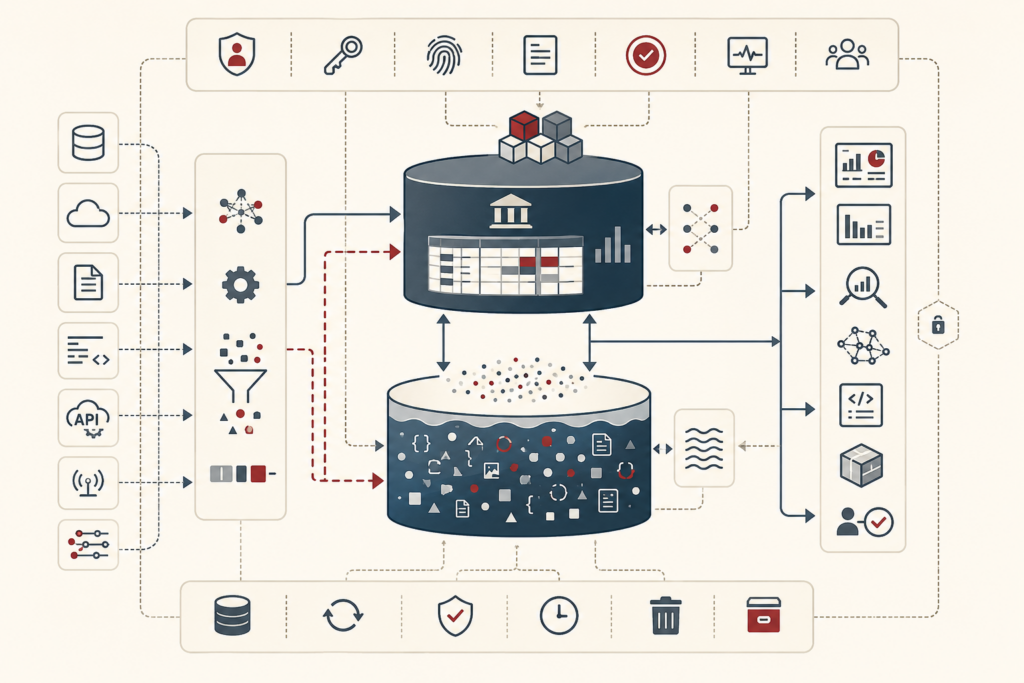
Data warehouses and data lakes solve different but complementary problems in modern analytics. This article frames the warehouse–lake distinction around analytical readiness: warehouses organize curated, governed, high-performance data for reporting, BI, decision support, dimensional modeling, and certified metrics, while lakes preserve raw, semi-structured, unstructured, and exploratory data for future analysis, machine learning, archival retention, and large-scale evidence management. It explains why mature data estates need both raw optionality and curated analytical state, and why lakehouse architectures emerged to combine lake flexibility with warehouse-style reliability, governance, and performance. The article also examines schema-on-write, schema-on-read, raw/bronze/silver/gold layers, dimensional models, conformed dimensions, data-swamp risk, metadata, lineage, open table formats, cost-performance tradeoffs, and workload fit. Python/R workflows show how teams can evaluate asset readiness, governance coverage, dimensional-model quality, lakehouse features, swamp risk, and estate-readiness scores.