
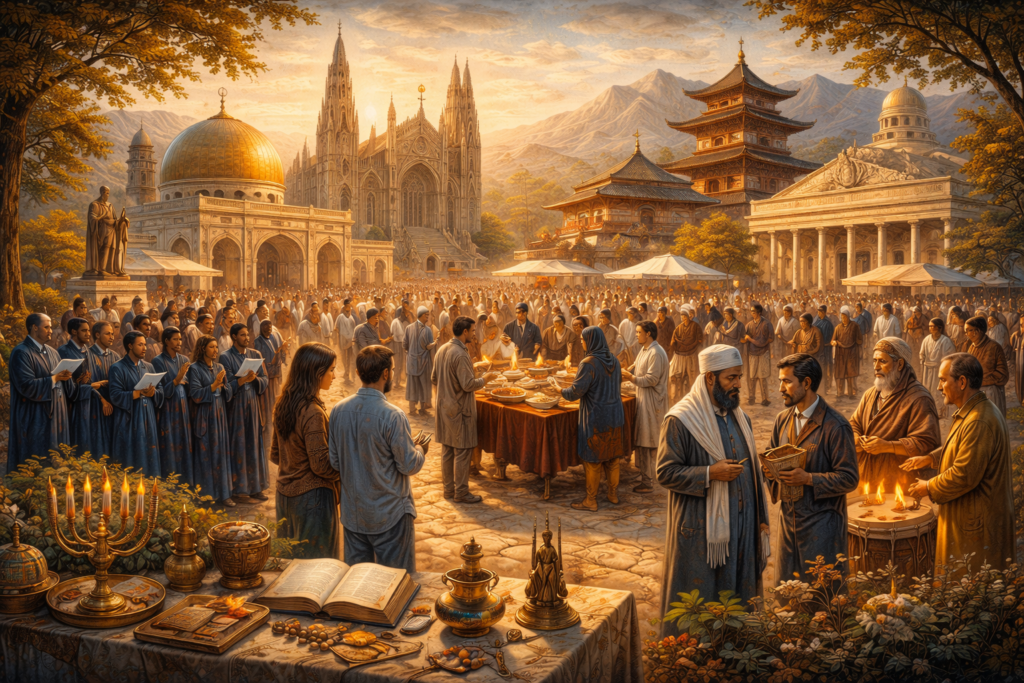
Religion and Society: Power, Identity, Pluralism, and Social Order
Religion and Society examines the social, ethical, political, institutional, cultural, and civilizational worlds through which religion shapes collective life, public order, identity, moral imagination, ritual belonging, social hierarchy, solidarity, conflict, education, family life, and the long negotiation between sacred authority and social change. This pillar explores religion as social institution; the role of ritual, family, and education in forming communities; the entanglement of religion with class, race, ethnicity, gender, and nationalism; and the ways pluralism, conflict, media, migration, and globalization reshape religious life in modern societies. By treating religion as lived social power rather than private belief alone, the category provides a serious framework for understanding how sacred worlds move through institutions, public life, inequality, and struggles over belonging.