Religious Studies

Religious Studies examines the sacred texts, ritual systems, interpretive traditions, cosmologies, institutions, and moral worlds through which human societies have sought to understand existence, obligation, suffering, transcendence, and the structure of reality. In the history of ideas, religion has shaped conceptions of law, community, authority, salvation, memory, and the relationship between visible life and invisible order across civilizations.

This category explores the study of religion through scripture, commentary, ritual, myth, ethics, law, symbolism, and lived practice, including the ways traditions define truth, preserve continuity, negotiate difference, and respond to historical change. It considers how religious worlds organize meaning, structure belonging, authorize power, and generate enduring debates about justice, destiny, liberation, and the good life.

Religious Studies plays an important role in comparative inquiry because religion remains one of the central ways human beings have interpreted the cosmos, organized collective life, and confronted mortality, moral struggle, and ultimate questions of meaning. By engaging religious traditions seriously, this category deepens understanding of civilization, symbolic order, and the intellectual, ethical, and spiritual frameworks that have shaped human history.

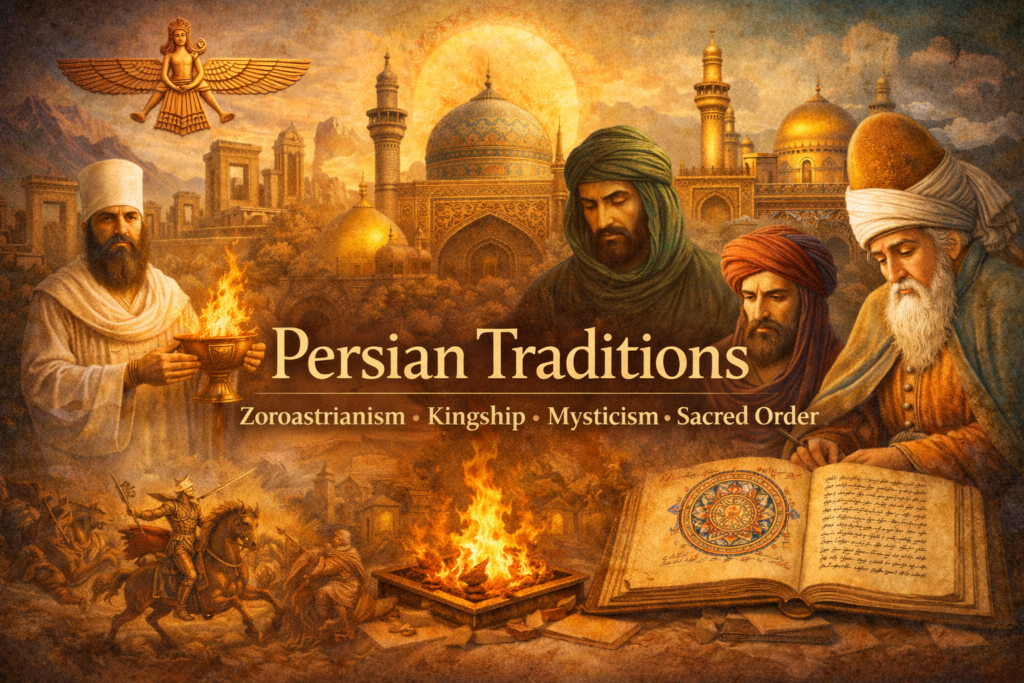
Symbolic Persian scene with sacred fire, manuscript, classical architecture, and figures representing Zoroastrian, mystical, and Persianate religious traditions.

Persian Traditions: Zoroastrianism, Kingship, Mysticism, and Sacred Order

Persian Traditions examines the religious, philosophical, literary, mystical, and civilizational worlds that emerged from Iranian and Persian history through sacred texts, imperial institutions, metaphysical speculation, ethical reflection, ritual practice, and enduring struggles over truth, justice, kingship, cosmic order, and the destiny of the soul. This pillar explores the Avesta and Gathas, Zoroastrianism, sacred kingship, apocalyptic expectation, Manichaeism, Mazdakism, the Shahnameh, Persianate Islam, Shi‘i devotion, Sufi poetry, illuminationist philosophy, and the long transition from pre-Islamic Iran to later Persian spiritual and intellectual life. By treating Persian traditions as a major civilizational stream rather than a narrow national archive, this category provides a serious framework for understanding one of the deepest religious and symbolic worlds in Eurasian history.
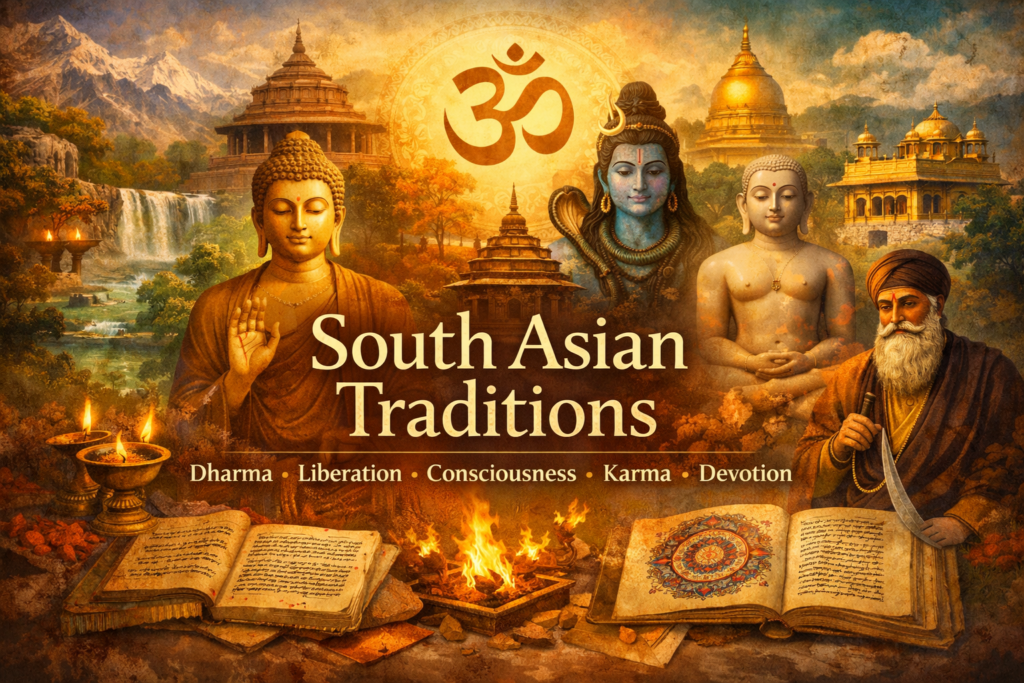
Symbolic scene featuring sacred architecture, manuscripts, ritual fire, and representative figures from South Asian religious traditions.

South Asian Traditions: Dharma, Liberation, Consciousness, and Sacred Order

South Asian Traditions examines the religious, philosophical, ritual, and civilizational worlds that emerged from the Indian subcontinent through sacred texts, oral traditions, contemplative disciplines, legal systems, devotional movements, and enduring reflections on selfhood, suffering, duty, liberation, and cosmic order. This pillar explores Vedic religion, Upanishadic speculation, epic traditions, Buddhism, Jainism, Sikhism, and the broader religious questions that connect them, including karma, dharma, rebirth, consciousness, ritual power, devotion, renunciation, and the disciplined transformation of the self. By treating these traditions as internally rich and historically layered worlds rather than as a vague spirituality, the category provides a serious framework for understanding one of the deepest civilizational archives of religion, metaphysics, contemplation, and moral thought.

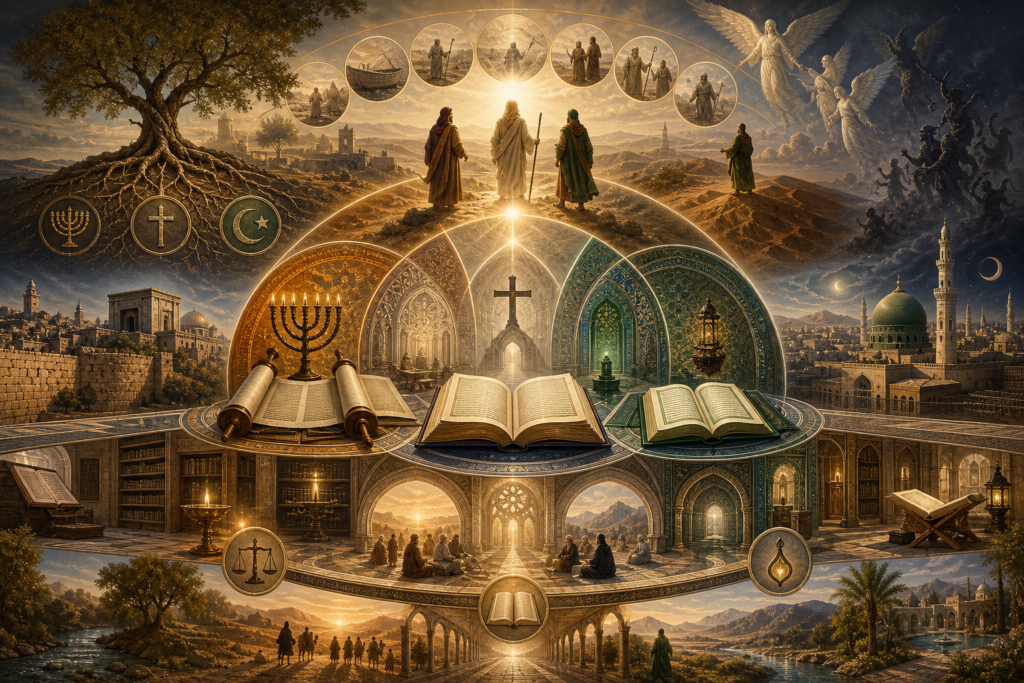
Symbolic religious-studies illustration showing Judaism, Christianity, and Islam through sacred books, architectural forms, desert landscapes, prophetic figures, angelic and demonic imagery, law, prayer, and shared Abrahamic sacred history.

Abrahamic Traditions: Prophecy, Revelation, Law, and Sacred History

Abrahamic Traditions examines the scriptural, prophetic, theological, legal, ritual, spiritual, philosophical, and historical worlds associated with Judaism, Christianity, and Islam through the primary texts, interpretive traditions, and civilizational forms by which these religions have understood God, revelation, covenant, prophecy, law, mercy, worship, judgment, knowledge, and the destiny of human communities. This pillar traces the prophetic arc from Adam to Jesus and culminates in Muhammad and the finality of Qur’anic revelation, while also exploring the interpretive traditions, legal structures, devotional worlds, and intellectual cultures that shaped Abrahamic civilization. With particular emphasis on Islam, the category connects revelation not only to worship and law, but also to philosophy, natural science, medicine, and the wider history of knowledge.

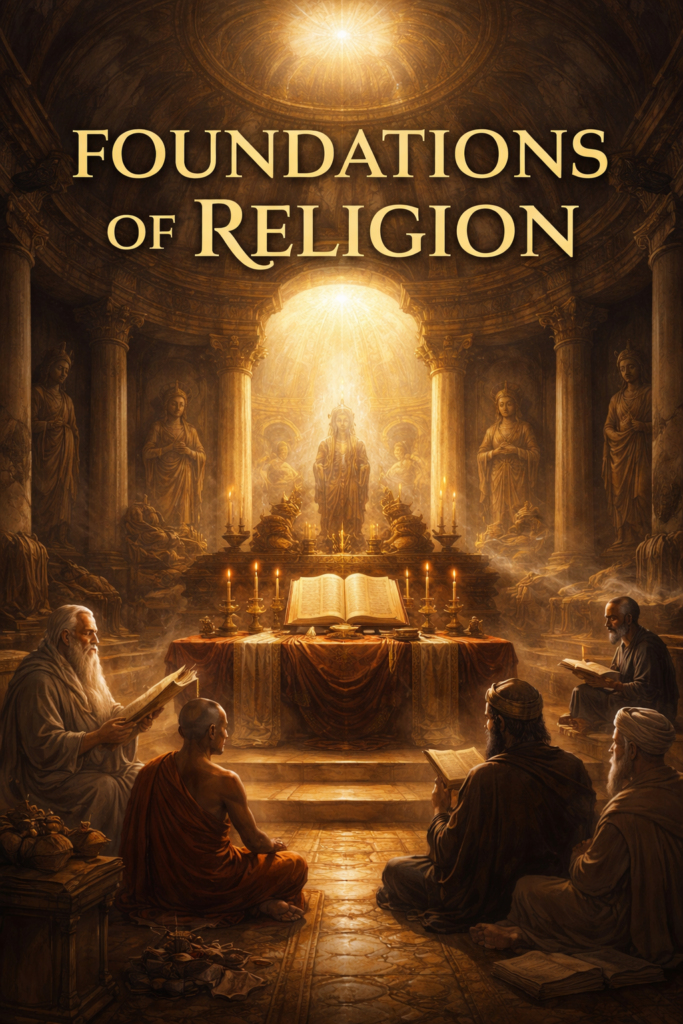
Illuminated sacred interior with scholars and religious figures gathered around an altar and open manuscript beneath a domed ceiling.

Foundations of Religion

Foundations of Religion examines the conceptual, historical, textual, ritual, and institutional structures through which religious traditions have interpreted reality, organized communal life, and articulated humanity’s relation to the sacred. This pillar explores the problem of defining religion, the distinction between sacred and ordinary orders, the role of myth and ritual, the formation of scripture and canon, the politics of interpretation and authority, and the importance of oral, embodied, and place-based traditions that cannot be reduced to text alone. By grounding the study of religion in history, comparison, sacred transmission, and civilizational analysis, this category provides the framework for understanding how religious worlds shape meaning, law, memory, identity, and the structure of social order across time and place.

Scroll to Top