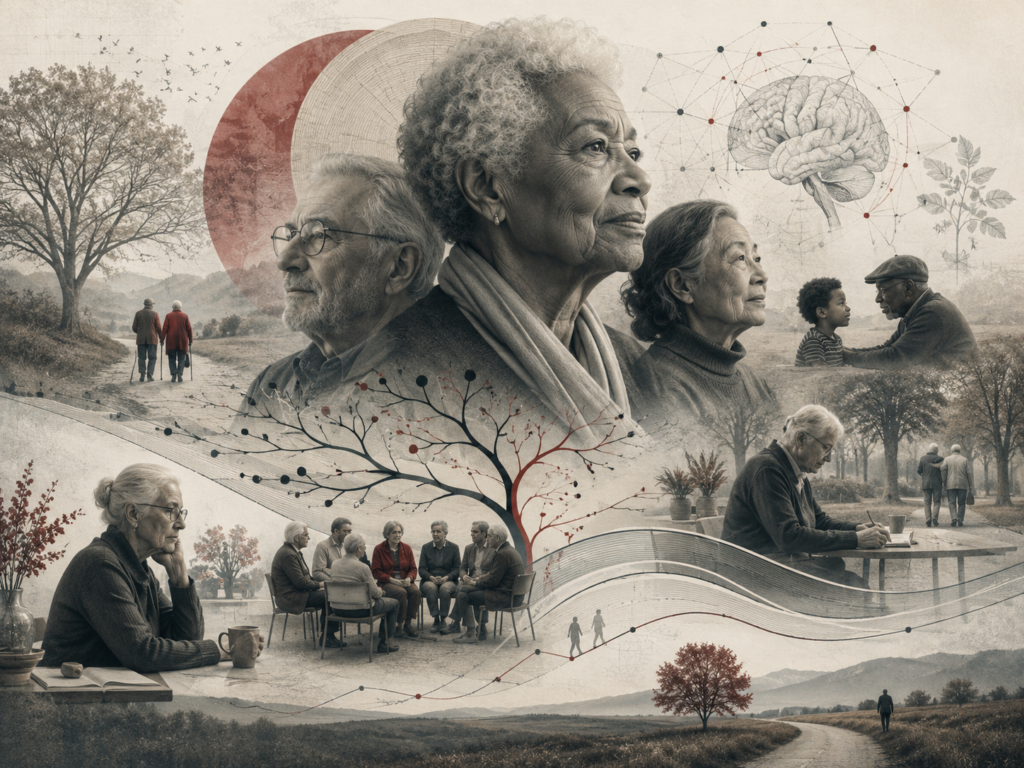
Aging, Adaptation, and Development in Later Life
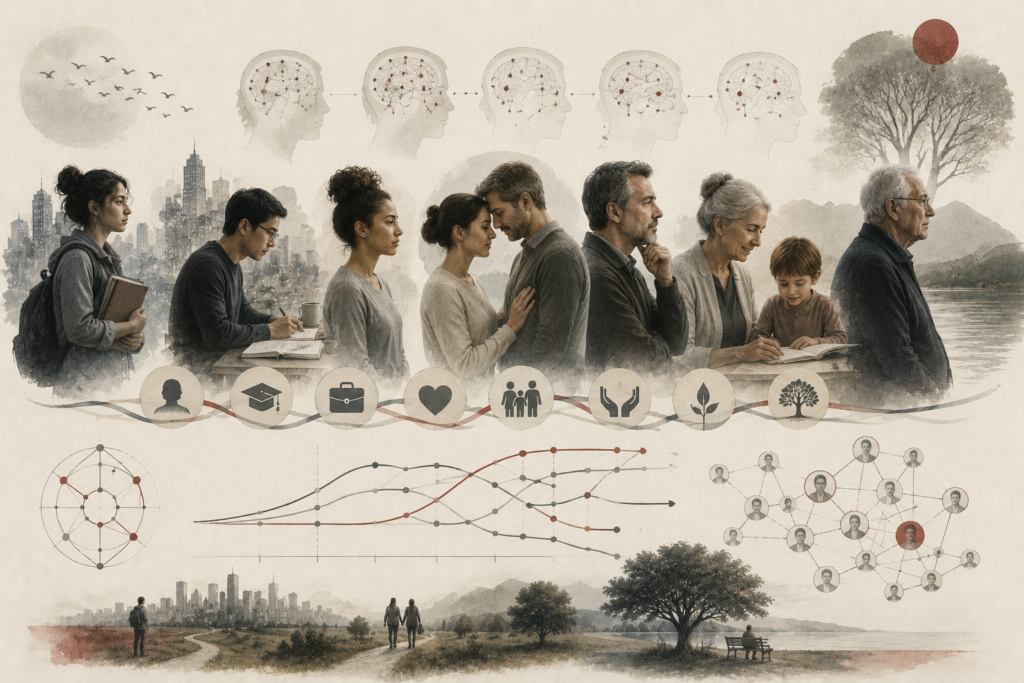
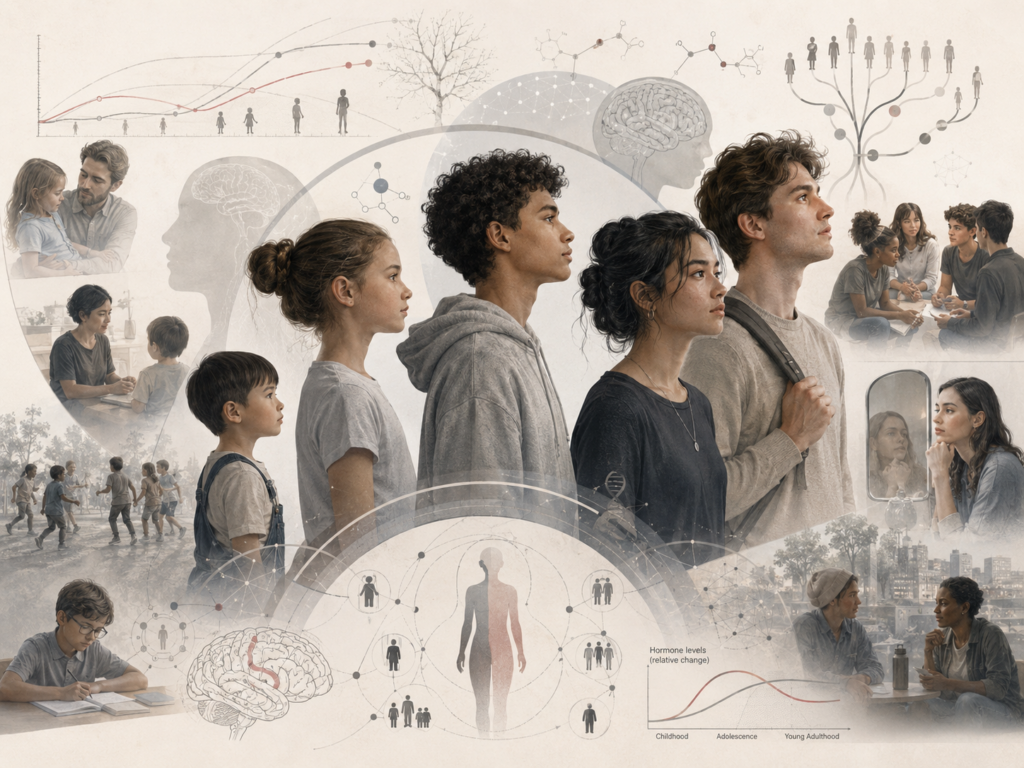
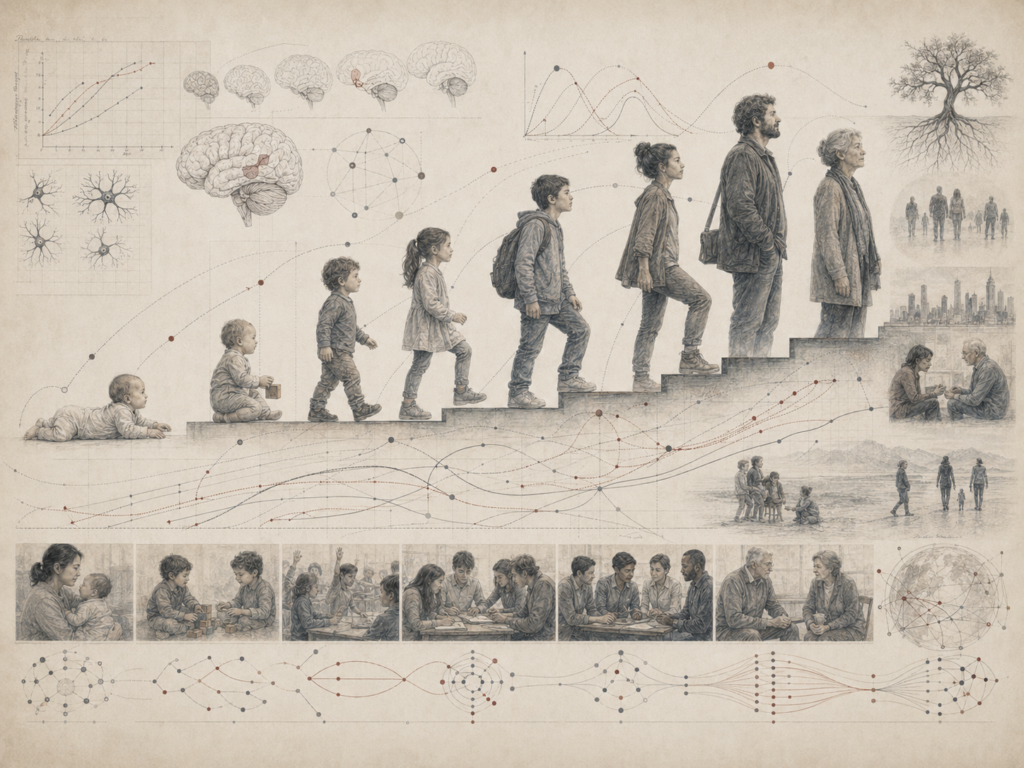
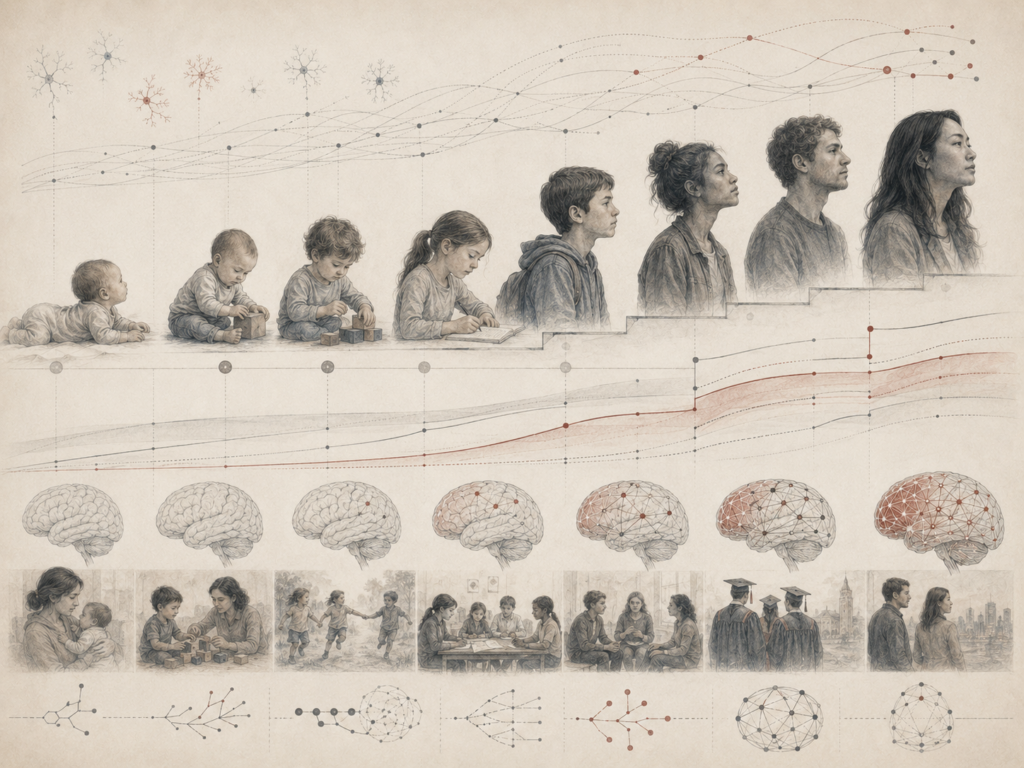
Aging is not the opposite of development but a later-life phase in which human beings continue to adapt under changing conditions of body, time, health, memory, social role, and meaning. This article examines functional ability, cognition, compensation, care, retirement, social connection, mortality awareness, and unequal aging as parts of one developmental process. It argues that later life should be understood neither as simple decline nor as sentimentalized success, but as a psychologically complex phase shaped by support, health, adaptation, and environment. In that sense, aging reveals how development continues through vulnerability, revision, and the changing conditions of embodied life.