The Lexical Hypothesis and the Emergence of Trait Structure
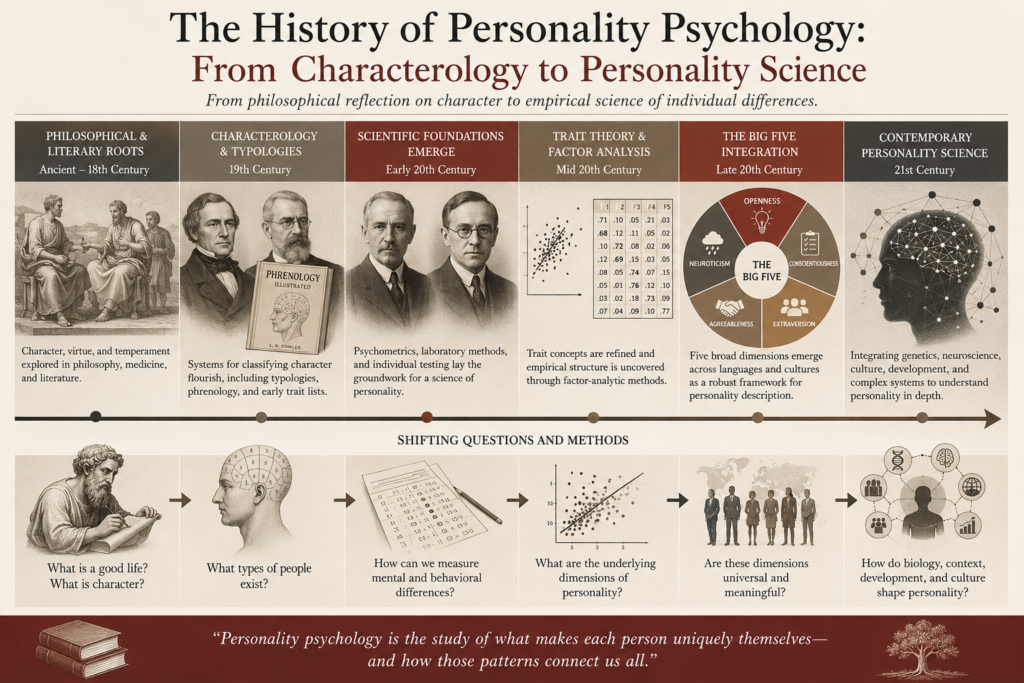
The lexical hypothesis offers one of personality psychology’s most important bridges between language, social life, and empirical trait structure. It begins from a simple but powerful idea: personality differences that matter in human communities tend to become encoded in ordinary language. Over time, words for reliability, sociability, anxiety, curiosity, dominance, kindness, and emotional volatility become cultural tools for describing patterns of behavior. Researchers then use these trait terms, ratings, and statistical methods to identify broader dimensions of personality. This article examines how social observation becomes language, how language becomes data, and how models such as the Five-Factor Model emerged from attempts to organize personality-relevant words into coherent psychological structures.