Relational and Developmental Jungian Psychotherapy
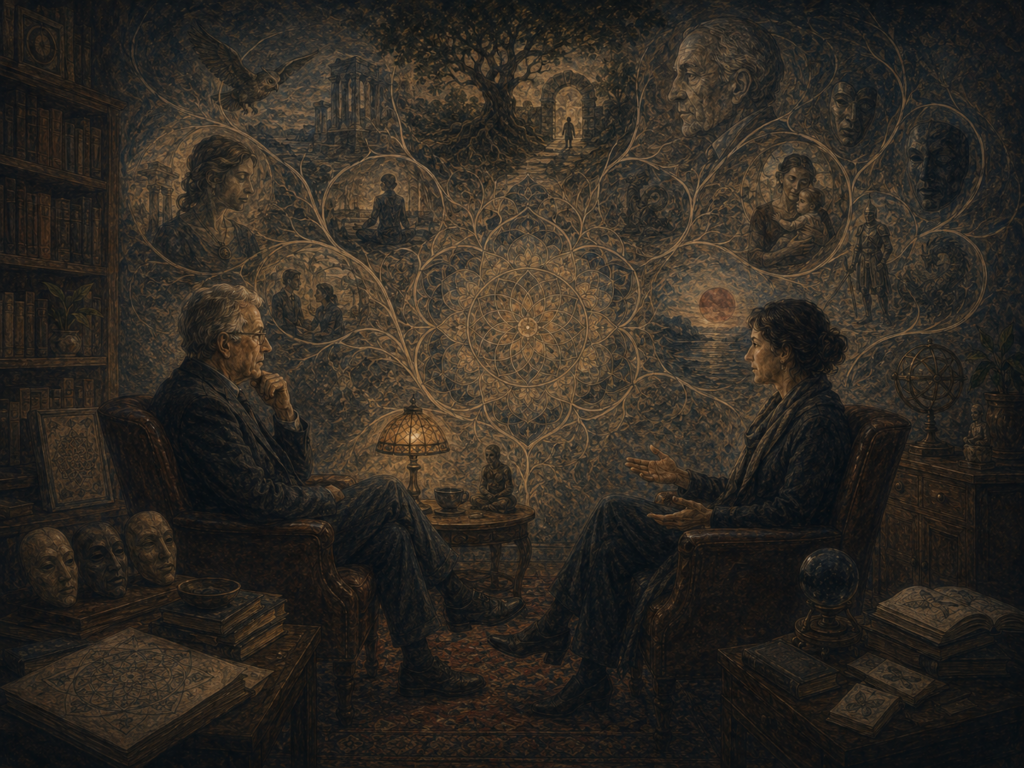
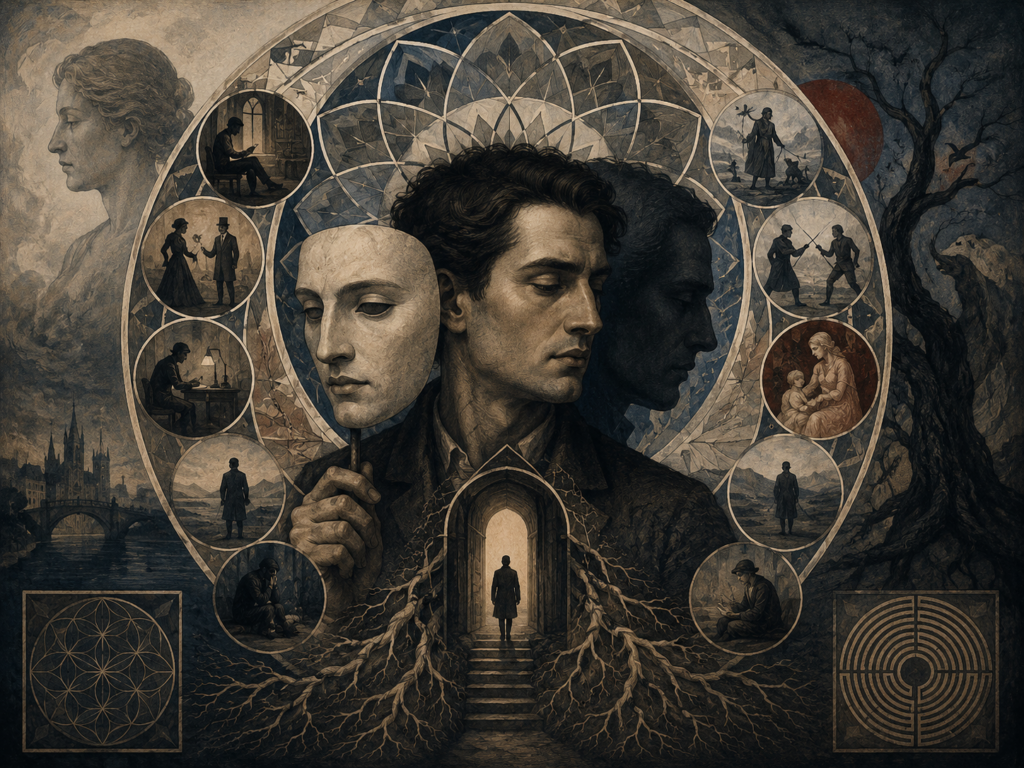
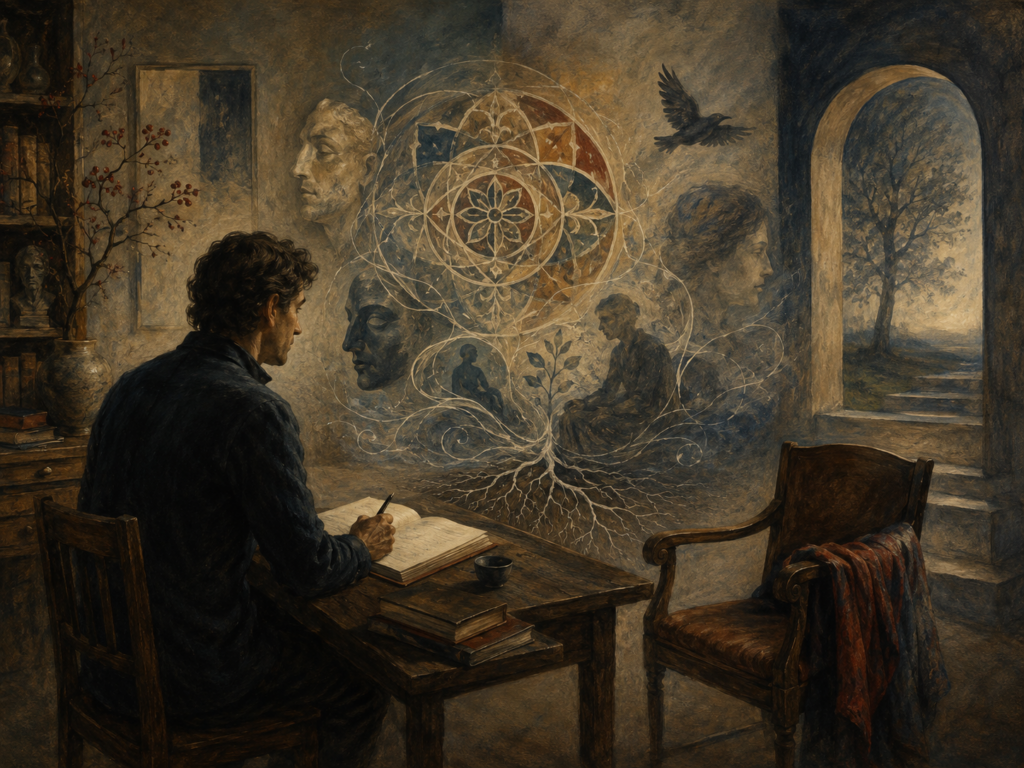
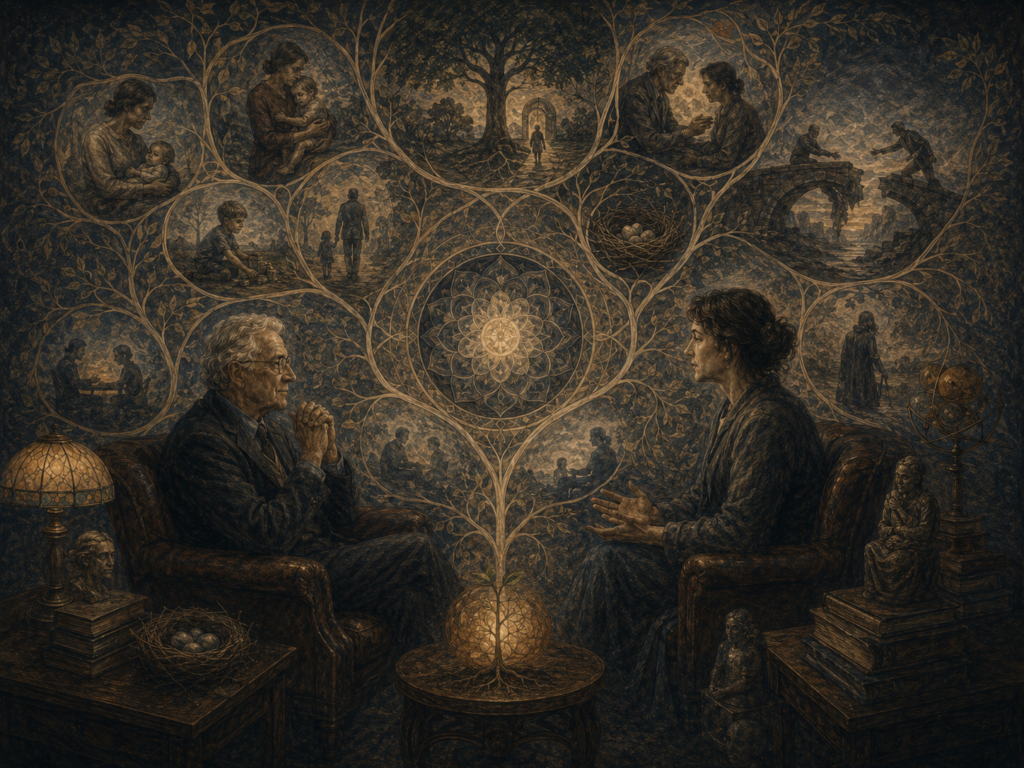
This image represents analytical psychology in clinical practice as a meeting between clinical conversation and the deeper symbolic life of the psyche. At the center, therapist and patient sit facing one another in a warm consulting room, emphasizing the relational core of treatment. Around them unfold symbolic scenes suggestive of dream life, shadow encounter, reflective writing, and a path through psychic difficulty, indicating that Jungian therapy attends not only to symptoms but also to the unconscious patterns, complexes, and symbolic pressures shaping distress. The luminous connective field linking the scenes suggests that clinical work in this tradition is not linear problem-solving alone, but a process of integration across memory, symbol, relationship, and self-understanding. The composition is designed to convey Jungian practice as ethically grounded depth work that holds suffering, interpretation, and transformation together within a contained therapeutic space.