
Last Updated May 29, 2026
Active imagination is one of the most distinctive and demanding practices in analytical psychology because it asks the conscious ego neither to suppress imaginal material nor to be passively overwhelmed by it, but to enter into a disciplined dialogue with symbolic contents as they emerge. In Jung’s view, the psyche does not reveal itself only through dreams, symptoms, slips, projections, moods, and retrospective interpretation. It can also be approached through a waking encounter with images, figures, voices, bodily atmospheres, symbolic scenes, and emotional presences that arise from the unconscious and are engaged rather than dismissed. Active imagination is the name Jung gave to this mode of encounter: a practice of entering the imaginal field while preserving enough consciousness to witness, respond, question, discriminate, remember, and reflect.
This makes active imagination fundamentally different from fantasy in the ordinary sense. Ordinary fantasy often drifts wherever wish, fear, repetition, avoidance, or distraction carries it. It is usually ego-led, even when the ego does not realize it. Active imagination begins instead when imaginal material presents itself with enough autonomy, emotional force, or symbolic density that consciousness can no longer treat it as mere decoration. The task is not to invent impressive inner scenes, stage a private drama, or indulge reverie. It is to allow a figure, image, place, mood, or conflict to unfold and to respond to it seriously as a psychic event.
Main Library
Publications
Article Map
Analytical Psychology
Related Topic
Dream Interpretation
Related Topic
Shadow Psychology
Related Topic
The Self
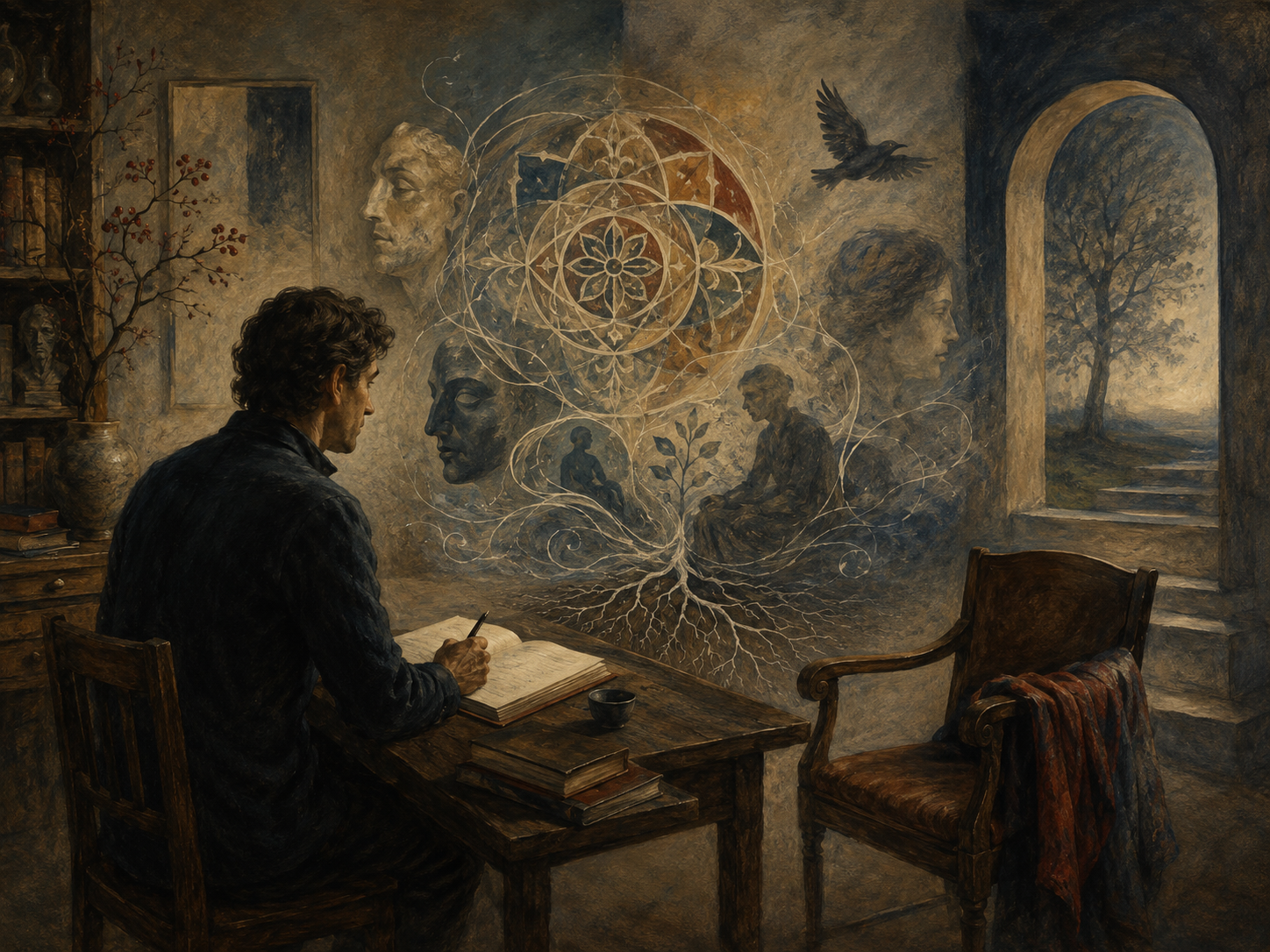
Jung valued this practice because he believed the psyche is not exhausted by what consciousness already knows how to say. Symbolic life often exceeds conceptual thought. Dreams provide one avenue into that symbolic life, but active imagination offers another. It allows a waking relation to what the unconscious presents, making it possible for a person to encounter shadow figures, guiding presences, wounded children, moral conflicts, images of center, symbolic landscapes, or unresolved tensions in a more sustained way than dream interpretation alone sometimes permits.
Yet Jung also understood that the practice is risky. Without enough ego strength and reflective capacity, active imagination can collapse into inflation, dissociation, fantasy indulgence, passive obedience to inner figures, or simple confusion. The point is not to lose oneself in imaginal content. It is to establish relation to it. Active imagination is therefore not mystical surrender, not aesthetic role-play, not automatic truth delivery, and not a substitute for clinical care where psychological stability is fragile. It is a psychologically serious discipline of symbolic dialogue in which consciousness and unconscious material meet without either being erased.
This article examines what active imagination is in analytical psychology, how Jung developed it, how it differs from ordinary fantasy and from dream interpretation, why symbolic dialogue matters for individuation, what role the ego plays in the method, how images become form through writing and art, and what ethical and clinical cautions must accompany the practice. It treats active imagination as one of Jung’s boldest methods: a disciplined way of meeting the psyche through image, encounter, and response.
Why Active Imagination Matters
Active imagination matters because much of psychic life cannot be reached by analysis of surface thought alone. Some conflicts remain abstract until they take imaginal form. Some symbolic contents repeat in dreams but never become adequately engaged in waking life. Some inner figures continue acting through projection, mood, symptom, fantasy, resentment, attraction, fear, or creative compulsion because consciousness has never actually entered into relation with them. Active imagination gives analytical psychology a method for approaching such material directly without reducing it immediately to explanation.
This matters especially in Jung’s framework because the psyche is not merely a storehouse of contents waiting to be decoded. It is dynamic. It presents images, tensions, symbolic formations, affects, and inner events that demand response. Active imagination treats those formations as dialogical possibilities rather than as passive data. It asks not only what an image means, but what happens when consciousness meets it, questions it, listens to it, resists it, or is changed by it.
In this sense, active imagination belongs to Jung’s larger challenge to purely rationalistic models of psychology. The psyche does not always speak first in concepts. It may speak in a dark animal, a locked room, a wounded child, a hostile stranger, a veiled woman, a ruined temple, a flood, a circle, a stone, a voice, a descent, a figure at a threshold, or a charged mood that slowly becomes image. These formations are not meaningless because they are imaginal. They may carry psychic reality precisely because they condense affect, memory, desire, conflict, and possibility into symbolic form.
Active imagination also matters because it changes the role of the person in relation to unconscious material. Dream interpretation can sometimes become too observational: the dream is recorded, analyzed, associated, amplified, and explained. Active imagination requires a more participatory stance. The person must respond. They must ask a question, make a choice, face a figure, refuse a demand, apologize, protect a vulnerable image, stand before an accusing presence, or remain in a symbolic scene long enough for something to unfold. The psyche becomes not just an object of study but a field of encounter.
This encounter can be transformative because psychic material often remains unchanged when it is understood only from the outside. A person may know that they project anger and still continue projecting it. They may know that they fear dependency and still flee intimacy. They may understand a dream intellectually and still fail to respond to its demand. Active imagination gives unconscious material a relational form. The ego must meet what it has previously avoided, dismissed, or projected.
The practice also matters for creativity, spirituality, and moral life. It reveals how imagination can be disciplined rather than escapist, how symbolic expression can deepen rather than replace responsibility, and how the ego can learn from unconscious material without surrendering judgment. At its best, active imagination allows inner life to become more dialogical, less split, less projected, and more symbolically alive.
Its importance, however, depends on seriousness. Active imagination becomes trivial when it is reduced to visualization, self-help fantasy, aesthetic indulgence, or private mythology. It becomes dangerous when inner figures are treated as infallible authorities. It becomes useful when the ego remains awake enough to participate, question, remember, test, and ethically evaluate the encounter. The practice matters because it asks consciousness to become neither master nor servant of the unconscious, but a responsible participant in symbolic life.
What Jung Meant by Active Imagination
Jung used the term active imagination to describe a method of engaging unconscious material by allowing an image, mood, figure, scene, bodily atmosphere, or inner event to unfold and then responding to it consciously. The practice begins when spontaneous psychic material becomes vivid enough to be held in attention rather than dismissed. One does not create the content arbitrarily. One encounters what appears and enters into relation with it.
The “active” in active imagination does not mean that the ego fabricates the scene. It means that consciousness participates. The person remains present, reflective, and responsive. They may ask questions, answer a figure, observe the transformation of a scene, write the exchange, sketch what appears, move with a gesture, sculpt an image, or continue the imaginal situation until some symbolic movement becomes clearer. This is imagination, but not passive drifting. It is imagination under disciplined witnessing.
Jung’s own experiments with imaginal encounter, later associated with the materials of The Red Book, show that the practice can be intense, elaborate, unsettling, and morally demanding. It may involve conversation with figures that seem autonomous, encounters with symbolic landscapes, confrontation with shadow, dialogue with inner authorities, and repeated efforts to understand what the psyche is presenting. The method is not merely a technique; it is a mode of psychological relation.
To understand active imagination, it is important to distinguish several components. First, there is spontaneous emergence: something appears that was not simply invented by conscious intention. Second, there is attentive containment: the ego holds the material without immediately repressing, explaining, or acting it out. Third, there is dialogical response: consciousness participates by speaking, asking, refusing, listening, or choosing. Fourth, there is symbolic development: the image or scene changes in response to the encounter. Fifth, there is reflective integration: the person later considers what occurred in relation to life, ethics, relationships, dreams, and development.
This structure differentiates active imagination from many looser forms of imagination. It is not enough that a person has an inner image. The image must become a site of relation. It is not enough that a figure speaks. The ego must evaluate, respond, and remember. It is not enough that the experience feels powerful. It must be brought back into life with discrimination. The practice depends on the tension between openness and responsibility.
| Element | Meaning in active imagination | Risk if missing |
|---|---|---|
| Spontaneous image | An image, figure, mood, or scene emerges with some autonomy | The process becomes deliberate invention or ego fantasy |
| Ego presence | Consciousness remains awake, reflective, and able to respond | The process may become flooding, dissociation, or passive identification |
| Dialogue | The ego enters relation with the image rather than merely observing it | The image remains inert, decorative, or only intellectually interpreted |
| Symbolic movement | The encounter unfolds, changes, resists, or reveals new meaning | The practice becomes repetitive, staged, or static |
| Integration | The material is reflected upon in relation to life and ethics | The experience remains isolated, inflated, or disconnected from responsibility |
What Jung meant by active imagination, then, was not merely “using imagination.” He meant a disciplined encounter between the conscious ego and autonomous symbolic material, held in a form where the psyche can speak and consciousness can answer.
Active Imagination Is Not Ordinary Fantasy
Jung repeatedly distinguished active imagination from idle fantasy. Fantasy in the ordinary sense is often ego-serving, repetitive, compensatory in a shallow way, or simply distractive. It tends to follow familiar wishes and fears without genuine encounter. Active imagination begins only when something relatively autonomous presents itself: an unexpected figure, a charged symbolic space, a conflict not consciously designed, a dream image that continues to exert pressure, or a mood that condenses into imaginal form.
The distinction matters because the method can otherwise be trivialized. To invent a dramatic inner movie is not yet active imagination. To visualize a preferred outcome is not active imagination. To rehearse revenge, romance, superiority, humiliation, rescue, or spiritual importance is not necessarily active imagination. The practice becomes psychologically serious only when the imaginal content has enough independence to challenge the ego’s assumptions and enough symbolic force to require relation rather than control.
Ordinary fantasy often confirms the ego’s existing pattern. It may soothe, distract, inflate, compensate, or repeat. Active imagination disturbs the ego’s pattern because the image does not simply obey. A figure may refuse the ego’s interpretation. A dream scene may change unexpectedly. A hostile image may reveal a legitimate claim. A guide may demand responsibility rather than comfort. A child figure may require protection rather than sentiment. A symbolic object may remain opaque. The encounter has dignity because it is not fully reducible to conscious intention.
Fantasy also tends to remain unaccountable. One can fantasize endlessly without changing behavior, withdrawing projection, repairing harm, confronting shadow, or accepting limitation. Active imagination must eventually be tested against life. If an imaginal encounter produces no increase in responsibility, humility, ethical clarity, symbolic depth, or psychological integration, its value remains questionable. Jung’s method does not authorize escape from ordinary life; it deepens participation in it.
This distinction is especially important because imagination has both healing and deceptive capacities. It can reveal what the ego cannot say, but it can also create elaborate defenses. It can mediate symbolic truth, but it can also inflate self-importance. It can help a person face shadow, but it can also stage a fantasy of having faced shadow. The fact that something appears inwardly does not make it wise. The fact that it feels numinous does not make it morally valid. The fact that a figure speaks does not mean the ego should obey.
Active imagination requires discipline precisely because fantasy and symbolic encounter can resemble one another on the surface. The difference lies in autonomy, resistance, development, ego participation, and later integration. The ego does not control the process, but it remains accountable. The image is not dismissed, but it is not worshiped. The encounter is taken seriously, but not literally in a crude sense. This tension is what gives the practice its psychological depth.
| Ordinary fantasy | Active imagination |
|---|---|
| Often follows ego wish, fear, repetition, or distraction | Begins with symbolic material that has some autonomy or emotional force |
| May confirm familiar self-image or defensive pattern | Often challenges, interrupts, or complicates the ego’s standpoint |
| Can remain private, pleasurable, or avoidant without consequence | Requires reflective follow-through and relation to life |
| Usually lacks disciplined witnessing | Requires ego presence, memory, discrimination, and response |
| May become escapist or self-flattering | Should deepen humility, responsibility, symbolic relation, and integration |
Active imagination is therefore not fantasy made more elaborate. It is fantasy brought under the discipline of symbolic encounter. The difference is not aesthetic intensity. The difference is relation, autonomy, and responsibility.
Symbolic Dialogue and Psychic Encounter
At its heart, active imagination is symbolic dialogue. The psyche presents itself not only through abstract states but through figures, voices, gestures, landscapes, objects, colors, atmospheres, animals, thresholds, wounds, ruins, temples, roads, rooms, and dramatic situations. These may be frightening, seductive, absurd, wise, accusatory, grieving, comic, numinous, or morally ambiguous. The task is not to decide at once whether they are “real” in an external sense. The task is to recognize that they are psychically real and to respond accordingly.
Symbolic dialogue means that the person enters into an encounter. A shadowed figure may be asked what it wants. A child may be protected or questioned. A ruined temple may be explored. A threatening animal may be approached, avoided, fed, or watched. A guide may speak, or refuse to speak. A door may open, remain closed, or demand a condition. A symbolic object may be received, rejected, carried, broken, repaired, buried, or transformed. The importance of the practice lies in this movement from passive image to relational event. The unconscious is not only seen; it is addressed.
This dialogical structure gives active imagination its distinctive power. Many forms of interpretation ask what an image stands for. Active imagination asks what the image does when met. A dream figure may change when questioned. A feared image may become less persecutory when acknowledged. A beautiful figure may reveal its danger when approached too eagerly. A wounded figure may require care before it can speak. A hostile figure may carry shadow truth. A symbolic center may emerge only after conflict has been endured. Meaning unfolds through encounter.
The dialogue is not always verbal. Sometimes the exchange occurs through movement, color, posture, distance, temperature, light, sound, bodily sensation, or symbolic transformation. A figure may not answer in words. A landscape may shift. A room may darken. A path may appear. A wound may close or open. A vessel may break. A person may feel bodily fear, grief, warmth, pressure, or resistance. Active imagination must be attentive to these nonverbal forms because the psyche often speaks through image before speech.
The ego’s response matters. It should not be servile. If a figure commands harm, grandiosity, withdrawal from responsibility, or contempt for others, the ego must not obey simply because the command appears inwardly. The ego can refuse, question, challenge, negotiate, ask for clarification, or end the session. Symbolic dialogue is not submission. It is relation. The unconscious may bring truth, but it may also bring archaic force, complex distortion, or inflated temptation.
This makes active imagination ethically charged. An image can reveal something the ego needs to know, but the ego remains responsible for how it responds. A symbolic encounter may deepen compassion, expose projection, reveal grief, strengthen courage, or clarify a conflict. It may also tempt the ego into inflation, superiority, self-exemption, or magical certainty. Dialogue becomes transformative when it increases consciousness rather than replacing it.
Symbolic dialogue and psychic encounter therefore form the core of active imagination. The practice does not reduce symbols to definitions. It lets symbolic life act, speak, resist, and transform within a disciplined relational field. The psyche becomes a dialogue partner, and consciousness becomes more capable of meeting what it had previously only suffered, projected, or explained from a distance.
The Role of the Ego in Active Imagination
The ego’s role in active imagination is paradoxical. It must remain present enough to observe, remember, discriminate, and ethically evaluate what occurs, yet it must not dominate the imaginal material so thoroughly that nothing genuinely new can appear. Too much ego control reduces the process to staged fantasy. Too little ego presence risks being swept into identification, inflation, dissociation, or confusion.
Jung valued this tension because it mirrors the larger problem of depth psychology: how can consciousness relate to the unconscious without either conquering it or dissolving into it? Active imagination is one experimental answer. The ego becomes a participant-observer, neither detached analyst nor surrendered medium. It allows the image to unfold, but it also answers. It listens, but it does not obey blindly. It enters the scene, but it remains capable of leaving the scene. It is affected, but it does not abandon responsibility.
Ego presence matters first as containment. Active imagination can bring charged material close to consciousness. Shadow figures, grief, sexual images, aggression, spiritual symbols, parental complexes, death images, and numinous presences may appear with force. Without enough ego stability, such material may overwhelm. Containment means the person can remain oriented, remember that this is an imaginal process, distinguish inner event from external fact, and return to ordinary reality afterward.
Ego presence also matters as dialogue. If the ego is too passive, the encounter may become a stream of images without integration. If the ego is too controlling, the unconscious has no space to appear. The ego must ask, answer, wait, notice, and sometimes resist. It must be humble enough to be surprised and strong enough not to be swallowed. This is why active imagination cannot be reduced to free association or visualization. It requires a disciplined middle position.
Ethical evaluation is another ego function. Not every imaginal figure is wise. Not every voice should be obeyed. Not every symbolic demand should be literalized. A figure may carry partial truth, complex distortion, archetypal force, emotional compensation, or shadow material. The ego must evaluate the encounter in relation to ordinary life, moral responsibility, relationships, clinical stability, and repeated symbolic patterns. The ego’s task is not to censor the unconscious prematurely, but neither is it to surrender judgment.
The ego also integrates the encounter afterward. Active imagination does not end when the image fades. The person may write, draw, reflect, compare the material with dreams, discuss it in analysis, notice life parallels, and ask what responsibility follows. Integration requires time. A powerful image may need to be held without immediate interpretation. Another may require concrete action. Another may simply reveal a pattern that must be watched. Ego integration turns imaginal encounter into psychological development.
| Ego function | Role in active imagination | Risk if absent |
|---|---|---|
| Attention | Holds the image, mood, figure, or scene steadily | The material dissipates, fragments, or becomes ordinary distraction |
| Memory | Retains what occurs for later reflection | The encounter remains vague and cannot be integrated |
| Discrimination | Distinguishes symbolic truth, complex distortion, fantasy, and literal fact | The person may overbelieve, dismiss, or confuse the material |
| Dialogue | Responds to the image rather than only observing it | The image remains passive or the ego becomes passive |
| Ethical judgment | Tests imaginal demands against responsibility and life | Inflation, acting out, or moral abdication becomes possible |
The ego’s role is therefore not to defeat the unconscious. It is to become a responsible partner in symbolic relation. Active imagination works only when the ego is awake enough to participate and humble enough to learn.
Images, Figures, Places, and Voices
Active imagination may begin from many kinds of psychic material. A dream figure may reappear in waking reflection. A recurring mood may condense into a personified voice. An imaginal landscape may present itself with unusual vividness. A bodily tension may evoke a symbolic form. A remembered dream location may become re-enterable. A grief may appear as a child. Anger may appear as an animal. Shame may appear as a hidden room. A moral problem may appear as a judge, a wound, a bridge, or a broken object. Jung’s writings, and especially the materials later associated with The Red Book, show how richly varied such encounters can become.
What matters is not the genre of the image but the quality of encounter. Figures in active imagination should not be assumed to be mere masks of the ego. They often behave with enough autonomy to surprise the conscious personality. This surprise is one mark of genuine symbolic encounter. The psyche speaks in forms consciousness did not fully plan.
Images may appear as persons, animals, places, objects, colors, weather, rooms, temples, forests, deserts, seas, stairways, caves, machines, books, vessels, masks, wounds, mirrors, ancestors, strangers, children, guides, enemies, or ambiguous presences. Each form should be approached through context, association, affect, and development rather than through a fixed dictionary. A snake, child, house, bird, or stone does not mean the same thing in every psyche. The image must be encountered, not simply decoded.
Figures may speak in language, but speech is not required. A figure’s silence may matter. Its posture, distance, refusal, gaze, gesture, age, clothing, wound, or environment may carry meaning. A place may change without explanation. A symbolic object may feel heavy, forbidden, luminous, fragile, or dangerous. A voice may be harsh, tender, ironic, commanding, evasive, or grieving. Active imagination requires close attention to these qualities because they are part of the symbolic event.
Voices require special caution. In active imagination, “voice” can mean an imaginal or internal symbolic expression, not necessarily an auditory hallucination. If voices are experienced as externally heard, commanding, uncontrollable, persecutory, or associated with loss of reality testing, clinical care is important. Jungian language should not be used to romanticize destabilizing symptoms. Active imagination presupposes enough ego stability to distinguish symbolic encounter from external reality.
Places can be especially important because they provide symbolic containers. A dream house, cave, city, forest, temple, sea, desert, mountain, library, theater, garden, or underground passage may become a recurring imaginal field. Returning to such a place can reveal development. A locked room opens. A hostile landscape becomes habitable. A ruined building is repaired. A path appears where none existed. These changes may indicate symbolic movement in the psyche.
Images, figures, places, and voices are therefore not decorative material. They are forms through which psychic life becomes encounterable. Active imagination asks consciousness to meet them with care: neither literalizing them crudely nor dismissing them as meaningless fantasy, but allowing them to become part of a disciplined symbolic relation.
Active Imagination and Dream Work
Active imagination is closely related to dream work, but it is not identical with it. Dream interpretation begins with a symbolic production already given in sleep. Active imagination continues or deepens symbolic relation in waking life. A dream image may serve as the point of departure: the dreamer re-enters the scene, addresses the figure, explores the house, follows the guide, remains with the symbolic object, or asks what the dream left unresolved.
This makes active imagination particularly valuable when dream material remains unfinished. A dream may present an image of striking intensity but no resolution. A person may wake from a dream of a locked room, a silent child, a hostile animal, a lost road, a mysterious book, a dying figure, or a threshold they did not cross. Interpretation can help, but the image may still demand encounter. The waking practice allows symbolic dialogue to continue. It does not replace dream interpretation; it extends it into conscious participation.
Dream work often begins with association and amplification. What does the figure remind the dreamer of? What personal memory, feeling, or situation is constellated? What mythic, cultural, religious, literary, or archetypal parallels deepen the image? Active imagination adds another step: what happens if the ego returns to the image and responds? This can reveal dimensions not obvious from analysis alone. A figure may answer unexpectedly. A landscape may change. A feared image may reveal grief. A guide may refuse to guide until the ego assumes responsibility.
Active imagination may also help when a dream figure becomes strongly projected onto another person. A person may dream of a judge, seducer, child, enemy, savior, teacher, animal, or wounded figure and then find themselves drawn into similar relational patterns. Re-engaging the image inwardly can help withdraw projection. The figure becomes part of psychic life rather than being located only in the outer world. This does not deny the reality of other people; it clarifies the psychic contribution to perception.
Dreams also provide a safeguard for active imagination. If imaginal work becomes inflated or arbitrary, later dreams may compensate. A person who overidentifies with a guiding figure may dream of falling, being corrected, or being exposed. A person who dismisses an active imagination encounter may dream the image again with stronger force. Dream and active imagination can therefore form a dialogue with each other. Each checks and extends the other.
There are also differences of authority. Dreams arrive without conscious control and often carry the autonomy of the unconscious more clearly. Active imagination involves conscious participation and therefore is more vulnerable to ego interference. For that reason, active imagination should remain humble in relation to dream material. It may continue a dream, but it should not overwrite the dream’s original structure too quickly. The ego’s continuation must be distinguished from the dream’s given image.
At their best, dream work and active imagination form a powerful pair. Dreams present symbolic material. Active imagination allows relation to it. Dream interpretation clarifies meaning. Active imagination tests meaning through encounter. Together, they deepen the person’s capacity to live symbolically without abandoning consciousness.
Active Imagination, Shadow, and Inner Conflict
One of the most important uses of active imagination is in relation to shadow material and unresolved inner conflict. The practice may bring the person face to face with figures they fear, despise, envy, idealize, avoid, or do not understand. What is usually projected outward may appear inwardly in imaginal form and demand response. This can make active imagination ethically potent, because it becomes harder to pretend the conflict exists only elsewhere.
A shadow figure may appear as an enemy, animal, stranger, criminal, beggar, rival, seducer, monster, wounded person, trickster, or degraded double. Such figures should not be interpreted mechanically. The shadow may contain morally troubling material, but it may also contain vitality, courage, grief, instinct, creativity, need, desire, or truth that the persona has excluded. The question is not “How do I destroy this figure?” but “What relation must consciousness establish with what this figure carries?”
Active imagination can help because shadow material often resists purely intellectual recognition. A person may admit abstractly that they are angry, dependent, envious, proud, resentful, vulnerable, or afraid, yet still remain unchanged. Meeting a figure who embodies that material may make the conflict more concrete. The ego may have to answer for its avoidance. It may have to hear what the disowned material says. It may have to set boundaries. It may have to acknowledge harm. It may have to recover life trapped inside rejection.
At the same time, shadow encounters in active imagination must be handled with seriousness. The point is not to romanticize darkness, nor to enact whatever a figure seems to desire. The ego remains responsible for judgment. Active imagination offers contact, not moral abdication. If a shadow figure demands cruelty, revenge, domination, betrayal, or self-harm, the ego should not obey. The symbolic meaning of a demand must be distinguished from literal action.
Inner conflict may appear in active imagination as dialogue between opposed figures: a child and a judge, a soldier and a healer, a mother and a stranger, a king and a beggar, a wounded animal and a cold observer, a spiritual guide and a skeptical witness. These conflicts may represent psychic opposites that consciousness has not reconciled. The goal is not always to make peace immediately. Sometimes the conflict must be held, heard, and allowed to reveal its structure before premature resolution is possible.
Active imagination can also expose projection. A person may discover that the hated figure inside resembles the person they have been attacking outside. Or they may find that an idealized figure carries their own unlived capacity. This does not mean the outer person is irrelevant or that all external conflict is projection. It means the psyche’s participation in conflict becomes more visible. That visibility can reduce unconscious repetition.
Shadow work through active imagination is therefore not a license to indulge the shadow. It is a discipline of encounter, recognition, boundary, and ethical integration. The shadow becomes less dangerous when it is neither denied nor acted out, but brought into conscious relation.
From Image to Form: Writing, Drawing, and Symbolic Expression
Jung often emphasized that active imagination need not remain purely inward. It may take form through writing, dialogue transcription, painting, drawing, sculptural imagination, movement, music, ritual gesture, or other symbolic expression. The point is not artistic achievement as such. It is to give imaginal material a form in which it can be reflected upon, revisited, and integrated.
This externalization matters because symbolic dialogue can otherwise remain too fleeting. Writing down an exchange, sketching a figure, shaping an image into visible form, or giving a scene a structured narrative allows consciousness to continue relating to what emerged. It also makes the material less likely to remain an unexamined emotional atmosphere. Symbol becomes object of further reflection without ceasing to be symbol.
Writing is one of the most accessible forms. A person may record a dialogue between ego and figure, describe a scene, write a letter to an image, allow a figure to answer, or narrate the transformation of a symbolic space. The written form helps slow the encounter. It requires the ego to remember, articulate, and distinguish. It also creates a record that can be compared with later dreams, moods, relationships, and life events.
Drawing and painting allow another kind of relation. Some images lose vitality when immediately verbalized. A figure’s posture, color, distance, wound, gaze, or surrounding space may be more important than any sentence it speaks. Drawing the image can reveal details the ego did not initially notice. The purpose is not aesthetic polish but symbolic accuracy. A crude drawing may be psychologically more truthful than an impressive image made to please the ego.
Movement and gesture may also matter. Some active imagination material appears bodily: a pressure in the chest, a defensive posture, a reaching hand, a turning away, a trembling, a heaviness, a need to kneel, stand, retreat, or open. Carefully embodied symbolic expression can help integrate material that is not primarily verbal. But bodily work also requires caution, especially where trauma, dissociation, or overwhelming affect is present.
External form gives the ego a way to maintain relation without being swallowed. The image is no longer only inside. It becomes visible, revisitable, and discussable. This can reduce inflation because the person can look at the material rather than simply be possessed by it. It can also deepen humility because the image may reveal more complexity than the ego first understood.
| Form | Use in active imagination | Primary value | Risk |
|---|---|---|---|
| Dialogue writing | Records exchange between ego and figure | Clarifies response, resistance, and symbolic movement | Can become scripted if the ego controls too much |
| Drawing or painting | Gives image visual form | Reveals symbolic details beyond verbal interpretation | Can become aesthetic performance rather than encounter |
| Movement or gesture | Allows bodily expression of imaginal material | Includes affect, body, and instinct | Can destabilize if affect is overwhelming |
| Music or sound | Expresses mood, rhythm, tension, or atmosphere | Gives form to nonverbal psychic states | Can remain diffuse without later reflection |
| Ritualized action | Marks symbolic transition or response | Connects image to embodied responsibility | Can inflate if treated as magical certainty |
From image to form, active imagination becomes more than private inwardness. It becomes a symbolic practice that gives unconscious material shape, continuity, and accountability. Form allows the psyche to be met again.
Active Imagination and Individuation
Active imagination plays a major role in individuation because individuation requires more than conceptual insight. The psyche changes through relation, not only through explanation. Active imagination allows the person to meet images of shadow, anima or animus, guiding figures, centers, conflicts, or symbolic tasks in a way that deepens psychic differentiation. It creates a bridge between conscious life and the wider symbolic field of the psyche.
In Jung’s thought, individuation is not achieved by mastering symbols from the outside. It unfolds through participation in symbolic life. Active imagination is one of the methods by which that participation becomes more direct, more dialogical, and more transformative. The person does not simply interpret the psyche; they meet it. They do not simply know about shadow; they may confront a shadow figure. They do not simply theorize the Self; they may encounter symbolic images of center, order, totality, or demand.
Individuation requires differentiation between ego and unconscious contents. Active imagination supports this differentiation because the ego learns to relate to images as figures within the psyche rather than being unconsciously possessed by them. A complex can become a figure. A mood can become a voice. A projection can become an image. A fear can become an animal. Once the material is encountered symbolically, it becomes more available to consciousness. It is no longer only acted out.
At the same time, individuation requires integration. The ego cannot simply keep the unconscious at a distance. It must learn from what appears. A shadow figure may carry needed strength. A child image may carry vulnerability and future life. A guide may represent a more developed relation to the Self, but may also tempt inflation. A symbolic center may orient the psyche, but only if the ego does not identify with it. Active imagination provides a field in which these integrations can begin.
The practice also supports individuation by allowing opposites to meet. Conscious and unconscious, ego and shadow, reason and image, body and symbol, fear and desire, duty and freedom, old self and emerging self may all appear as figures or scenes. Active imagination does not resolve such tensions by argument alone. It gives them dramatic form. The person can witness how the opposites relate, resist, transform, or remain divided.
Individuation through active imagination is not always pleasant. It may involve humiliation, grief, guilt, anger, fear, and the loss of flattering self-images. A figure may confront the ego with truths it would rather avoid. A symbolic scene may reveal the cost of one-sidedness. A repeated image may show that the person has not integrated what they claim to understand. Active imagination deepens individuation precisely because it makes evasion harder.
Its role in individuation must nevertheless be held carefully. Powerful symbolic experiences do not prove maturity. A person can have elaborate active imagination encounters and remain ethically undeveloped. They can produce beautiful images and continue projecting shadow. They can confuse imaginal intensity with transformation. Active imagination serves individuation only when symbolic encounter leads to greater consciousness, responsibility, humility, relational truth, and integration in life.
Clinical Value and Methodological Caution
Clinically, active imagination can be valuable when symbolic material is vivid but not yet integrated, when dreams recur without development, when projection is strong, or when inner figures seem to act through mood and relationship without being consciously engaged. It can help bring unconscious tensions into a form where they may be encountered rather than simply suffered. It may support work with shadow, grief, creative blockage, inner conflict, dream figures, relational projection, symbolic vocation, and developmental transition.
The practice can also help restore agency. A person who feels passively overwhelmed by a mood may discover that the mood has an image. A person haunted by a dream may enter dialogue with the dream figure. A person repeatedly drawn into projection may meet the projected quality inwardly. A person caught between opposed impulses may allow them to appear as figures and hear what each carries. Such work can transform diffuse suffering into symbolic relation.
But methodological caution is essential. Active imagination is not appropriate for every person or every moment. Where ego boundaries are fragile, reality testing is unstable, trauma is acute, mania is present, psychotic symptoms are active, dissociation is severe, or symbolic intensity is already overwhelming, the practice may be too destabilizing. Jung’s method presupposes enough ego strength to sustain dialogue without collapse into identification. It is therefore not a casual universal technique.
Active imagination also requires pacing. A person should not force intense material to appear. They should not remain in a symbolic scene beyond their capacity to return safely. They should not treat frightening images as mandatory trials. They should not assume that every figure must be engaged immediately. Sometimes the correct psychological response is containment, rest, ordinary grounding, relational support, clinical care, or waiting.
In a therapeutic context, the method requires clinical judgment. The analyst or therapist must assess whether the person can distinguish inner images from external reality, tolerate affect, reflect symbolically, and integrate the material afterward. The practice can be powerful, but power is not the same as safety. A method that opens the psyche also requires boundaries.
Methodological caution also applies to interpretation. Active imagination material is subjective, symbolic, and context-dependent. It should not be treated as objective evidence about other people, literal prediction, divine command, or direct truth about the external world. It may reveal the psyche’s relation to something, but that relation still requires interpretation. The imaginal event may be meaningful without being factually authoritative.
| Clinical value | Possible benefit | Required caution |
|---|---|---|
| Dream continuation | Allows unresolved dream material to unfold in waking relation | Do not overwrite the dream with ego fantasy too quickly |
| Shadow encounter | Brings projected or disowned material into symbolic relation | Do not romanticize or act out shadow demands |
| Complex differentiation | Gives affectively charged patterns a visible form | Do not mistake symbolic figure for literal external truth |
| Creative integration | Transforms diffuse psychic material into image, writing, or form | Do not confuse aesthetic production with psychological integration |
| Individuation work | Deepens relation between ego, unconscious, symbol, and Self | Guard against inflation and maintain ethical accountability |
Active imagination is clinically valuable only when it remains psychologically grounded. It is a method of symbolic relation, not a shortcut around stabilization, care, evidence, or responsibility.
Criticisms, Risks, and Limits
Active imagination faces several criticisms. It can appear subjective, unverifiable, and open to projection or self-deception. It may be difficult to distinguish genuine symbolic emergence from unconscious role-play, deliberate invention, wishful fantasy, or aesthetic performance. There is also the danger of inflation, especially when imaginal figures are treated as unquestionable authorities or revelations. In such cases, the person may abandon judgment rather than deepen it.
These criticisms are real. The strength of active imagination lies not in certainty but in disciplined relation. Its results must always be tested against life, ethics, development, and subsequent symbolic material. The imaginal event may be meaningful without being infallible. Jung’s method becomes most persuasive when it remains interpretively modest and psychologically grounded.
One major risk is inflation. An encounter with a powerful figure, guide, deity-like image, mandala, voice, or symbolic center may make the ego feel chosen, special, enlightened, or exempt from ordinary responsibility. This is one of the classic dangers of depth work. The more numinous the image, the greater the need for humility. The image may orient the psyche, but the ego must not identify with it.
Another risk is dissociation or destabilization. Active imagination intentionally lowers the barrier between conscious attention and unconscious material. For some people, at some times, this may be too much. If a person is already overwhelmed by intrusive images, voices, flashbacks, dissociation, paranoia, manic intensity, or unstable reality testing, active imagination may intensify distress. Such cases require professional care, grounding, and stabilization rather than deeper immersion in imaginal material.
A third risk is moral evasion. A person may use active imagination to avoid real-world accountability. They may consult inner figures instead of speaking honestly to other people, repairing harm, making decisions, or accepting consequences. They may retreat into symbolic complexity when ordinary ethics are clear. Jungian work is weakest when it turns concrete responsibility into endless inner drama.
A fourth risk is interpretive certainty. Because active imagination can feel vivid and meaningful, the person may assume they know exactly what it means. But symbolic material is multivalent. It may need time, comparison, dialogue, dream confirmation, and life-testing. Premature certainty can freeze the symbol. Responsible interpretation leaves room for revision.
A fifth risk is aestheticization. The person may become fascinated with producing beautiful images, elaborate inner worlds, or impressive symbolic narratives. This can look deep while remaining defensive. The question is not whether the material is visually or narratively compelling. The question is whether it changes the person’s relation to shadow, life, ethics, relationship, body, and unconscious truth.
| Risk | How it appears | Responsible correction |
|---|---|---|
| Inflation | Inner figures are treated as proof of special destiny or authority | Maintain humility, grounding, and distinction between ego and Self |
| Dissociation | The person feels flooded, unreal, fragmented, or unable to return | Stop the practice, ground in ordinary reality, seek appropriate support |
| Fantasy indulgence | The ego stages scenes that confirm existing wishes or identity | Look for autonomy, resistance, surprise, and symbolic development |
| Moral evasion | Symbolic work replaces accountability in life | Test imaginal insight through ethical action and relationship |
| Interpretive certainty | The person literalizes the image or treats it as final truth | Keep interpretation provisional, contextual, and open to correction |
These limits do not invalidate active imagination. They make its discipline clearer. The practice is powerful because imagination is powerful. It must therefore be bounded by ego strength, ethical responsibility, symbolic humility, and clinical caution.
Ethical Use and Responsible Boundaries
Active imagination requires ethical boundaries because it brings the person into contact with material that may feel authoritative, intimate, frightening, seductive, or sacred. The deeper the experience, the more important it becomes to distinguish symbolic encounter from literal command. A figure may say something meaningful, but the ego remains responsible for what it does with that meaning. No imaginal event cancels ethical judgment.
One essential boundary is the distinction between inner and outer reality. Active imagination may reveal how a person experiences a relationship, conflict, parent, lover, enemy, institution, or community. It does not by itself prove facts about those external realities. If an inner figure accuses someone, idealizes someone, or claims secret knowledge about someone, that material must be interpreted psychologically before it is treated externally. The psyche may be revealing projection, fear, desire, shadow, grief, or insight—but discernment is required.
A second boundary concerns harm. Active imagination should not be used to justify cruelty, abandonment, coercion, domination, self-harm, or contempt for others. If an inner figure demands harmful action, the ethical response is not obedience but inquiry and containment. What does the demand symbolize? What affect is attached to it? What complex is active? What legitimate need is distorted inside the demand? What responsible action, if any, follows?
A third boundary concerns dependence. The person should not become dependent on active imagination as an oracle for every decision. Jungian symbolic work is meant to deepen consciousness, not replace it. If a person cannot make ordinary choices without consulting inner figures, the method may have become a defense against responsibility. The psyche may offer guidance, but human life still requires judgment, relationship, information, and action.
A fourth boundary concerns privacy and sharing. Active imagination material may be intimate and psychologically raw. Sharing it publicly, aesthetically, or prematurely can expose material before it has been integrated. It can also turn symbolic work into performance. Some material needs privacy, analysis, journaling, or time. Not every image belongs in public language.
A fifth boundary concerns trauma and mental health. Active imagination should not be prescribed casually. People with trauma histories, dissociation, psychosis, mania, severe depression, or unstable reality testing may require different forms of care. A practice that deepens symbolic contact may be unsuitable when the immediate need is safety, stabilization, medication, relational support, or professional treatment.
Responsible active imagination therefore requires a simple but demanding rule: take the image seriously, but do not surrender responsibility to it. The ego must listen, respond, and learn—but also test, evaluate, and remain accountable. This is not a limitation of the method. It is what makes the method psychologically mature.
Mathematical Lens
Active imagination can be modeled as a dynamic interaction between ego mediation, autonomous symbolic emergence, reflective response, and integrative outcome. Let \(E_t\) represent ego mediation at time \(t\), \(U_t\) unconscious imaginal activation, \(R_t\) reflective response, and \(I_t\) the degree of symbolic integration achieved through dialogue. A stylized form is:
I_t = \alpha + \beta_1 E_t + \beta_2 U_t + \beta_3 R_t – \beta_4(E_t – U_t)^2 + \varepsilon_t
\]
Interpretation: Integration is strongest not when ego or unconscious dominates entirely, but when ego mediation, imaginal activation, and reflective response remain in workable relation. Too much ego control suppresses novelty; too much imaginal pressure weakens reflection.
This captures a core Jungian intuition: active imagination depends on tension between consciousness and unconscious material. The ego must be present enough to mediate, but not so dominant that the image becomes staged. The unconscious must be active enough to bring symbolic content, but not so overwhelming that consciousness collapses. The squared imbalance term represents the loss of dialogue when one pole overwhelms the other.
A recursive dialogical model can represent the unfolding of symbolic encounter:
S_{t+1} = f(S_t, R_t, Q_t)
\]
Interpretation: \(S_t\) is the current symbolic state, \(R_t\) is the response of consciousness, and \(Q_t\) is the next imaginal presentation. The symbolic dialogue develops through alternating presentation and response rather than through static interpretation alone.
One can also model destabilization risk as a function of imaginal intensity, ego stability, and reflective capacity:
D_t = \gamma_1 U_t – \gamma_2 E_t – \gamma_3 R_t + \eta_t
\]
Interpretation: Destabilization risk rises when imaginal activation is high and ego mediation or reflective capacity is low. This does not diagnose anyone; it formalizes the caution that active imagination requires enough ego strength to sustain symbolic dialogue safely.
In network terms, active imagination can be understood as increasing connectivity between conscious nodes and weakly integrated imaginal clusters. Let \(G_t = (V_t,E_t)\) represent the symbolic-dialogue network at time \(t\), where nodes include ego presence, shadow figure, guide figure, child figure, symbolic scene, reflective response, ethical judgment, and integration state. A simple integration-connectivity measure is:
K_t = \frac{2|E_t|}{|V_t|(|V_t|-1)}
\]
Interpretation: \(K_t\) represents symbolic connectivity. As meaningful links increase between ego, imaginal figures, reflective response, and integration state, previously isolated psychic material becomes more relationally available.
This mathematical lens should not be mistaken for literal measurement of active imagination. It is a conceptual model. Its purpose is to make the systems logic explicit: the practice depends on ego mediation, imaginal autonomy, reflective response, ethical evaluation, and integrative follow-through. The equations clarify the structure of the process without replacing symbolic interpretation, clinical judgment, or lived discernment.
R Workflow: Simulating Symbolic Dialogue and Ego-Mediated Integration
The following R workflow simulates active imagination as a dynamic relation among ego mediation, imaginal intensity, reflective response, and integrative outcome. It formalizes the Jungian idea that symbolic dialogue is most effective when ego presence is strong enough to reflect but not so dominating that imaginal material is suppressed. The data are synthetic and illustrative. They are not clinical, diagnostic, therapeutic, or predictive.
# ============================================================
# Active Imagination and the Practice of Symbolic Dialogue
# R Workflow: Symbolic dialogue and ego-mediated integration
# ============================================================

# This workflow uses synthetic data for conceptual demonstration.
# It is not a clinical tool, diagnostic instrument, treatment
# recommendation system, mental-health assessment, or empirical
# validation of Jungian active imagination.

library(dplyr)
library(ggplot2)
library(lme4)
library(broom.mixed)
library(tidyr)

set.seed(2026)

# ------------------------------------------------------------
# 1. Create synthetic person-period data
# ------------------------------------------------------------

n_people <- 240
n_periods <- 18

person_level <- tibble(
  person_id = 1:n_people,
  baseline_ego_mediation = rnorm(n_people, 0, 1),
  baseline_reflective_capacity = rnorm(n_people, 0, 1),
  baseline_symbolic_relation = rnorm(n_people, 0, 1),
  dialogue_mode = sample(
    c(
      "dream_continuation",
      "shadow_dialogue",
      "guide_encounter",
      "child_figure",
      "symbolic_scene",
      "mood_personification"
    ),
    size = n_people,
    replace = TRUE
  )
)

panel <- expand.grid(
  person_id = 1:n_people,
  time = 1:n_periods
) |>
  arrange(person_id, time) |>
  left_join(person_level, by = "person_id") |>
  mutate(
    developmental_time = time / max(time),

    ego_mediation =
      baseline_ego_mediation +
      0.04 * time +
      0.20 * baseline_reflective_capacity +
      rnorm(n(), 0, 0.42),

    imaginal_activation =
      rnorm(n(), 0, 1) +
      ifelse(dialogue_mode == "shadow_dialogue", 0.34, 0) +
      ifelse(dialogue_mode == "guide_encounter", 0.22, 0) +
      ifelse(dialogue_mode == "mood_personification", 0.28, 0),

    reflective_response =
      baseline_reflective_capacity +
      0.30 * ego_mediation +
      0.18 * baseline_symbolic_relation +
      rnorm(n(), 0, 0.44),

    symbolic_relation =
      baseline_symbolic_relation +
      0.06 * time +
      0.22 * imaginal_activation +
      0.18 * reflective_response +
      rnorm(n(), 0, 0.42)
  )

# ------------------------------------------------------------
# 2. Model dialogue balance and destabilization risk
# ------------------------------------------------------------

panel <- panel |>
  mutate(
    ego_imaginal_balance =
      -1 * (ego_mediation - imaginal_activation)^2,

    destabilization_risk =
      0.54 * imaginal_activation -
      0.38 * ego_mediation -
      0.34 * reflective_response +
      rnorm(n(), 0, 0.46),

    ethical_containment =
      0.42 * ego_mediation +
      0.36 * reflective_response +
      0.28 * symbolic_relation -
      0.24 * abs(imaginal_activation) +
      rnorm(n(), 0, 0.40)
  )

# ------------------------------------------------------------
# 3. Simulate integration from symbolic dialogue
# ------------------------------------------------------------

panel <- panel |>
  mutate(
    integration_score =
      0.56 * ego_mediation +
      0.52 * imaginal_activation +
      0.48 * reflective_response +
      0.44 * symbolic_relation +
      0.34 * ethical_containment -
      0.70 * (ego_mediation - imaginal_activation)^2 -
      0.28 * pmax(destabilization_risk, 0) +
      rnorm(n(), 0, 0.50),

    dialogue_quality =
      0.46 * symbolic_relation +
      0.42 * reflective_response +
      0.38 * ethical_containment -
      0.34 * abs(ego_mediation - imaginal_activation) +
      rnorm(n(), 0, 0.42)
  )

# ------------------------------------------------------------
# 4. Estimate mixed-effects model
# ------------------------------------------------------------

model <- lmer(
  integration_score ~ ego_mediation +
    imaginal_activation +
    reflective_response +
    symbolic_relation +
    ethical_containment +
    destabilization_risk +
    time +
    (1 | person_id),
  data = panel
)

summary(model)

fixed_effects <- broom.mixed::tidy(model, effects = "fixed")
print(fixed_effects)

# ------------------------------------------------------------
# 5. Summarize by dialogue mode
# ------------------------------------------------------------

mode_summary <- panel |>
  group_by(dialogue_mode) |>
  summarize(
    mean_ego_mediation = mean(ego_mediation),
    mean_imaginal_activation = mean(imaginal_activation),
    mean_reflective_response = mean(reflective_response),
    mean_symbolic_relation = mean(symbolic_relation),
    mean_ethical_containment = mean(ethical_containment),
    mean_destabilization_risk = mean(destabilization_risk),
    mean_dialogue_quality = mean(dialogue_quality),
    mean_integration_score = mean(integration_score),
    .groups = "drop"
  ) |>
  arrange(desc(mean_integration_score))

print(mode_summary)

# ------------------------------------------------------------
# 6. Developmental trajectory
# ------------------------------------------------------------

trajectory <- panel |>
  group_by(time) |>
  summarize(
    mean_ego_mediation = mean(ego_mediation),
    mean_imaginal_activation = mean(imaginal_activation),
    mean_reflective_response = mean(reflective_response),
    mean_symbolic_relation = mean(symbolic_relation),
    mean_ethical_containment = mean(ethical_containment),
    mean_destabilization_risk = mean(destabilization_risk),
    mean_dialogue_quality = mean(dialogue_quality),
    mean_integration_score = mean(integration_score),
    .groups = "drop"
  ) |>
  pivot_longer(
    cols = c(
      mean_ego_mediation,
      mean_imaginal_activation,
      mean_reflective_response,
      mean_symbolic_relation,
      mean_ethical_containment,
      mean_destabilization_risk,
      mean_dialogue_quality,
      mean_integration_score
    ),
    names_to = "measure",
    values_to = "value"
  )

ggplot(trajectory, aes(x = time, y = value, linetype = measure)) +
  geom_line(linewidth = 1) +
  labs(
    title = "Simulated Integration Through Active Imagination",
    subtitle = "Integration rises when ego mediation, imaginal activation, reflective response, and symbolic relation remain in dialogue",
    x = "Developmental time",
    y = "Mean synthetic score"
  ) +
  theme_minimal()

# ------------------------------------------------------------
# 7. Dialogue-mode comparison
# ------------------------------------------------------------

mode_long <- mode_summary |>
  pivot_longer(
    cols = c(
      mean_ego_mediation,
      mean_imaginal_activation,
      mean_reflective_response,
      mean_symbolic_relation,
      mean_ethical_containment,
      mean_destabilization_risk,
      mean_dialogue_quality,
      mean_integration_score
    ),
    names_to = "measure",
    values_to = "value"
  )

ggplot(
  mode_long,
  aes(x = reorder(dialogue_mode, value), y = value, fill = measure)
) +
  geom_col(position = "dodge") +
  coord_flip() +
  labs(
    title = "Synthetic Active Imagination Dialogue Modes",
    subtitle = "Different modes show different balances of ego mediation, imaginal activation, containment, and integration",
    x = "Dialogue mode",
    y = "Mean synthetic score"
  ) +
  theme_minimal()

# ------------------------------------------------------------
# Optional export
# ------------------------------------------------------------

dir.create("outputs/tables", recursive = TRUE, showWarnings = FALSE)
write.csv(panel, "outputs/tables/active_imagination_panel.csv", row.names = FALSE)
write.csv(mode_summary, "outputs/tables/dialogue_mode_summary.csv", row.names = FALSE)
write.csv(trajectory, "outputs/tables/integration_trajectory.csv", row.names = FALSE)

# ------------------------------------------------------------
# Possible extensions
# ------------------------------------------------------------

# 1. Model fragile ego structures with lower baseline mediation.
# 2. Compare guided and unguided active imagination.
# 3. Add repeated dream figures as starting points.
# 4. Simulate inflation when imaginal authority is overvalued.
# 5. Track symbolic integration across a therapeutic process.
# 6. Add trauma-sensitive stabilization thresholds.
# 7. Distinguish shadow, guide, child, and Self-symbol encounters.
A richer design could differentiate kinds of imaginal figures such as shadow, guide, child, trickster, anima or animus, ancestor, animal, or center-symbols, and estimate whether certain classes of figures are easier or harder to integrate under varying levels of ego stability. That would better reflect Jung’s view that symbolic dialogue is not uniform but depends strongly on the psychic situation and the type of material encountered.
Python Workflow: Modeling Active Imagination as a Dynamic Dialogue Network
The following Python workflow models active imagination as a dialogue network in which conscious response gradually increases connectivity with previously weakly integrated imaginal material. The aim is to visualize symbolic dialogue as relation-building rather than static interpretation. The workflow is conceptual and synthetic, not clinical, diagnostic, therapeutic, or predictive.
# ============================================================
# Active Imagination and the Practice of Symbolic Dialogue
# Python Workflow: Dynamic symbolic-dialogue network
# ============================================================
#
# This workflow is a conceptual network demonstration.
# It is not a clinical, diagnostic, treatment recommendation,
# mental-health assessment, or prediction tool.

from pathlib import Path
import networkx as nx
import pandas as pd
import numpy as np

np.random.seed(2026)

# ------------------------------------------------------------
# 1. Build a simplified dialogue network
# ------------------------------------------------------------

G = nx.DiGraph()

nodes = {
    "ego_presence": {"activation": 1.00, "node_type": "conscious_mediation"},
    "reflective_response": {"activation": 0.80, "node_type": "conscious_mediation"},
    "ethical_judgment": {"activation": 0.62, "node_type": "containment"},
    "shadow_figure": {"activation": 0.50, "node_type": "imaginal_figure"},
    "guide_figure": {"activation": 0.40, "node_type": "imaginal_figure"},
    "child_figure": {"activation": 0.40, "node_type": "imaginal_figure"},
    "trickster_figure": {"activation": 0.34, "node_type": "imaginal_figure"},
    "symbolic_scene": {"activation": 0.60, "node_type": "symbolic_field"},
    "bodily_affect": {"activation": 0.46, "node_type": "embodied_signal"},
    "inflation_risk": {"activation": 0.22, "node_type": "risk"},
    "integration_state": {"activation": 0.30, "node_type": "outcome"},
}

for node, attrs in nodes.items():
    G.add_node(node, **attrs)

edges = [
    ("shadow_figure", "symbolic_scene", 0.60),
    ("guide_figure", "symbolic_scene", 0.50),
    ("child_figure", "symbolic_scene", 0.48),
    ("trickster_figure", "symbolic_scene", 0.42),

    ("symbolic_scene", "reflective_response", 0.40),
    ("symbolic_scene", "integration_state", 0.36),
    ("symbolic_scene", "inflation_risk", 0.18),

    ("bodily_affect", "reflective_response", 0.24),
    ("bodily_affect", "integration_state", 0.20),

    ("ego_presence", "reflective_response", 0.50),
    ("ego_presence", "ethical_judgment", 0.46),
    ("ego_presence", "integration_state", 0.30),
    ("ego_presence", "inflation_risk", -0.24),

    ("reflective_response", "integration_state", 0.60),
    ("reflective_response", "inflation_risk", -0.20),

    ("ethical_judgment", "integration_state", 0.34),
    ("ethical_judgment", "inflation_risk", -0.30),

    ("inflation_risk", "integration_state", -0.38),
    ("integration_state", "ego_presence", 0.18),
]

for source, target, weight in edges:
    G.add_edge(source, target, weight=weight)

# ------------------------------------------------------------
# 2. Simulate symbolic dialogue over time
# ------------------------------------------------------------

history = []

for step in range(16):
    imaginal_pressure = np.random.normal(0.70, 0.20)
    conscious_support = np.random.normal(0.48, 0.14)
    new_activations = {}

    for node in G.nodes():
        incoming = 0.0

        for predecessor in G.predecessors(node):
            incoming += (
                G.nodes[predecessor]["activation"] *
                G[predecessor][node]["weight"]
            )

        base = G.nodes[node]["activation"]
        node_type = G.nodes[node]["node_type"]

        if node_type in {"imaginal_figure", "symbolic_field", "embodied_signal"}:
            updated = base + 0.12 * imaginal_pressure + 0.10 * incoming
        elif node_type in {"conscious_mediation", "containment", "outcome"}:
            updated = base + 0.08 * conscious_support + 0.10 * incoming
        elif node_type == "risk":
            updated = base + 0.08 * imaginal_pressure + 0.10 * incoming
        else:
            updated = base + 0.08 * incoming

        new_activations[node] = max(0.0, min(updated, 3.0))

    # Repeated dialogue gradually strengthens reflection and ethical containment.
    new_activations["reflective_response"] = min(
        new_activations["reflective_response"] + 0.014,
        3.0,
    )
    new_activations["ethical_judgment"] = min(
        new_activations["ethical_judgment"] + 0.012,
        3.0,
    )

    for node in G.nodes():
        G.nodes[node]["activation"] = new_activations[node]

    history.append({"step": step, **new_activations})

results_df = pd.DataFrame(history)

# ------------------------------------------------------------
# 3. Centrality metrics
# ------------------------------------------------------------

centrality_df = pd.DataFrame(
    {
        "node": list(G.nodes()),
        "node_type": [G.nodes[n]["node_type"] for n in G.nodes()],
        "betweenness": list(nx.betweenness_centrality(G, weight="weight").values()),
        "degree_centrality": list(nx.degree_centrality(G).values()),
        "out_degree": [G.out_degree(n) for n in G.nodes()],
        "in_degree": [G.in_degree(n) for n in G.nodes()],
        "final_activation": [G.nodes[n]["activation"] for n in G.nodes()],
    }
).sort_values(["betweenness", "degree_centrality"], ascending=False)

# ------------------------------------------------------------
# 4. Dialogue balance indices
# ------------------------------------------------------------

results_df["imaginal_activation_index"] = results_df[
    [
        "shadow_figure",
        "guide_figure",
        "child_figure",
        "trickster_figure",
        "symbolic_scene",
        "bodily_affect",
    ]
].mean(axis=1)

results_df["conscious_mediation_index"] = results_df[
    [
        "ego_presence",
        "reflective_response",
        "ethical_judgment",
    ]
].mean(axis=1)

results_df["dialogue_balance"] = (
    results_df["conscious_mediation_index"]
    - results_df["imaginal_activation_index"]
).abs()

results_df["integration_minus_risk"] = (
    results_df["integration_state"]
    - results_df["inflation_risk"]
)

balance_df = results_df[
    [
        "step",
        "imaginal_activation_index",
        "conscious_mediation_index",
        "dialogue_balance",
        "inflation_risk",
        "integration_state",
        "integration_minus_risk",
    ]
]

# ------------------------------------------------------------
# 5. Inputs to integration
# ------------------------------------------------------------

integration_inputs = []

for predecessor in G.predecessors("integration_state"):
    integration_inputs.append(
        {
            "source": predecessor,
            "source_type": G.nodes[predecessor]["node_type"],
            "weight": G[predecessor]["integration_state"]["weight"],
            "final_activation": G.nodes[predecessor]["activation"],
            "weighted_contribution": (
                G.nodes[predecessor]["activation"]
                * G[predecessor]["integration_state"]["weight"]
            ),
        }
    )

integration_input_df = pd.DataFrame(integration_inputs).sort_values(
    "weighted_contribution",
    ascending=False,
)

# ------------------------------------------------------------
# 6. Optional export
# ------------------------------------------------------------

output_dir = Path("outputs/tables")
output_dir.mkdir(parents=True, exist_ok=True)

results_df.to_csv(output_dir / "active_imagination_network_history.csv", index=False)
centrality_df.to_csv(output_dir / "active_imagination_network_centrality.csv", index=False)
balance_df.to_csv(output_dir / "active_imagination_dialogue_balance.csv", index=False)
integration_input_df.to_csv(output_dir / "active_imagination_integration_inputs.csv", index=False)

print("Activation history")
print(results_df)
print("\nNetwork centrality")
print(centrality_df)
print("\nDialogue balance")
print(balance_df)
print("\nInputs to integration")
print(integration_input_df)

# ------------------------------------------------------------
# Possible extensions
# ------------------------------------------------------------

# 1. Weaken ego_presence to simulate destabilizing conditions.
# 2. Add dream-origin figures as separate starting nodes.
# 3. Simulate overidentification by suppressing reflective_response.
# 4. Compare shadow-dominant, guide-dominant, and child-dominant dialogues.
# 5. Track changes in integration_state after repeated sessions.
# 6. Add trauma-sensitive stabilization thresholds.
# 7. Model clinical containment as a separate support node.
This model reflects a central Jungian idea: active imagination is not the passive reception of inner content, but a dynamic relation in which symbolic material and conscious response reshape one another over time. The practice becomes transformative when imaginal material is neither rejected nor worshiped, but engaged in sustained, reflective dialogue.
GitHub Repository
The companion repository extends this article’s argument into reproducible, multi-language research scaffolding. It supports synthetic active-imagination data, symbolic-dialogue simulation, ego-mediation workflows, imaginal-activation models, destabilization-risk examples, dynamic dialogue-network scripts, structured documentation, SQL schemas, and reusable methods for examining how ego presence, reflective response, symbolic figures, shadow material, ethical containment, imaginal pressure, and integration interact in analytical psychology.
| Repository area | Purpose | Use in this article context |
|---|---|---|
python |
Dynamic network modeling and tabular analysis | Models active imagination as a symbolic-dialogue network linking ego presence, reflective response, ethical judgment, imaginal figures, symbolic scene, inflation risk, and integration state |
r |
Simulation, statistical modeling, and visualization | Simulates ego mediation, imaginal activation, reflective response, symbolic relation, ethical containment, destabilization risk, dialogue quality, and integration score |
sql |
Structured data design and query examples | Stores synthetic dialogue variables, symbolic-encounter categories, integration measures, and risk/context indicators |
julia |
Numerical simulation and scenario analysis | Can extend symbolic-dialogue models into nonlinear balance, imaginal intensity, containment, and integration scenarios |
c, cpp, fortran, go, rust |
Compiled-language examples and computational scaffolds | Provide simple scoring, reproducibility, and systems-modeling examples for symbolic integration, dialogue balance, and destabilization risk |
data, notebooks, outputs, docs |
Inputs, notebooks, generated figures/tables, and documentation | Keep synthetic data, exploratory notebooks, results, method notes, validation plans, and responsible-use documentation organized |
These materials are for synthetic-data research, methods demonstration, conceptual modeling, symbolic-process analysis, institutional learning, and reproducible workflows. They are not intended for diagnosis, therapy, psychological assessment, clinical decision-making, treatment recommendation, mental-health evaluation, employment screening, workplace surveillance, individual performance management, or individual evaluation.
Complete Code Repository
Access the full companion repository for this article, including reproducible analysis materials, synthetic active-imagination data, symbolic-dialogue workflows, ego-mediation models, dynamic dialogue-network scripts, and multi-language code scaffolding for analytical psychology research.
Conclusion
Active imagination is one of Jung’s most original methods because it creates a space where consciousness and symbolic life can meet directly. It is neither ordinary fantasy nor mystical surrender. It is a disciplined practice of symbolic dialogue in which images, figures, moods, and psychic scenes are allowed to emerge and are then met with reflective presence. The goal is not to dominate the unconscious or dissolve into it, but to establish relation.
That relation is central to individuation. The psyche changes not only when it is interpreted from the outside, but when it is encountered from within. Active imagination gives form to that encounter. Used seriously, it can deepen relation to shadow, dream material, inner conflict, bodily affect, symbolic center, and the unfinished work of psychic integration. Used carelessly, it can become inflation, confusion, fantasy indulgence, or avoidance of life. Jung’s great insight was to recognize both truths at once: symbolic dialogue is powerful precisely because it must be practiced with consciousness still awake.
The enduring value of active imagination lies in its refusal of two simplifications. It refuses the rationalistic simplification that inner images are merely meaningless fantasy. It also refuses the inflated simplification that inner images are unquestionable revelation. Between dismissal and surrender lies the difficult middle path of symbolic relation. The image is taken seriously. The ego remains responsible. The encounter unfolds. Meaning emerges through dialogue.
This makes active imagination one of analytical psychology’s most demanding contributions to modern thought. It shows that imagination can be disciplined without being deadened, that symbols can be encountered without being literalized, and that unconscious life can be approached without abandoning ethical judgment. It is a practice of meeting the psyche where it speaks most vividly: in image, figure, mood, scene, and response.
At its best, active imagination does not pull the person away from life. It returns them to life with greater depth. The shadow becomes less projected. The dream becomes more audible. The ego becomes less isolated. The symbol becomes less decorative and more alive. The psyche becomes a field of relation rather than a set of symptoms or ideas. In that disciplined encounter, active imagination becomes not an escape into fantasy, but a method for making inner life more conscious, more accountable, and more whole.
Related articles
- Dream Interpretation in Analytical Psychology
- Dreams, Compensation, and the Prospective Function
- The Shadow and the Psychology of Disowned Selfhood
- Anima, Animus, and the Problem of Gendered Symbolism
- The Self in Jungian Thought: Totality, Center, and Symbol
- Ego, Consciousness, and Psychic Differentiation
- Individuation and the Development of the Depth Self
- Myth, Symbol, and the Archetypal Imagination
- The Personal Unconscious and the Theory of Complexes
- Analytical Psychology, Symbolism & the Depth Mind
Further reading
- Chodorow, J. (ed.) (1997) Jung on Active Imagination. Princeton, NJ: Princeton University Press. Available via Princeton University Press.
- Hannah, B. (1981) Encounters with the Soul: Active Imagination as Developed by C.G. Jung. Santa Monica, CA: Sigo Press. Available via Inner City Books.
- Johnson, R.A. (1986) Inner Work: Using Dreams and Active Imagination for Personal Growth. San Francisco, CA: HarperSanFrancisco. Available via HarperCollins.
- Jung, C.G. (1960) The Structure and Dynamics of the Psyche, trans. R.F.C. Hull. 2nd edn. Princeton, NJ: Princeton University Press. Available via Princeton University Press.
- Jung, C.G. (1966) Two Essays on Analytical Psychology, trans. R.F.C. Hull. 2nd edn. Princeton, NJ: Princeton University Press. Available via Princeton University Press.
- Jung, C.G. (1989) The Symbolic Life: Miscellaneous Writings, trans. R.F.C. Hull. Princeton, NJ: Princeton University Press. Available via Princeton University Press.
- Jung, C.G. (2009) The Red Book: Liber Novus, ed. S. Shamdasani. New York: W.W. Norton. Available via W.W. Norton.
- Samuels, A., Shorter, B. and Plaut, F. (1986) A Critical Dictionary of Jungian Analysis. London: Routledge. Available via Routledge.
- Stein, M. (1998) Jung’s Map of the Soul: An Introduction. Chicago, IL: Open Court. Available via Open Court.
- Young-Eisendrath, P. and Dawson, T. (eds.) (2008) The Cambridge Companion to Jung. 2nd edn. Cambridge: Cambridge University Press. Available via Cambridge University Press.
References
- Chodorow, J. (ed.) (1997) Jung on Active Imagination. Princeton, NJ: Princeton University Press. Available via Princeton University Press.
- Hannah, B. (1981) Encounters with the Soul: Active Imagination as Developed by C.G. Jung. Santa Monica, CA: Sigo Press. Available via Inner City Books.
- Johnson, R.A. (1986) Inner Work: Using Dreams and Active Imagination for Personal Growth. San Francisco, CA: HarperSanFrancisco. Available via HarperCollins.
- Jung, C.G. (1960) The Structure and Dynamics of the Psyche, trans. R.F.C. Hull. 2nd edn. Princeton, NJ: Princeton University Press. Available via Princeton University Press.
- Jung, C.G. (1966) Two Essays on Analytical Psychology, trans. R.F.C. Hull. 2nd edn. Princeton, NJ: Princeton University Press. Available via Princeton University Press.
- Jung, C.G. (1968) The Archetypes and the Collective Unconscious, trans. R.F.C. Hull. 2nd edn. Princeton, NJ: Princeton University Press. Available via Princeton University Press.
- Jung, C.G. (1976) Aion: Researches into the Phenomenology of the Self, trans. R.F.C. Hull. Princeton, NJ: Princeton University Press. Available via Princeton University Press.
- Jung, C.G. (1989) The Symbolic Life: Miscellaneous Writings, trans. R.F.C. Hull. Princeton, NJ: Princeton University Press. Available via Princeton University Press.
- Jung, C.G. (2009) The Red Book: Liber Novus, ed. S. Shamdasani. New York: W.W. Norton. Available via W.W. Norton.
- Samuels, A., Shorter, B. and Plaut, F. (1986) A Critical Dictionary of Jungian Analysis. London: Routledge. Available via Routledge.
- Shamdasani, S. (2009) Introduction to The Red Book: Liber Novus. New York: W.W. Norton. Available via W.W. Norton.
- Stein, M. (1998) Jung’s Map of the Soul: An Introduction. Chicago, IL: Open Court. Available via Open Court.
- Young-Eisendrath, P. and Hall, J.A. (eds.) (1991) Jung’s Self Psychology: A Constructivist Perspective. New York: Guilford Press. Available via Guilford Press.
- Young-Eisendrath, P. and Dawson, T. (eds.) (2008) The Cambridge Companion to Jung. 2nd edn. Cambridge: Cambridge University Press. Available via Cambridge University Press.