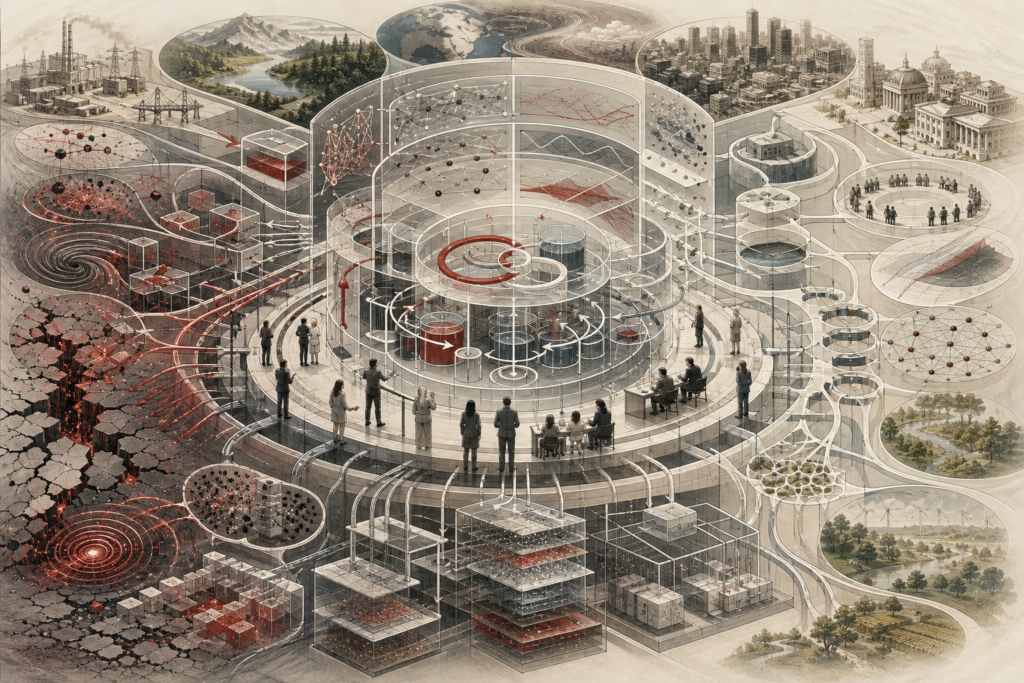
System Dynamics Modeling: Feedback Loops, Stocks, and Flows
System dynamics modeling is a formal method for analyzing complex systems by representing how stocks, flows, feedback loops, and time delays interact to generate behavior across time. Developed by Jay W. Forrester in the mid-twentieth century, the method emerged as a response to static and reductionist approaches that could not adequately explain recurring patterns such as growth, overshoot, oscillation, stagnation, and collapse. This article explains the origins of system dynamics, clarifies the role of causal loop diagrams and stock-and-flow structures, and shows how reinforcing and balancing feedback loops combine with delays to shape long-run system behavior. It also emphasizes the method’s importance for policy analysis, sustainability research, and strategic reasoning under complexity. In systems modeling, system dynamics matters because it reveals that many important patterns are generated endogenously by system structure rather than by external shocks alone.