Resource Depletion and Regeneration
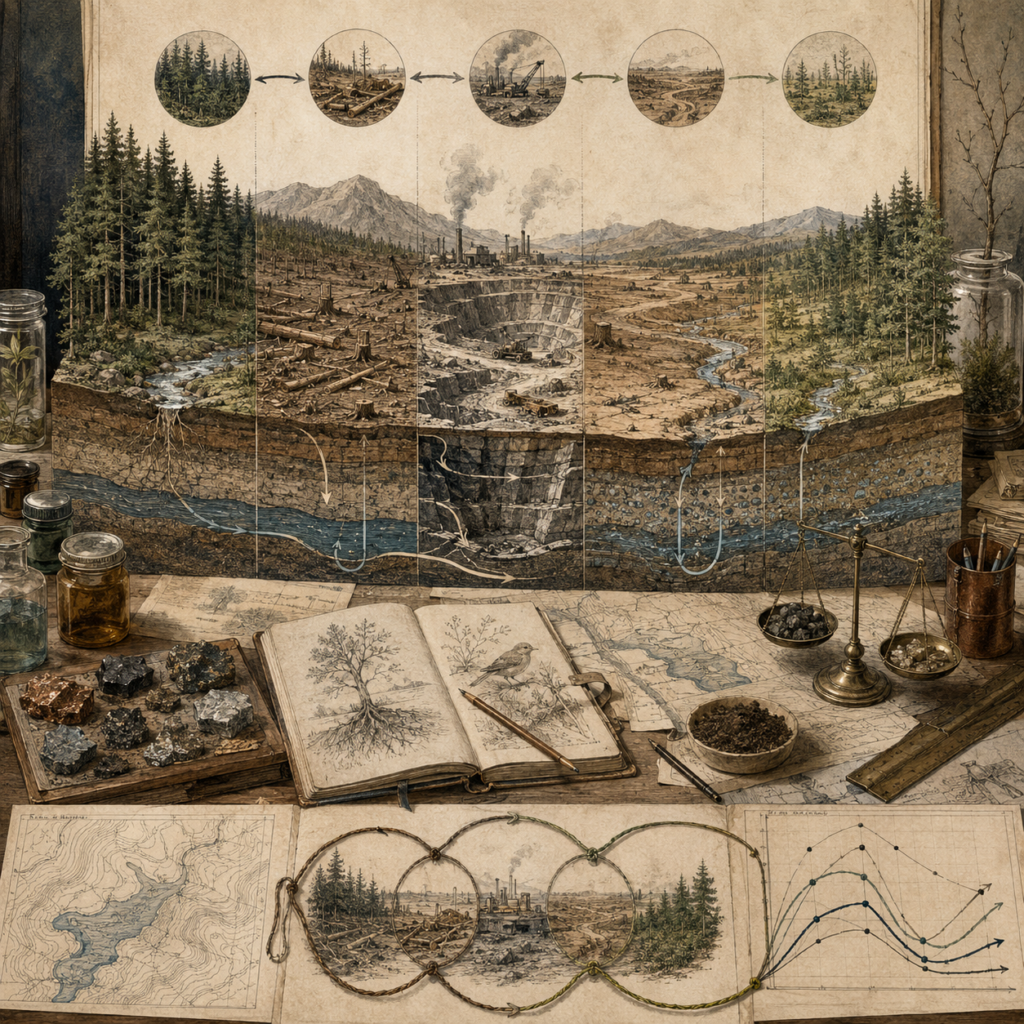
Resource Depletion and Regeneration shows how calculus turns extraction, renewal, scarcity, recovery, and sustainability into a structured systems model. This article introduces resource dynamics for calculus-based systems modeling, including stocks and flows, renewable and nonrenewable resources, depletion rates, regeneration functions, logistic recovery, carrying capacity, harvest pressure, maximum sustainable yield, overshoot, collapse thresholds, groundwater, forests, fisheries, soils, minerals, substitution, efficiency, rebound, common-pool governance, calibration, uncertainty, sensitivity, and responsible interpretation. It shows why renewable does not mean unlimited and why sustainability depends on rates, thresholds, measurement, and governance. In computational workflows, resource depletion audits support parameter records, harvest scenarios, threshold recovery checks, sustainable-yield calculations, nonrenewable drawdown, SQL governance registries, Haskell typed resource records, calculator scripts, Canvas artifacts, and generated reports. The article emphasizes documenting stock definitions, regeneration assumptions, extraction records, thresholds, uncertainty, governance context, and claim boundaries.