Philosophy

Philosophy examines fundamental questions about reality, knowledge, ethics, justice, meaning, selfhood, and the good life. In interdisciplinary fields such as sustainability, governance, psychology, technology, and civilizational analysis, philosophical inquiry provides the deeper conceptual foundations through which human beings interpret truth, obligation, purpose, and order.

This field brings together traditions of reasoning that ask not only what works, but what ought to be valued, how human beings should live, what can be known, and how societies should be organized. It includes moral and political thought, metaphysical reflection, wisdom traditions, and competing accounts of freedom, virtue, reason, and human flourishing across cultures and historical periods.

Philosophy plays a central role in shaping intellectual life, public argument, institutional design, and ethical judgment. By clarifying first principles and exposing deeper assumptions, it helps individuals and societies reason more carefully about justice, responsibility, knowledge, and the long-term purposes that guide collective life.

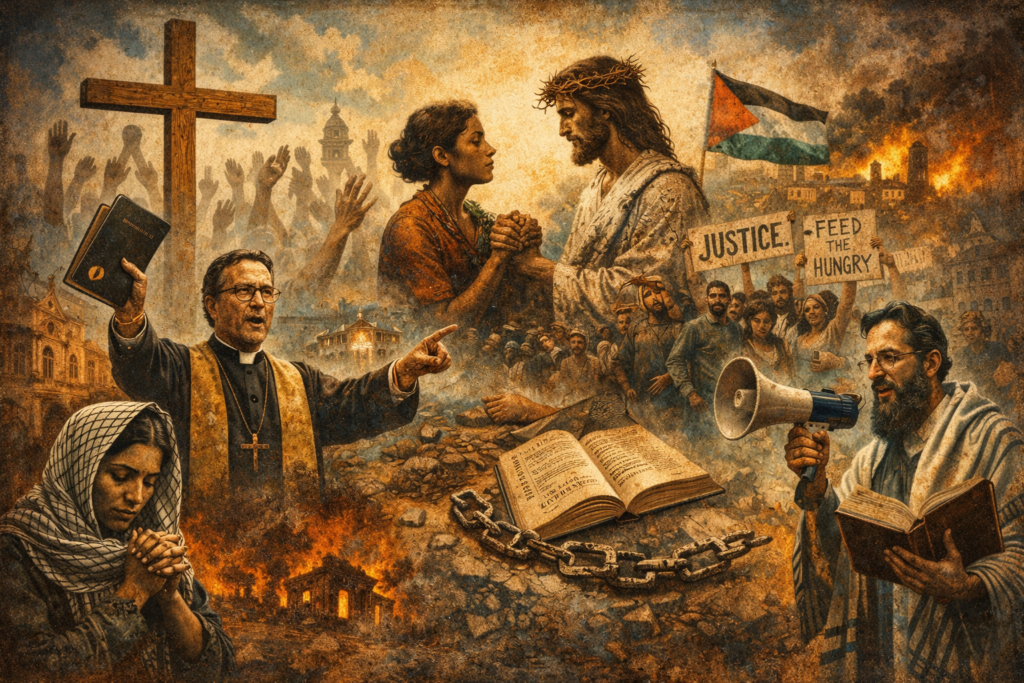
Editorial-style image depicting liberation theology through Christian, Jewish, and Muslim figures, protest, scripture, solidarity, poverty, and collective struggles for justice

Liberation Theology: Faith, Justice, and the Preferential Option for the Poor

Liberation theology is one of the most important and contested developments in modern religious thought. It is not a single doctrine but a broad and internally diverse family of theological approaches that read faith through the realities of poverty, oppression, exclusion, violence, and structural injustice. At its core lies a defining theological and political question: what does it mean to speak of God, salvation, church, discipleship, and moral responsibility in a world marked by exploitation, empire, racial domination, occupation, and the suffering of the poor? This content pillar explores liberation theology from its Latin American Catholic origins through Black, womanist, feminist, mujerista, Palestinian, Dalit, Indigenous, Jewish, Muslim, and interfaith liberationist traditions, showing how faith becomes a site of struggle over justice, anti-imperial resistance, social sin, and solidarity with the oppressed.
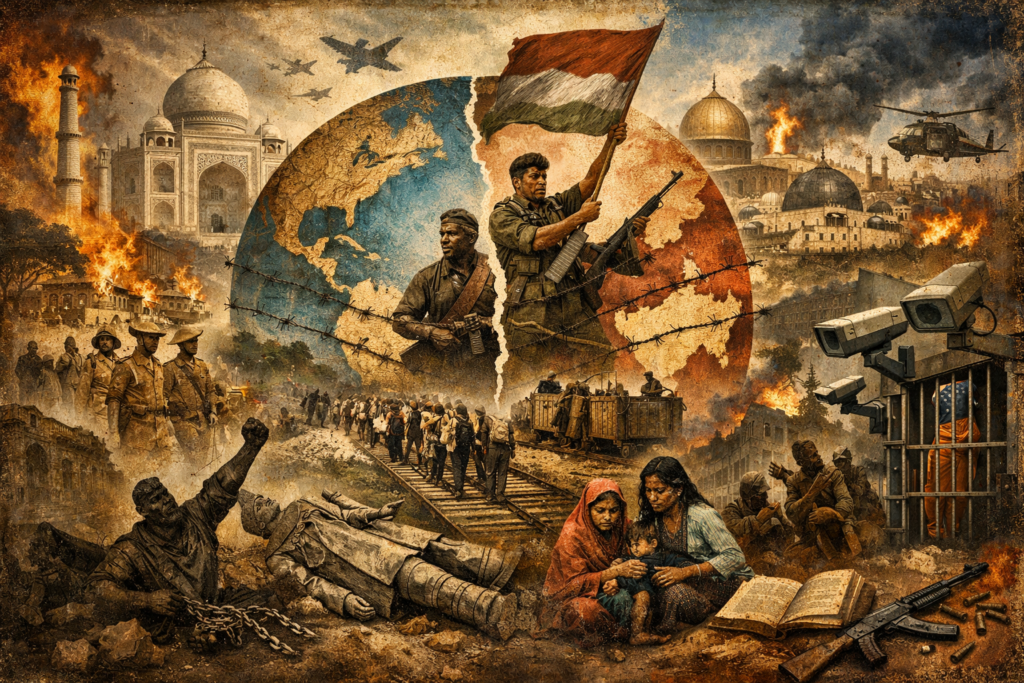
Editorial-style image depicting anti-colonial and decolonial thought through liberation fighters, partition, war, displacement, surveillance, and the fractured political geography of empire

Liberation, Anti-Colonial, and Decolonial Thought: Empire, Freedom, and the Struggle to Rebuild the Political World

Liberation, anti-colonial, and decolonial thought form one of the central constellations of political philosophy. This field is not a single doctrine but a broad and internally diverse body of reflection organized around the historical experiences of conquest, occupation, enslavement, empire, settler colonialism, racial domination, extractive rule, epistemic violence, and the long struggle to reclaim land, dignity, self-determination, and historical agency. At its core lies a defining political question: how should freedom, sovereignty, justice, and political community be rethought in a world shaped by colonial domination and by the unfinished aftermath of empire? This content pillar explores that question across Africa, South Asia, Indochina, Indonesia, Palestine, West Asia, Latin America, and Indigenous worlds, connecting anti-colonial struggle to partition, occupation, proxy rule, neocolonial dependency, surveillance, and the enduring political structures of empire.

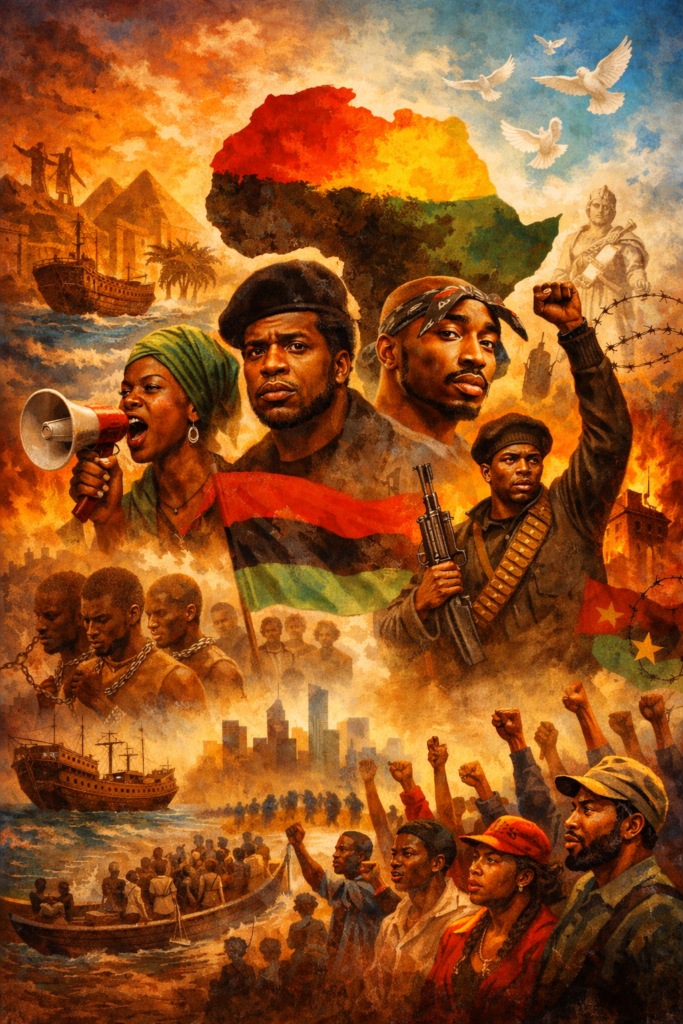
Editorial-style image depicting Pan-African and Black political thought through symbolic figures of resistance, the African continent, anti-colonial struggle, diaspora memory, and collective movements for liberation and justice

Pan-African and Black Political Thought: Diaspora, Liberation, Race, and the Struggle for Political Freedom

Pan-African and Black political thought form one of the central constellations of political philosophy. This field is not a single doctrine but a broad and internally diverse body of reflection organized around the historical experiences of slavery, colonialism, racial hierarchy, diaspora, empire, dispossession, and the struggle for liberation. At its core lies a defining political question: how should freedom, equality, community, sovereignty, and justice be rethought in a world shaped by anti-Blackness, colonial domination, racial capitalism, and the violent denial of Black humanity? This content pillar explores that question from slavery, abolition, and nineteenth-century Black political struggle through Pan-Africanism, anti-colonial thought, Negritude, Black radicalism, Black Marxism, Black feminist thought, Africana philosophy, and contemporary debates over reparations, policing, migration, citizenship, and decolonial justice.

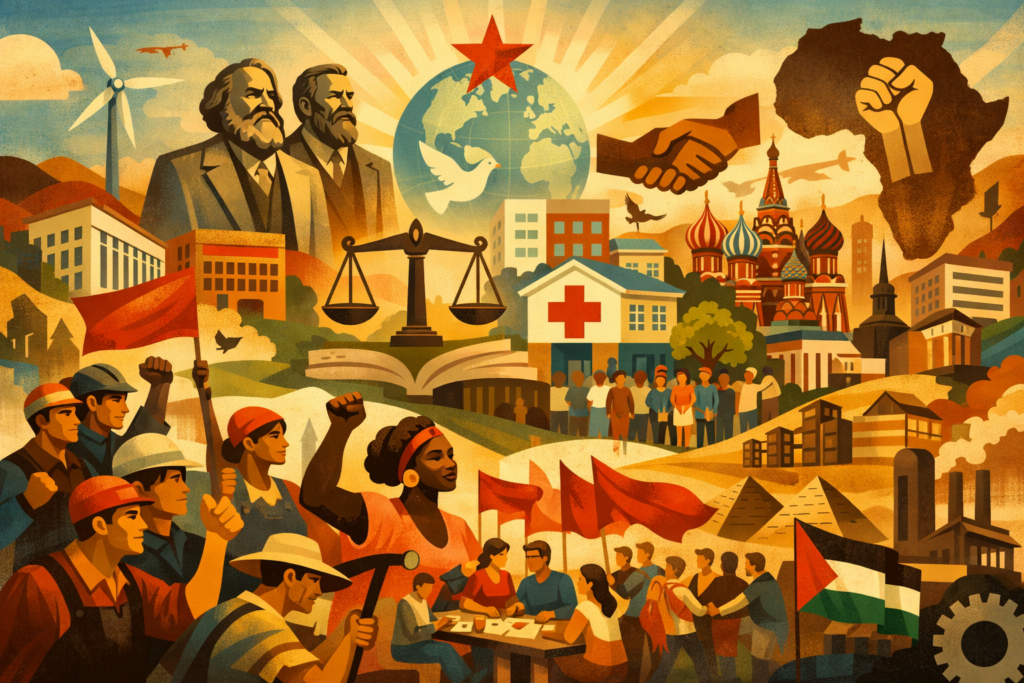
Editorial-style political image showing workers, public institutions, symbolic global solidarity, and collective civic life representing socialism and socialist thought across international traditions

Socialism and Socialist Thought: Equality, Collective Power, and the Struggle to Transform Social Order

Socialism and socialist thought form one of the central constellations of political philosophy. Socialism is not a single doctrine but a broad and internally contested family of traditions organized around critiques of capitalism, opposition to domination and exploitation, and the aspiration to build social orders grounded in equality, solidarity, democratic power, and the subordination of economic life to human need rather than private accumulation. At its core lies a distinctive political question: how should economic and social institutions be organized if freedom, equality, and human flourishing are to be shared rather than reserved for the owners of property, inherited privilege, or concentrated power? This content pillar explores socialism from early socialist critique and Marxist foundations through democratic socialism, social democracy, revolutionary socialism, libertarian socialism, Maoism, Eastern European experiments, African socialism, Latin American and Cuban socialism, Arab socialism, Palestinian left traditions, anti-colonial and feminist socialism, eco-socialism, and contemporary debates over planning, labor, care, ecology, and democratic ownership.

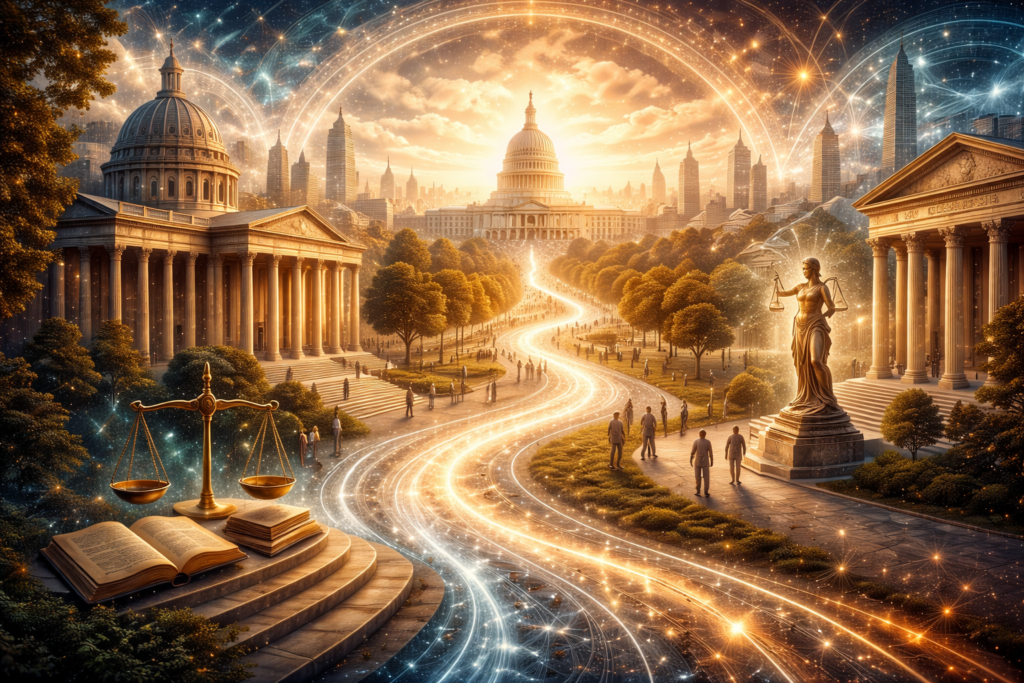
Editorial-style image of liberalism and its traditions, showing classical civic architecture, the U.S. Capitol, scales of justice, books, a luminous public boulevard, and a symbolic city of law, rights, and political order

Liberalism and Its Traditions: Liberty, Rights, Equality, and the Justification of Political Order

Liberalism and its traditions form one of the central constellations of political philosophy. Liberalism is not a single, fixed doctrine but a broad and internally contested family of views organized around liberty, individual standing, moral equality, rights, toleration, consent, constitutional order, and the justification of political power. At its core lies a distinctive political question: under what conditions can persons who are free and equal live together under institutions that are legitimate, just, and respectful of deep human plurality? This content pillar explores liberalism from its Enlightenment foundations and classical formulations through social liberalism, welfare liberalism, liberal egalitarianism, and neoliberal governance, while also engaging socialist, communitarian, feminist, Black, anti-colonial, and postcolonial critiques. The result is a long-range inquiry into freedom, property, markets, equality, legitimacy, public reason, and the unfinished struggle over how political order should be justified in societies marked by inequality, pluralism, and historical injustice.

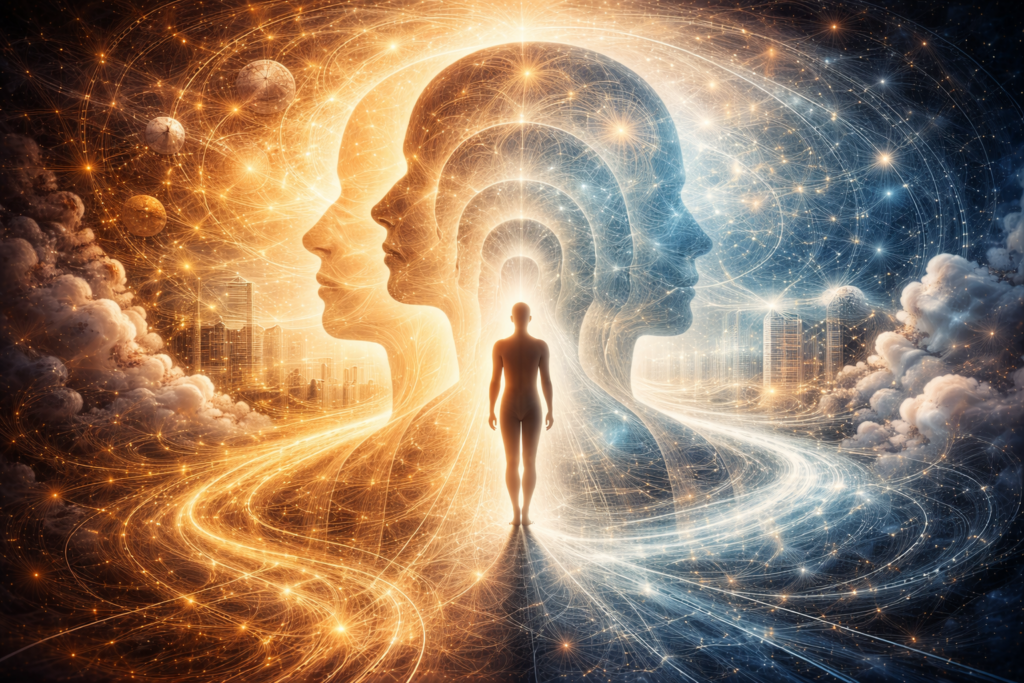
Abstract metaphysical image of a central human figure surrounded by layered translucent faces, luminous pathways, and interconnected patterns representing selfhood, memory, continuity, and personal identity

Selfhood and Personal Identity: Personhood, Persistence, and the Question of Who We Are

Selfhood and personal identity form one of the central constellations of metaphysics. The problem is not merely whether persons exist, but what kind of beings persons are, what makes someone the same person over time, how selfhood relates to consciousness and embodiment, and whether identity is grounded in memory, psychology, bodily continuity, narrative, agency, or some deeper structure of persistence. To ask about personal identity is to ask what it means to remain oneself through change, what survives across time, and what, if anything, makes a human life count as the life of one continuing subject. This content pillar explores those questions across classical, early modern, and contemporary philosophy, while also connecting metaphysical debates to ethics, law, medicine, cognitive science, trauma, aging, social recognition, and the lived conditions under which a life remains intelligibly one’s own.

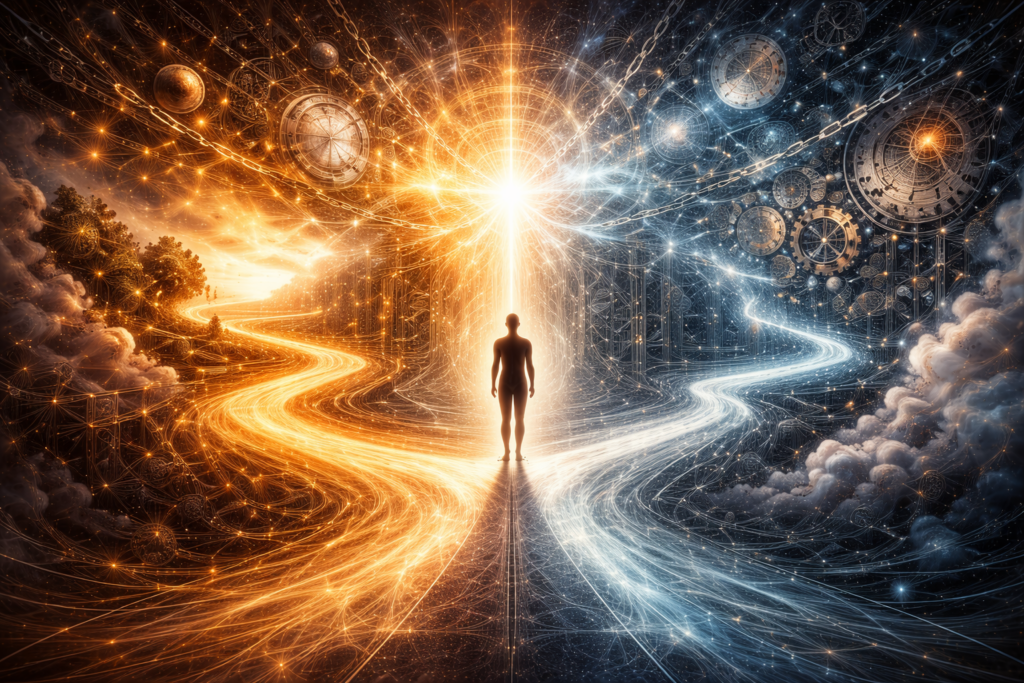
Abstract metaphysical image of a human figure standing between two diverging luminous paths, with radiant and mechanical cosmic structures symbolizing freedom, agency, and determinism

Freedom, Agency, and Determinism: Free Will, Action, and Responsibility in a Causally Ordered World

Freedom, agency, and determinism form one of the central constellations of metaphysics. The problem is not merely whether human beings act, choose, and deliberate, but whether those acts, choices, and deliberations can be genuinely free in a world shaped by causal order, natural law, character, history, and circumstance. To ask whether we are free is to ask whether agency is real, whether responsibility is justified, whether persons are authors of what they do in any meaningful sense, and whether action can be more than the unfolding of forces whose deeper sources lie beyond conscious control. This content pillar explores those questions across classical, medieval, modern, and contemporary philosophy, while also connecting metaphysical debates to action theory, law, politics, psychology, neuroscience, coercion, social structure, and the conditions under which human beings can meaningfully be held answerable for what they do.

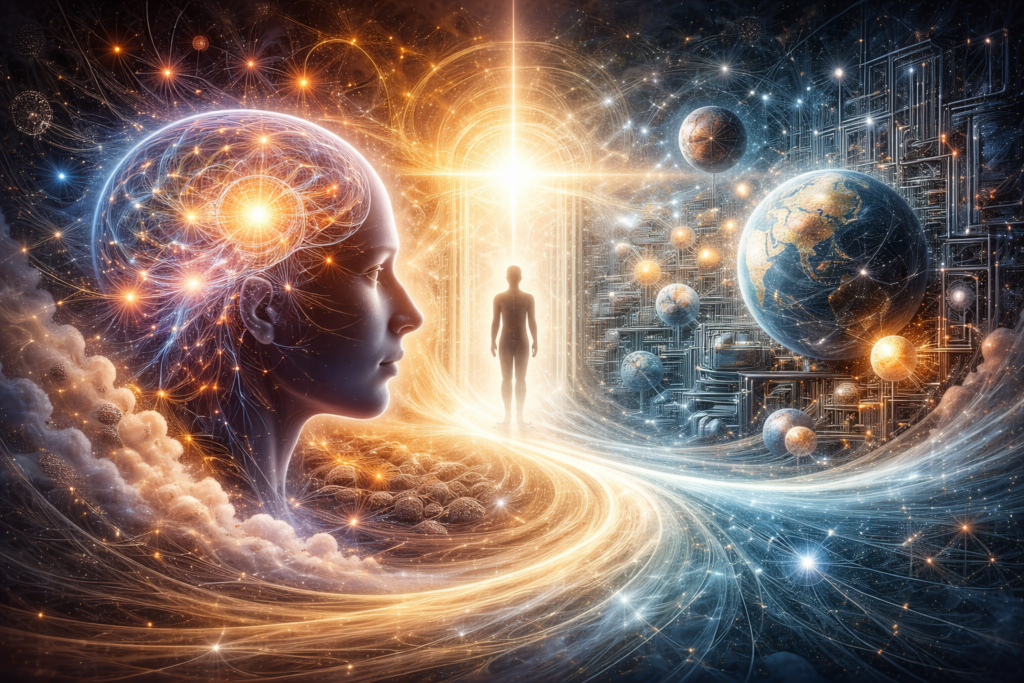
Abstract metaphysical image showing a luminous human profile, radiant neural patterns, a central human figure, and a technological cosmic landscape representing mind, matter, and consciousness

Mind, Matter, and Consciousness: Mental Life, Physical Reality, and the Problem of Experience

Mind, matter, and consciousness form one of the most enduring and difficult constellations in metaphysics. The problem is not simply whether minds exist, but how mental life relates to physical reality, whether consciousness can be explained in material terms, how thought is possible in a world of matter, and whether subjective experience discloses a dimension of reality that resists reduction to physical description. At its core lies a defining philosophical question: how does subjective life fit into the structure of reality? This content pillar explores dualism, materialism, physicalism, idealism, consciousness, qualia, intentionality, mental representation, mental causation, embodiment, personal identity, cognitive science, and artificial intelligence, showing why the relation between mind and world remains one of the deepest fault lines in metaphysics.

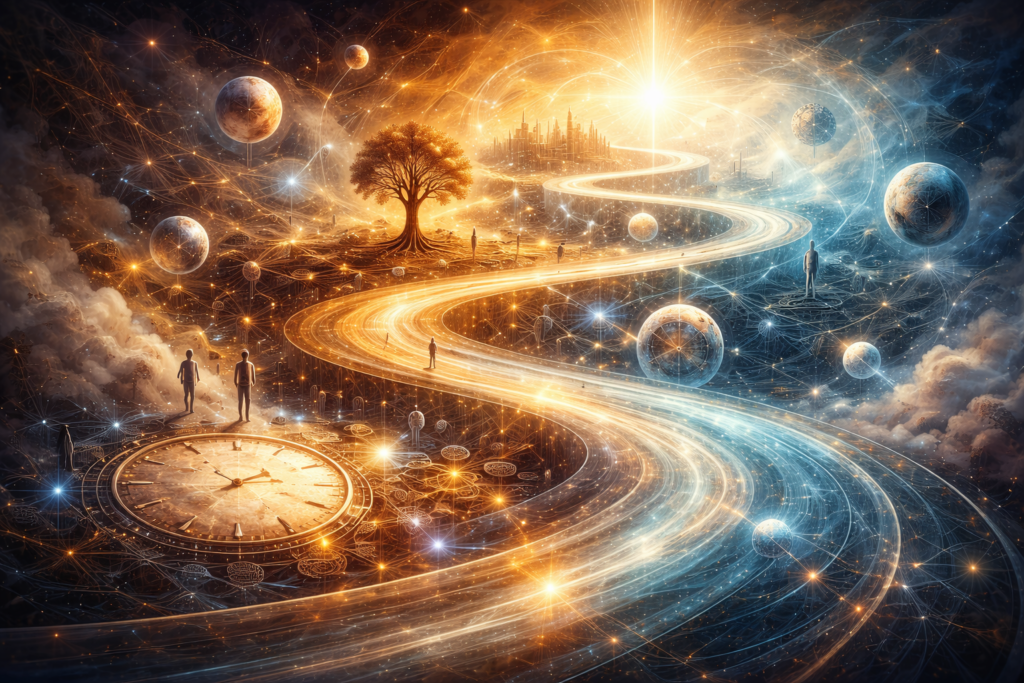
Abstract cosmic landscape with a flowing luminous path, celestial spheres, human figures, and radiant structures representing time, change, and causation

Time, Change, and Causation: Temporality, Becoming, and the Order of Events

Time, change, and causation form one of the central constellations of metaphysics. Time concerns succession, duration, persistence, and the ordering of past, present, and future. Change concerns alteration, motion, development, and transformation. Causation concerns the relations through which events, processes, states, and actions bring about further events, processes, states, and actions. Taken together, these concepts shape some of the deepest philosophical questions about reality: whether the world genuinely unfolds, whether becoming is real, whether the present is metaphysically privileged, whether causes must precede their effects, and how explanation is possible in a changing world. This content pillar explores those questions across classical, medieval, modern, and contemporary philosophy, while also connecting metaphysical debates to physics, agency, law, history, and systems thinking.

Scroll to Top