
Mythology

Mythology examines the sacred narratives, cosmologies, archetypes, heroic traditions, and symbolic worlds through which cultures have interpreted origins, order, conflict, destiny, and the relationship between human life and the larger cosmos. In the history of ideas, mythology has served not simply as early storytelling, but as a foundational mode of meaning-making through which societies have expressed moral vision, collective memory, metaphysical imagination, and the structure of reality itself.

This category explores myth as a civilizational form that links narrative, ritual, symbolism, and cultural identity across time. It considers how mythic traditions explain the creation of the world, the nature of divine and human power, the role of fate and sacrifice, and the moral tensions embedded in stories of gods, heroes, ancestors, and sacred landscapes.

Mythology plays an important role in human inquiry because it reveals how societies imagine order, transmit values, and confront the enduring questions of suffering, death, transformation, and belonging. By engaging myth seriously, this category deepens understanding of symbolic thought, cultural memory, and the narrative structures through which civilizations have interpreted existence.

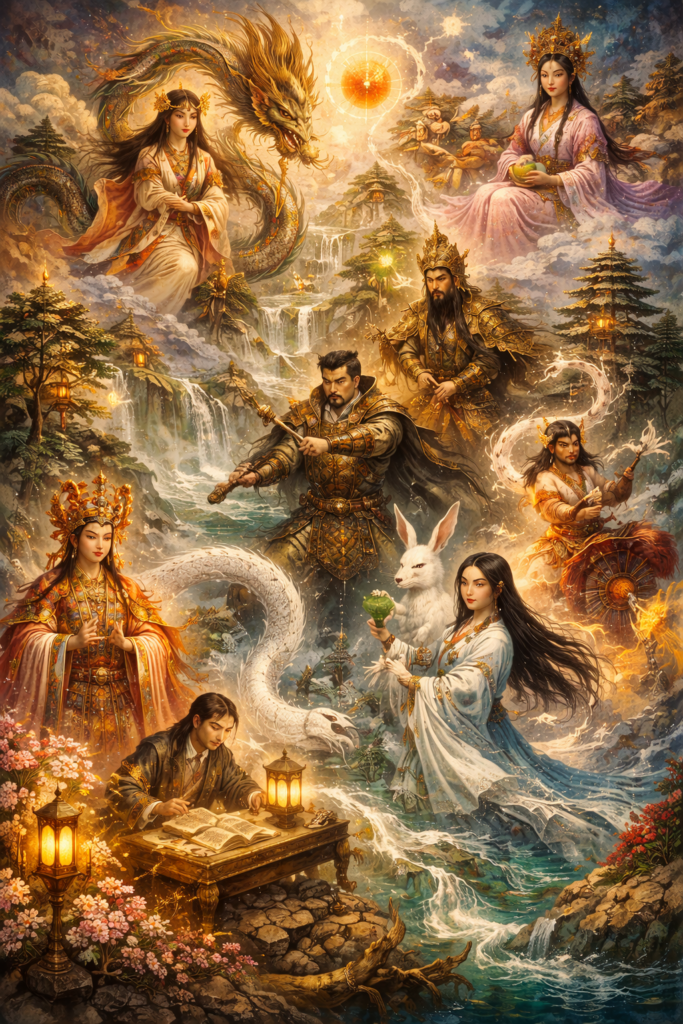
Digital painting inspired by Chinese myth and folklore featuring dragons, divine figures, legendary heroes, celestial imagery, waterfalls, sacred mountains, and supernatural beings in a richly detailed mythic landscape.

Chinese Myth, Folklore & Legend: Cosmos, Spirits, and the Sacred Imagination of Civilization

Chinese Myth, Folklore & Legend: Cosmos, Spirits, and the Sacred Imagination of Civilization explores a vast and internally diverse mythic archive in which cosmogony, culture heroes, sacred geography, dynastic memory, supernatural beings, ritual order, and popular religion intersect. From the Shanhaijing, Chuci, and Huainanzi to dragons, fox spirits, immortals, festival traditions, local cults, oral epics, and regional narrative worlds, this category examines how myth has shaped the symbolic, religious, and literary life of the Chinese world across classical texts, ritual practice, vernacular transmission, and visual culture.
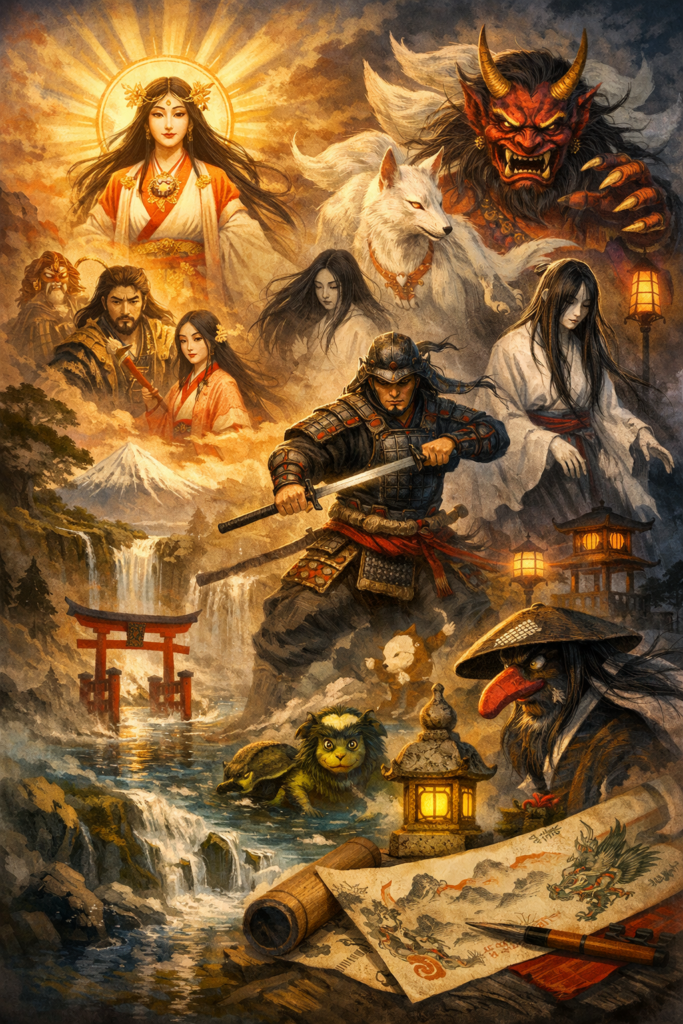
Digital painting of Japanese myth and folklore featuring Amaterasu, an oni, a fox spirit, ghosts, a samurai, a tengu, shrine gates, lanterns, waterfalls, and sacred landscape imagery.

Japanese Myth, Folklore & Legend: Kami, Sacred Place, and the Supernatural Imagination

Japanese Myth, Folklore & Legend: Kami, Sacred Place, and the Supernatural Imagination examines a richly layered narrative archive in which cosmogony, divine genealogy, shrine tradition, sacred geography, oral transmission, and supernatural presence converge. From the Kojiki and Nihon shoki to the Fudoki, ritual language, yōkai lore, ghost traditions, folktales, regional legend, and Ainu and Ryukyuan narrative worlds, this category explores how myth in Japan has been preserved, localized, performed, visualized, and continually reinterpreted across religious practice, literary culture, and living heritage.

Scroll to Top