Mythology

Mythology examines the sacred narratives, cosmologies, archetypes, heroic traditions, and symbolic worlds through which cultures have interpreted origins, order, conflict, destiny, and the relationship between human life and the larger cosmos. In the history of ideas, mythology has served not simply as early storytelling, but as a foundational mode of meaning-making through which societies have expressed moral vision, collective memory, metaphysical imagination, and the structure of reality itself.

This category explores myth as a civilizational form that links narrative, ritual, symbolism, and cultural identity across time. It considers how mythic traditions explain the creation of the world, the nature of divine and human power, the role of fate and sacrifice, and the moral tensions embedded in stories of gods, heroes, ancestors, and sacred landscapes.

Mythology plays an important role in human inquiry because it reveals how societies imagine order, transmit values, and confront the enduring questions of suffering, death, transformation, and belonging. By engaging myth seriously, this category deepens understanding of symbolic thought, cultural memory, and the narrative structures through which civilizations have interpreted existence.

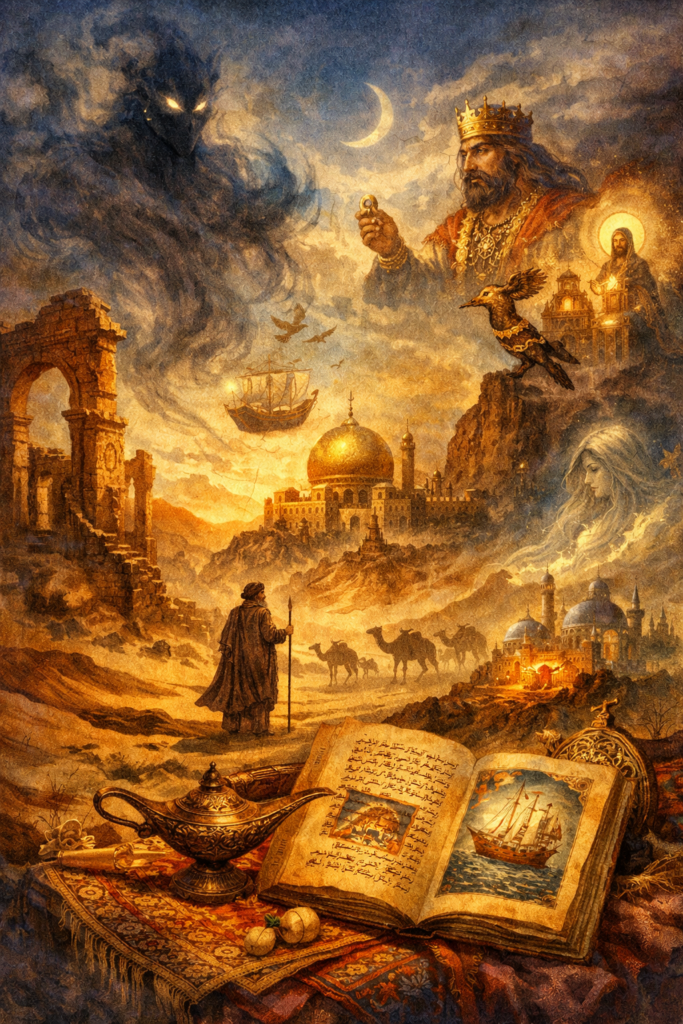
Editorial illustration inspired by Arabian and Levantine narrative traditions featuring desert ruins, sacred architecture, a jinn-like presence, legendary figures, manuscript imagery, caravans, and a charged mythic landscape.

Arabian & Levantine Myth, Folklore & Sacred Narrative: Sacred Worlds, Oral Tradition, and the Narrative Imagination of the Region

Arabian and Levantine myth, folklore, and sacred narrative preserve one of the most intricate story worlds of the premodern imagination: a world shaped by deserts and ruins, prophets and saints, jinn and miracles, shrines and cities, exile and hospitality, judgment and wonder. These traditions do not belong to a single canon. They survive instead across pre-Islamic poetry, Qurʾanic and post-Qurʾanic sacred narrative, Christian and Jewish storytelling, saint legends, pilgrimage memory, oral folklore, marvel literature, heroic romance, and local tales tied to sacred landscapes and everyday life. Arabian and Levantine storytelling returns again and again to holy places, haunted terrains, ruined peoples, prophetic warning, blessed persons, moral testing, and the enduring power of story to preserve meaning across conquest, displacement, and cultural change.
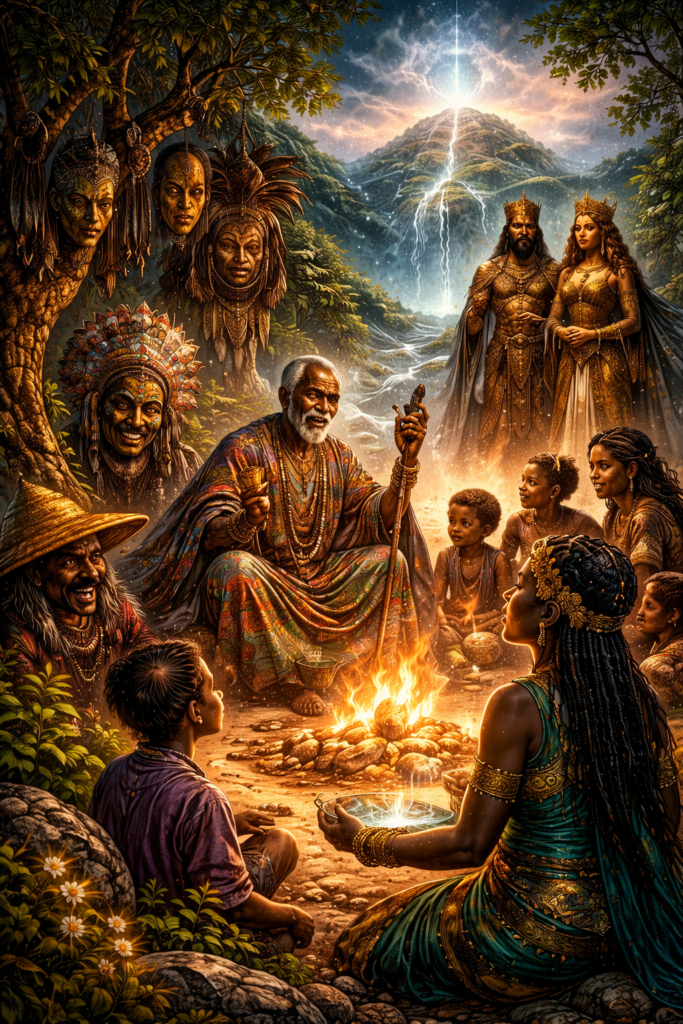
Digital painting inspired by African myth and sacred narrative featuring storytellers, spirit presences, sacred landscapes, royal symbolism, masks, and oral tradition motifs.

African Myth, Folklore & Sacred Narrative: Oral Tradition, Sacred Worlds, and Living Story

African Myth, Folklore & Sacred Narrative: Oral Tradition, Sacred Worlds, and Living Story examines a vast and internally diverse field of cultural memory in which creation, ancestry, trickster intelligence, sacred kingship, spirit worlds, ecological imagination, and ritual performance converge. From Anansi traditions and Yoruba sacred narratives to royal histories, masquerade worlds, epic memory, and regionally grounded sacred stories across the continent, this category explores how African myth and folklore have been preserved, enacted, transmitted, and continually renewed through oral tradition, performance, ceremony, and communal life.

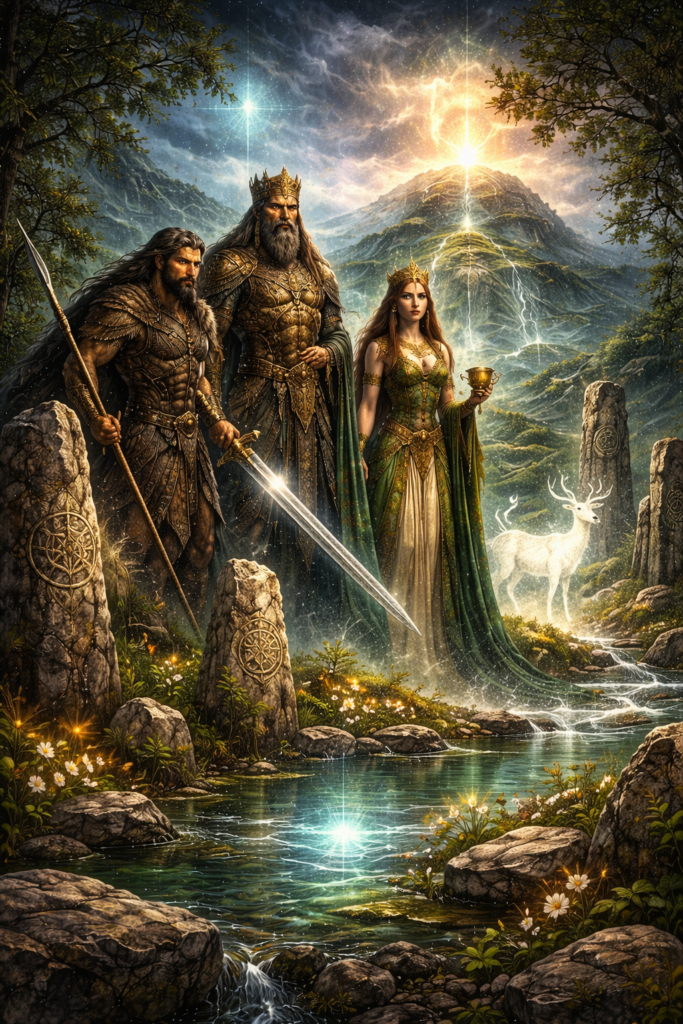
Digital painting inspired by Celtic mythology featuring heroic figures, sacred hills, standing stones, enchanted waters, and otherworldly landscapes.

Celtic Mythology: Sovereignty, Sacred Landscape, and the Otherworld Imagination

Celtic Mythology: Sovereignty, Sacred Landscape, and the Otherworld Imagination examines a richly layered mythic archive in which divine rule, heroic legend, enchanted crossings, poetic power, and place-bound memory converge. From the Táin Bó Cúailnge and Lebor Gabála Érenn to the Welsh tales later grouped as the Mabinogion, this category explores how Celtic myth was preserved, transformed, and continually reimagined across oral tradition, manuscript culture, sacred geography, and the enduring otherworldly imagination of the Celtic world.

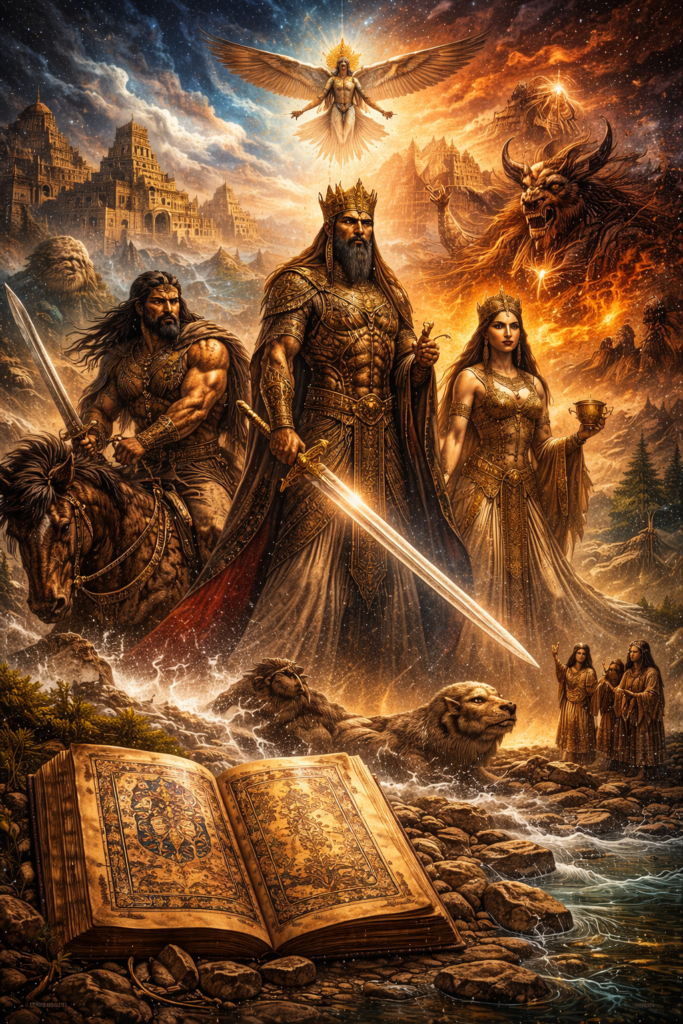
Digital painting inspired by Persian myth and epic featuring sacred kingship, heroic figures, mythic creatures, manuscript motifs, and an Iranian epic landscape.

Persian Myth, Folklore & Epic Tradition: Cosmic Struggle, Heroic Memory, and Sacred Imagination

Persian Myth, Folklore & Epic Tradition: Cosmic Struggle, Heroic Memory, and Sacred Imagination examines a richly layered archive in which creation, moral conflict, sacred order, dynastic memory, heroic struggle, and tragic grandeur converge. From the Avesta and the Bundahišn to Ferdowsi’s Shahnameh, popular epics, manuscript traditions, and oral storytelling, this category explores how Persian myth and folklore were preserved, transformed, and continually reimagined across Zoroastrian cosmology, epic memory, courtly literature, and the long cultural afterlives of Iranian narrative tradition.

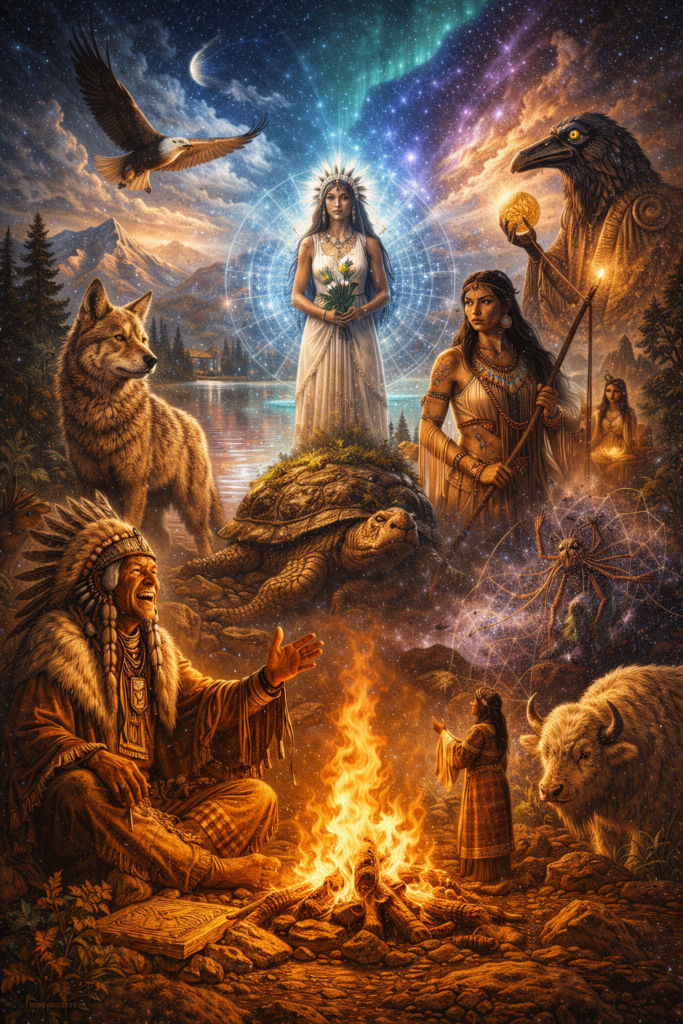
Digital painting inspired by Native American storytelling featuring sacred landscapes, symbolic animal beings, oral tradition motifs, celestial imagery, and a diversity of Indigenous narrative worlds.

Native American Myth, Folklore & Legend: Oral Tradition, Sacred Worlds, and the Stories of Many Nations

Native American Myth, Folklore & Legend: Oral Tradition, Sacred Worlds, and the Stories of Many Nations examines a vast and internally diverse field of Indigenous storytelling in which creation narratives, trickster traditions, sacred geography, animal powers, oral memory, and ceremonial knowledge converge. From Sky Woman and Coyote to Raven, Spider Woman, Corn Mother, Thunder Beings, and nation-specific story worlds across North America, this category explores how myth, folklore, and legend have been preserved, performed, protected, and continually renewed through oral tradition, land-based knowledge, community protocol, and cultural continuity.

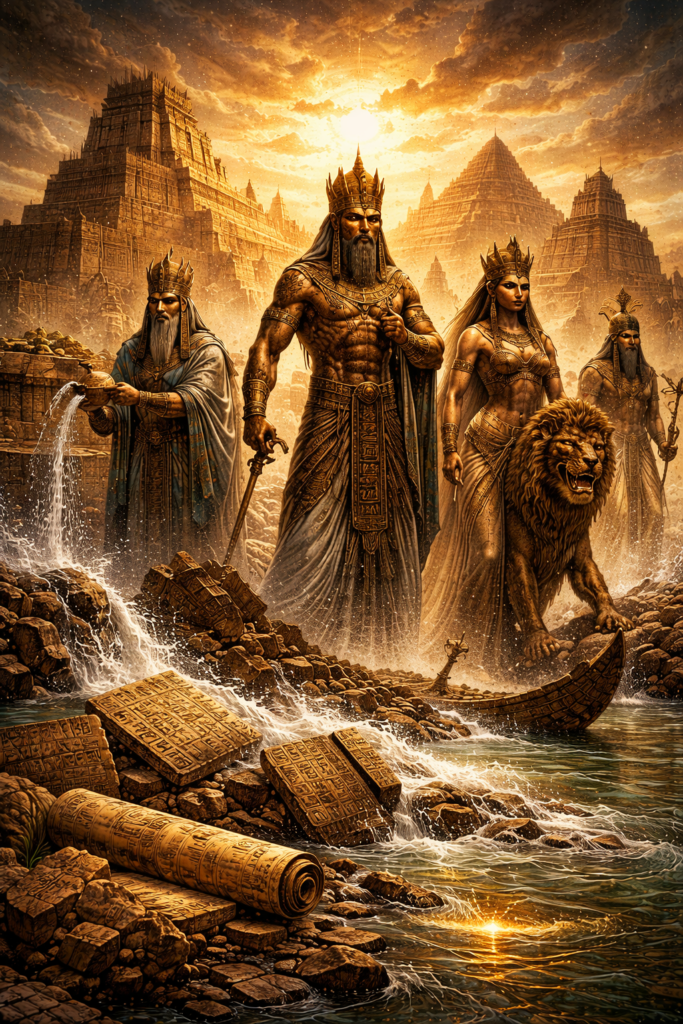
Digital painting inspired by Mesopotamian mythology featuring ancient city architecture, divine figures, cuneiform tablets, sacred rivers, and mythic symbols of kingship and catastrophe.

Mesopotamian Mythology: Gods, Cities, and the Fragile Order of Civilization

Mesopotamian Mythology: Gods, Cities, and the Fragile Order of Civilization examines one of the great mythic archives of the ancient world, where creation, divine plurality, sacred city life, flood memory, underworld descent, heroic striving, and cosmic instability converge. From Sumerian and Akkadian literary texts to the Epic of Gilgamesh, Atrahasis, the Enūma Eliš, and the wider cuneiform archive, this category explores how myth in Mesopotamia was written, transmitted, ritualized, and continually reshaped through temple culture, kingship, ecological danger, and the precarious maintenance of order.

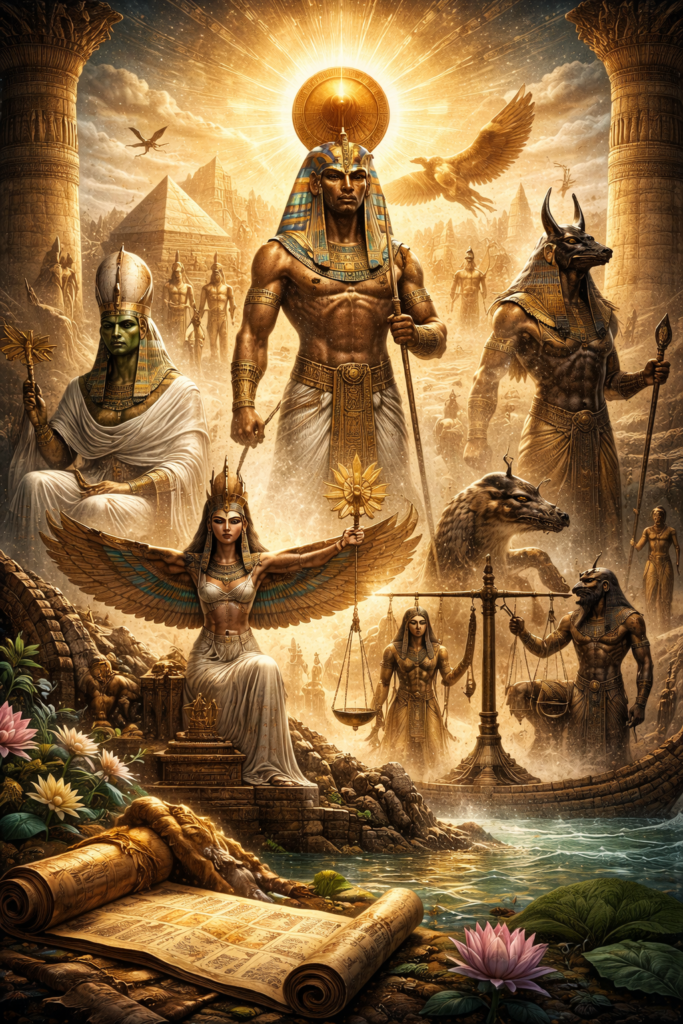
Digital painting inspired by Egyptian mythology featuring solar divinity, royal figures, temple columns, pyramids, winged goddess imagery, Anubis, the weighing of the heart, papyrus scrolls, and the Nile.

Egyptian Mythology: Divine Kingship, Cosmic Order, and the Sacred Imagination of the Nile

Egyptian Mythology: Divine Kingship, Cosmic Order, and the Sacred Imagination of the Nile examines one of the foundational mythic archives of the ancient world, where creation, solar renewal, divine rulership, funerary transformation, temple ritual, and sacred speech converge within a richly ordered religious cosmos. From the Pyramid Texts, Coffin Texts, and Book of the Dead to temple inscriptions, cult practice, and the wider symbolic worlds of Ra, Osiris, Isis, Horus, Seth, Hathor, Thoth, and Amun, this category explores how Egyptian myth was preserved, enacted, monumentalized, and continually renewed across ritual life, kingship, mortuary tradition, and sacred landscape.

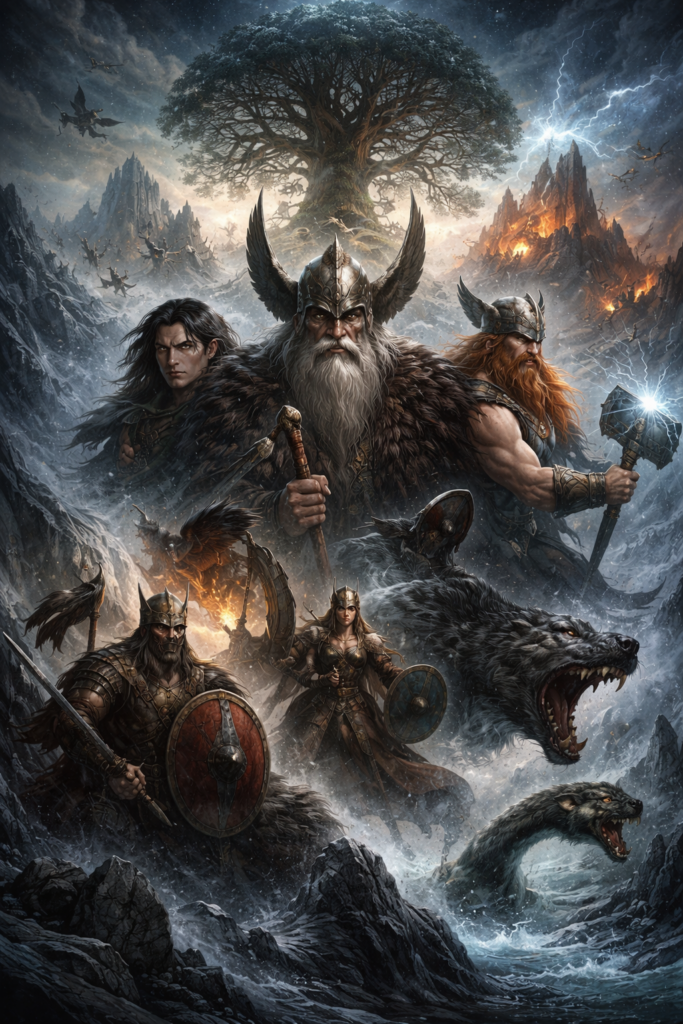
Digital painting inspired by Norse mythology featuring Odin, Thor, Loki, a shieldmaiden, wolves, a sea serpent, Yggdrasil, burning mountains, and an icy apocalyptic northern landscape.

Norse Mythology: Fate, Gods, and the Tragic Imagination of the North

Norse Mythology: Fate, Gods, and the Tragic Imagination of the North examines a mythic archive shaped by cosmogony, divine conflict, prophetic speech, heroic memory, monstrous alterity, and apocalyptic expectation. From the Poetic Edda, Snorri Sturluson’s Prose Edda, and saga literature to manuscript culture, skaldic tradition, and the heroic cycles of the North, this category explores how Norse myth was preserved, reordered, and transmitted through medieval textualization while retaining a distinctive vision of fate, wisdom, violence, kinship, and world-ending doom.

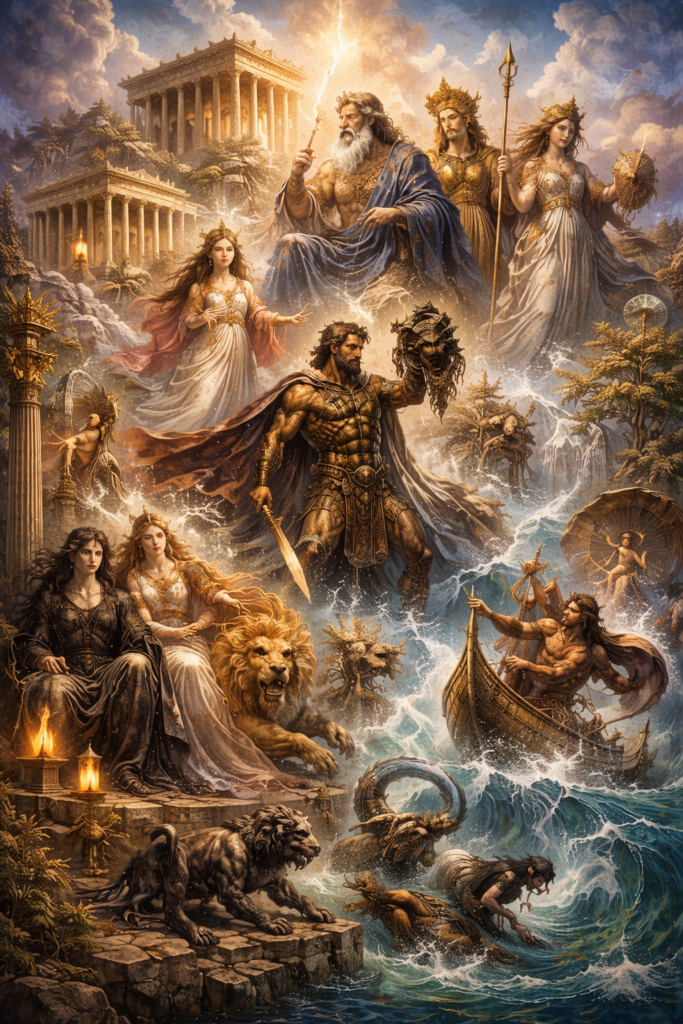
Digital painting inspired by Greek and Roman mythology featuring Olympian gods, heroic figures, monsters, temples, storm-lit skies, and a mythic Mediterranean seascape.

Greek & Roman Mythology: Gods, Heroes, and the Sacred Imagination of the Ancient Mediterranean

Greek & Roman Mythology: Gods, Heroes, and the Sacred Imagination of the Ancient Mediterranean examines one of the foundational mythic archives of the ancient world, where cosmogony, divine genealogy, heroic legend, sacred geography, ritual practice, civic identity, and political memory converge. From Homer and Hesiod to the Homeric Hymns, Apollodorus, Pausanias, Virgil, and Ovid, this category explores how Greek and Roman myth was composed, transmitted, ritualized, adapted, and monumentalized across epic, tragedy, cult, art, and imperial imagination.

Scroll to Top