The Law of the Sea and the United Nations Convention on the Law of the Sea (UNCLOS)
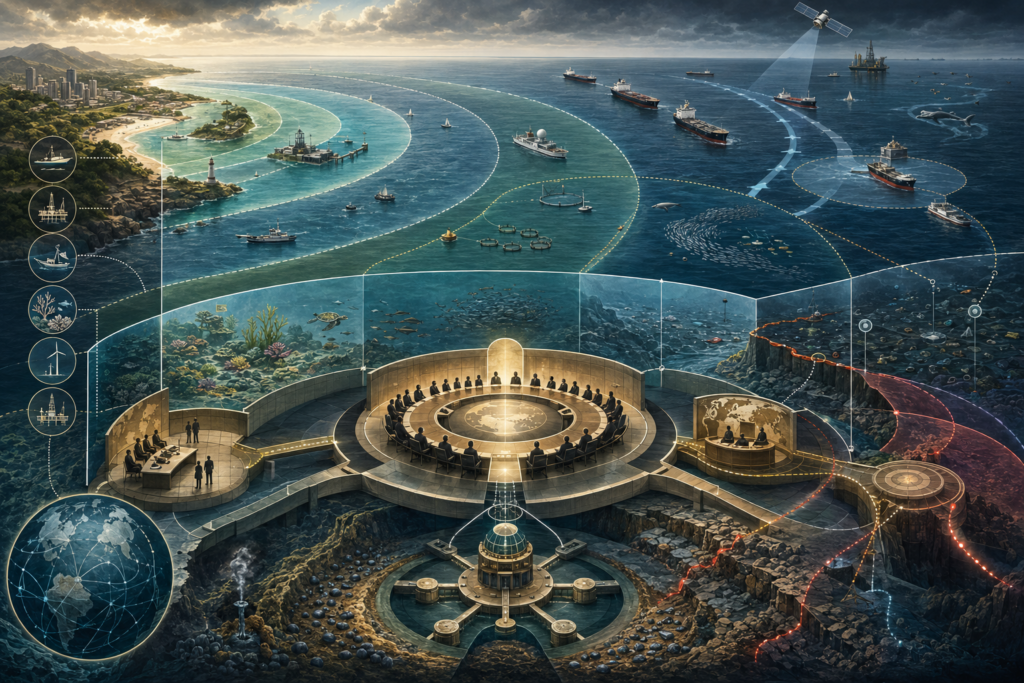
The law of the sea establishes the legal architecture for governing the world’s oceans. Largely codified in the United Nations Convention on the Law of the Sea, UNCLOS defines maritime zones, coastal-state jurisdiction, navigation rights, high-seas freedoms, continental shelf claims, deep seabed resources, marine environmental protection, and dispute settlement. This article explains how modern ocean law emerged from earlier debates over freedom of the seas and coastal sovereignty, how UNCLOS structures territorial seas, contiguous zones, exclusive economic zones, continental shelves, and the high seas, and why the deep seabed is treated as part of the common heritage of mankind. It also examines contemporary challenges in ocean governance, including fisheries, biodiversity protection, maritime boundary disputes, seabed mining, pollution, and sustainable stewardship of marine ecosystems.