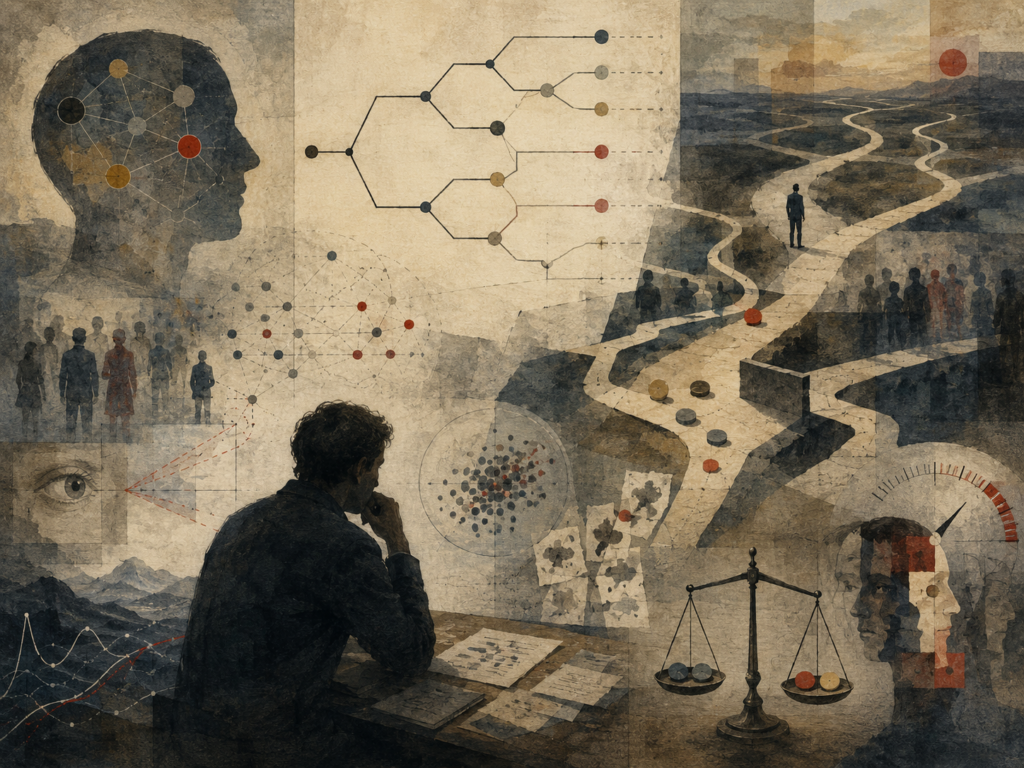
Decision Science and Systems Modeling: How to Model Decisions in Dynamic Systems
Decision Science and Systems Modeling examines how structured choice frameworks and formal system representation work together to improve decisions in complex, dynamic environments. The article argues that decisions cannot be understood as isolated acts because they enter systems shaped by feedback loops, delays, nonlinear effects, and adaptive responses that alter outcomes over time. It develops this through the foundations of systems modeling, the link between decisions and system behavior, feedback and delay dynamics, scenario analysis, robust decision-making, behavioral limits in model use, and system-specific mathematical and computational workflows. The article emphasizes that stronger decision-making depends not only on evaluating options well, but on modeling the evolving structures within which those options operate, so intervention can be judged in relation to accumulation, interaction, and system response rather than static assumptions alone.