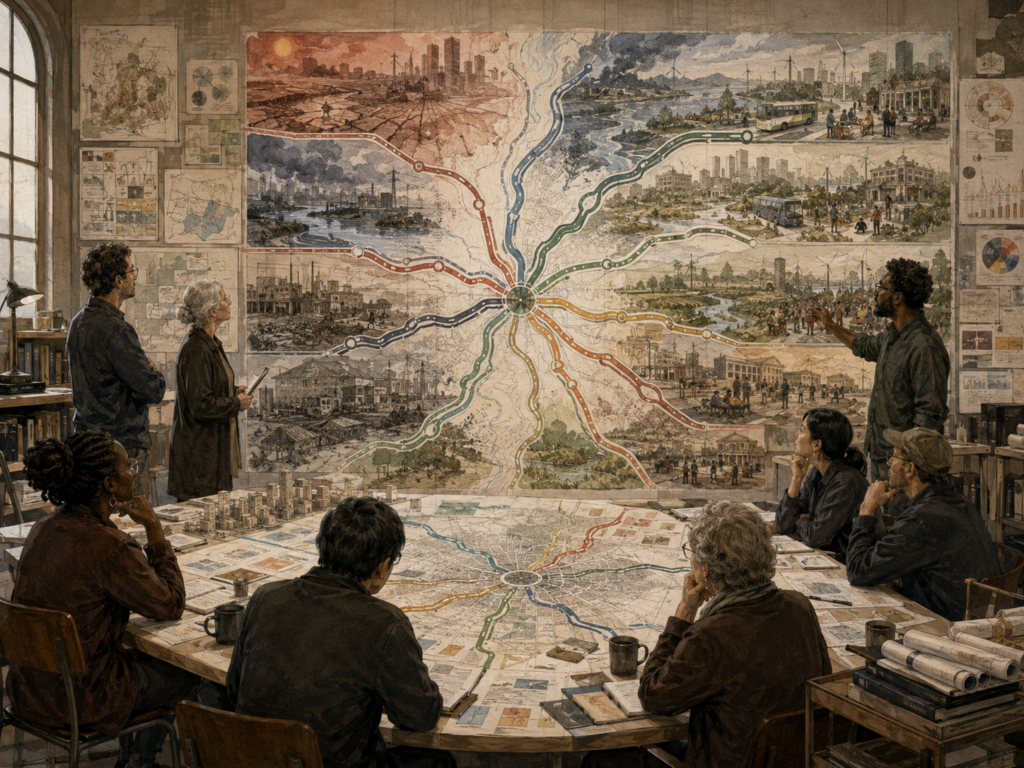
Trend Analysis and Megatrends: Identifying Patterns of Change in Complex Systems
Trend Analysis and Megatrends explains how futures thinking distinguishes between observable patterns of change and larger structuring forces that reshape multiple systems over time. The article argues that the real challenge is not simply noticing movement, but determining whether a pattern is temporary or durable, local or systemic, reversible or structural. It develops this through the distinction between trends and megatrends, the role of interaction across complex systems, uncertainty, weak signals, second-order effects, institutional framing, and the limits of treating visible momentum as destiny. The article emphasizes that megatrends are not just large trends, but long-wave conditions that alter the environment in which institutions, infrastructures, and markets operate.