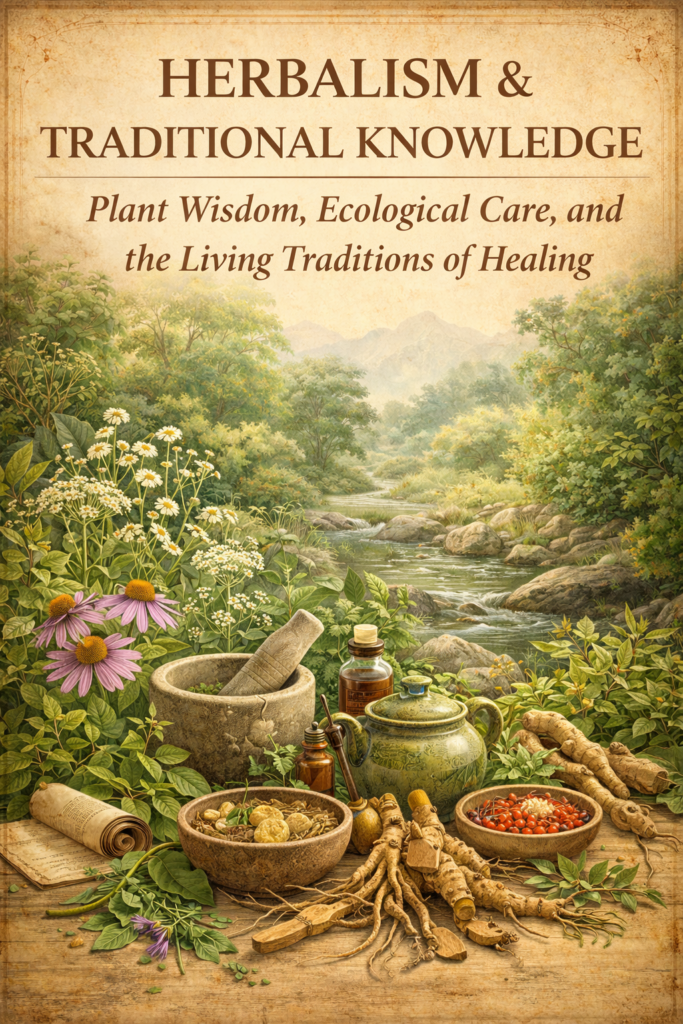
Herbalism & Traditional Knowledge: Plant Wisdom, Ecological Care, and the Living Traditions of Healing
Herbalism & Traditional Knowledge: Plant Wisdom, Ecological Care, and the Living Traditions of Healing explores one of the oldest and most enduring forms of healing knowledge, where medicinal plants, ecological familiarity, preparation, transmission, and care converge. From ethnobotany and materia medica to conservation, safety, pharmacology, and Indigenous and local knowledge systems, this category examines how plant-based healing has been cultivated, preserved, and interpreted across generations and living environments.