Author name: Tariq Ahmad

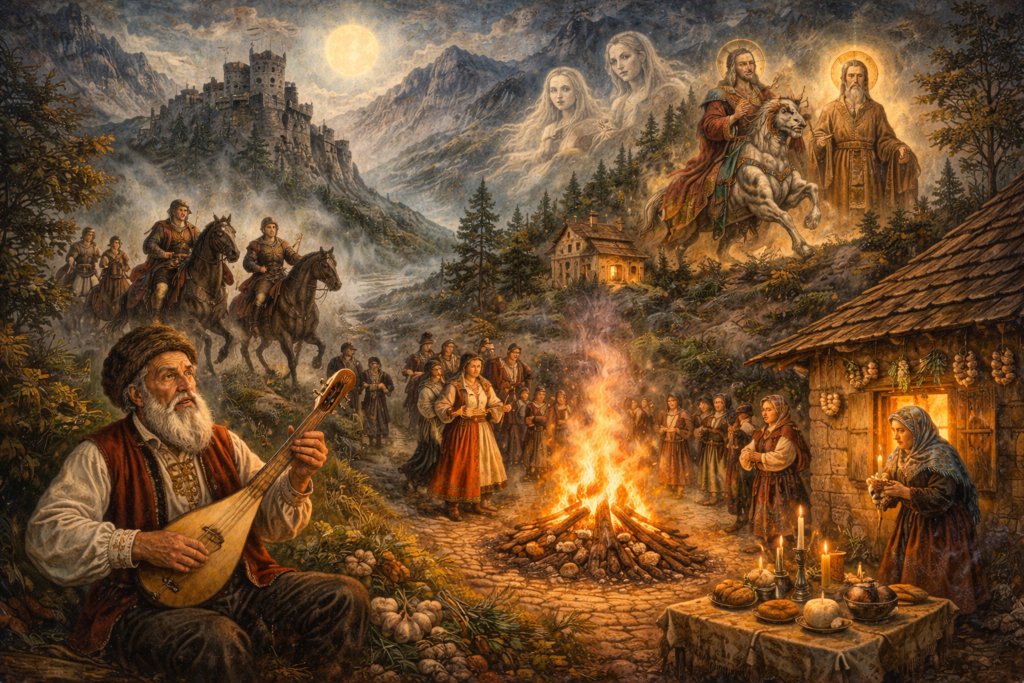
Editorial illustration of South Slavic mythic and folkloric worlds featuring a guslar with a stringed instrument, heroic riders in the Balkan mountains, village ritual around a fire, candlelit household devotion, saintly figures above a mountain monastery, and spectral female spirits in the mist

South Slavic Myth, Epic, and Folklore: Heroic Memory, Sacred Tradition, and the Moral Imagination of the Balkans

South Slavic myth, epic, and folklore preserve one of Europe’s richest narrative worlds: a world of heroic song, sacred mountains, saints, vampires, vila, outlaw memory, women’s lament, seasonal ritual, and the long moral pressure of kinship, empire, and survival. Shaped by pre-Christian Slavic inheritances, Orthodox and Catholic sacred traditions, Ottoman and Muslim frontier worlds, village custom, pastoral life, and oral performance, these traditions reveal how Balkan communities imagined nature, fate, honor, supernatural danger, communal obligation, and the burden of historical memory. This article explores South Slavic folklore in its full civilizational range, from ancient symbolic survivals and guslar epic to household ritual, healing practice, sacred geography, confessional contact zones, and the literary and political afterlives of oral tradition, showing how myth, legend, and song became enduring vehicles of moral imagination across the Balkans.
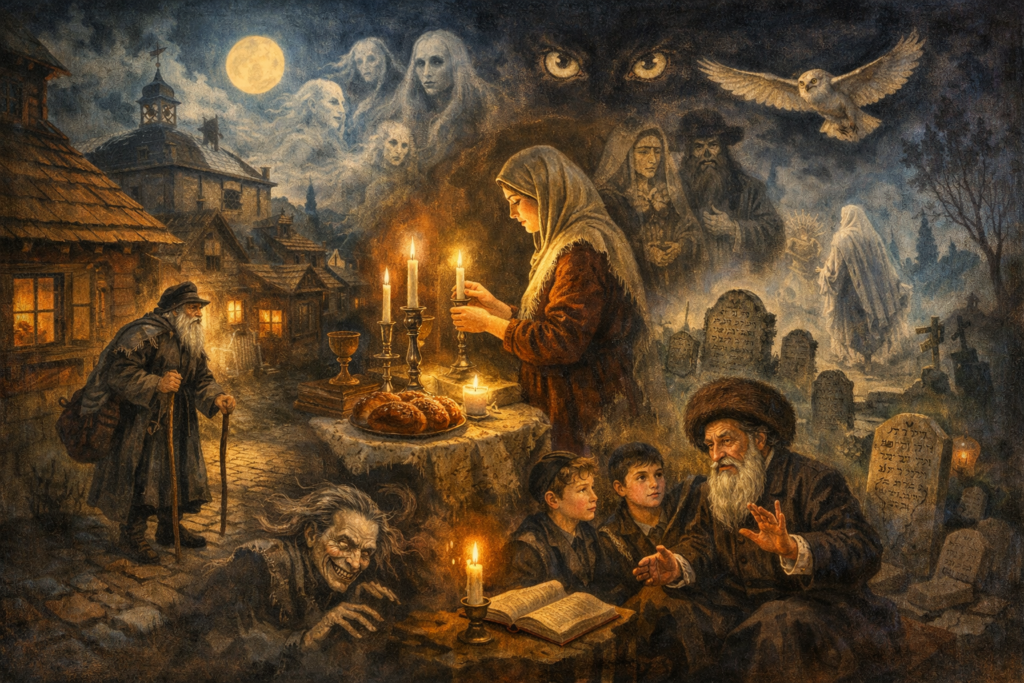
Editorial illustration of Yiddish folkloric and sacred worlds featuring a shtetl at dusk, a wandering holy figure, candlelit domestic ritual, a Hasidic storyteller with children, ghostly spirits, cemetery gravestones, and an atmosphere of exile, wonder, and hidden holiness

Yiddish Legend, Folklore, and Sacred Imagination: Exile, Hidden Holiness, and the Vernacular Life of the Unseen

Yiddish legend, folklore, and sacred imagination preserve one of the most intricate vernacular sacred worlds in Jewish history: a world of dybbuks and demons, hidden righteous figures, miracle-working rebbes, wandering souls, women’s ritual life, comic wisdom, messianic longing, and the moral pressures of diaspora. Shaped by medieval Ashkenazi piety, rabbinic and mystical tradition, Hasidic storytelling, domestic custom, communal memory, and the lived realities of exile, these traditions reveal how Yiddish-speaking communities imagined divine hiddenness, spiritual danger, blessing, suffering, and the unseen dimensions of everyday life. This article explores the field in its full historical range, from premodern Ashkenazi origins and the shtetl world to modern literary transformation, wartime rupture, postwar witness, archival rescue, performance, and continuing Yiddish cultural life, showing how folklore became one of the central ways a people preserved meaning, fear, humor, and sacred endurance across historical change.

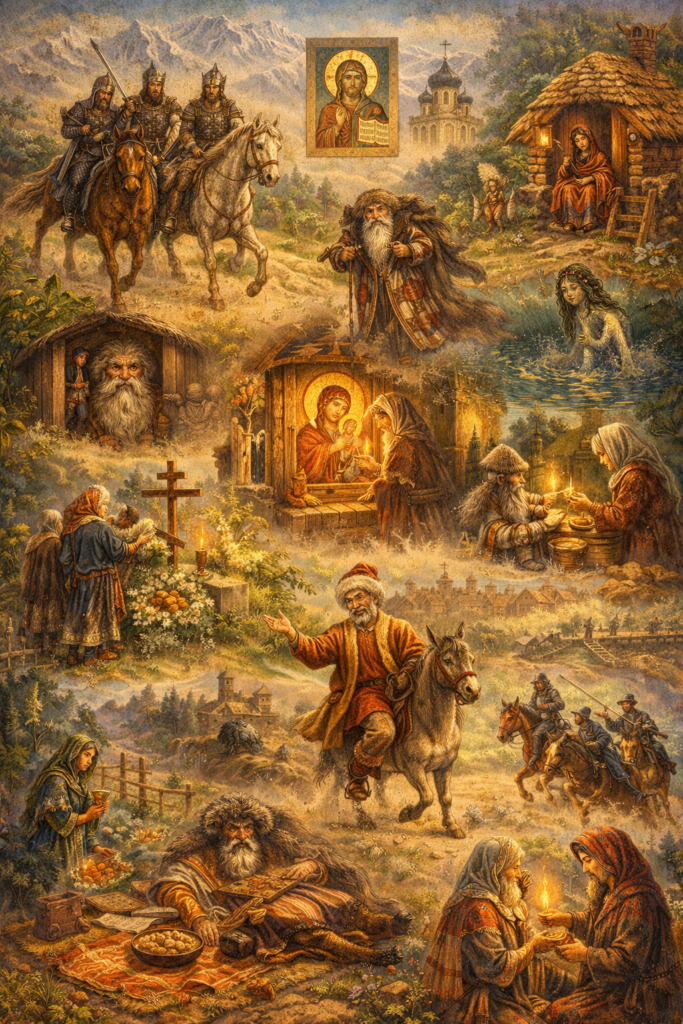
Editorial illustration of Russian mythic and folkloric worlds featuring bogatyr horsemen, a saint icon, a forest elder, a rusalka in the water, a domovoi at a cottage threshold, women in ritual and domestic scenes, a wandering fool on a donkey, and layered village, grave, and wilderness landscapes

Russian Myth, Epic, and Folklore: Nature, Sanctity, Suffering, and Moral Imagination

Russian myth, epic, and folklore preserve one of Europe’s most layered narrative worlds: a world of forests, rivers, saints, spirits, heroes, witches, domestic rites, village memory, and the returning dead, all held within a shared symbolic order. Rather than surviving as a single canonical mythology, these traditions endure through pre-Christian East Slavic belief, heroic oral epic, fairy tale, vernacular demonology, folk Christianity, monastic legend, women’s ritual song, seasonal custom, and later literary and artistic reworkings of folkloric form. Here, nature is never inert, suffering is rarely meaningless, and the boundary between visible and invisible life remains morally charged. This article approaches Russian myth, epic, and folklore as a civilizational archive rather than a loose body of old tales. It traces the interplay of pagan inheritance and Christian transformation; the world of the bogatyrs and the byliny; the supernatural ecology of household and wilderness spirits; the symbolic force of Baba Yaga and other wonder-tale figures; the role of saints, icons, pilgrimage, and holy fools; and the ritual year of Maslenitsa and Ivan Kupala.

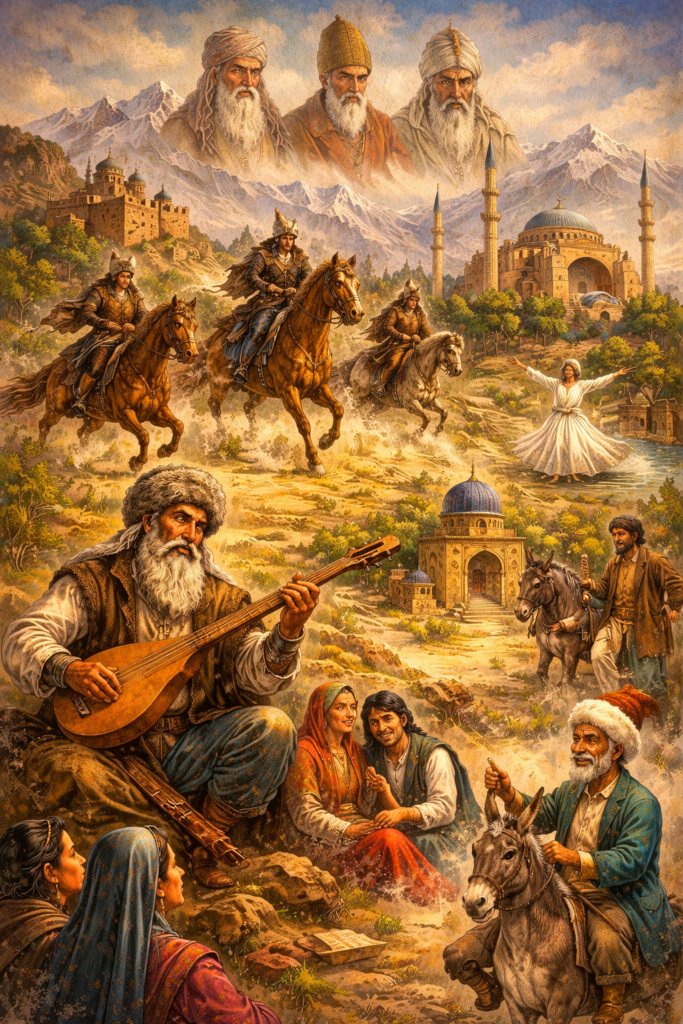
Editorial illustration of Turkic and Ottoman mythic worlds featuring steppe horsemen, an epic bard with a saz, saints and sages above the mountains, Ottoman and Central Asian architecture, whirling devotion, lovers, and Nasreddin Hodja on his donkey in a layered Eurasian landscape

Turkic and Ottoman Myth, Epic, and Folklore

Turkic and Ottoman myth, epic, and folklore preserve one of the great narrative worlds of Eurasia, joining Inner Asian cosmology, heroic memory, sacred charisma, frontier legend, and imperial imagination across centuries of transformation. From wolves, horses, mountains, and ancestral lineages to bardic epics, saint legends, dervish lore, Ottoman founding myths, trickster tales, and regional folk traditions, these story worlds reveal how Turkic-speaking peoples and Ottoman societies understood sovereignty, migration, sanctity, justice, longing, and communal survival. This article explores the field as a layered civilizational archive rather than a single canon, tracing the interplay of steppe inheritance, Islamicate transformation, Anatolian and Ottoman synthesis, oral performance, sacred geography, and popular narrative across a vast transregional world.

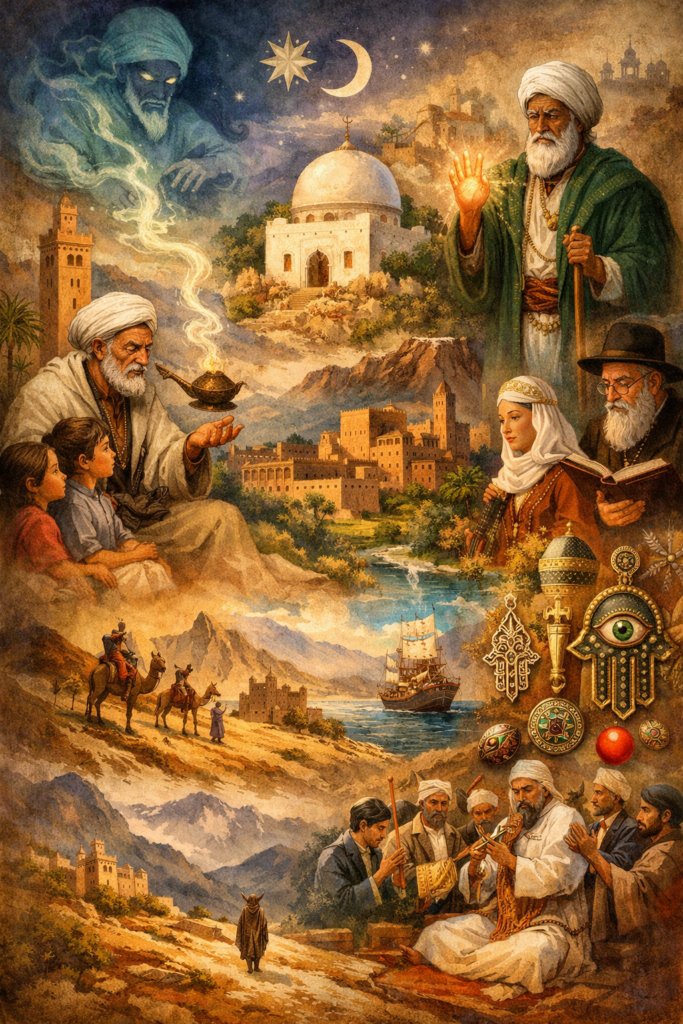
Illustration of Maghrebi and Andalusi sacred imagination featuring a storyteller, saintly figures, shrine architecture, desert and coastal travel, a jinn-like presence, Andalusi palaces, Jewish and Muslim memory, and ritual musicians across North Africa and al-Andalus.

Maghrebi and Andalusi Legend, Folklore, and Sacred Imagination

Maghrebi and Andalusi legend, folklore, and sacred imagination explore the legendary, devotional, and symbolic worlds through which North Africa and al-Andalus imagined sanctity, baraka, exile, memory, spiritual danger, and the hidden life of the world. This tradition is not organized around a single mythological canon, but around layered sacred narratives shaped by Amazigh oral inheritance, Arab and Islamic expansion, Jewish and Muslim folklore, shrine culture, healing ritual, pilgrimage, jinn lore, and the remembered afterlives of al-Andalus. At its core lies a defining question: how do communities preserve blessing, belonging, and civilizational memory through story when worlds are fractured by migration, loss, reform, and historical change? This content pillar explores saints, shrines, marabouts, zawiyas, sacred cities, desert and mountain imaginaries, protective folklore, Gnawa and confraternal ritual traditions, Andalusi and Morisco memory, Sephardi afterlives, and the sacred Mediterranean, showing why Maghrebi and Andalusi sacred imagination remains one of the richest regional traditions of folklore, devotion, and place-based memory.

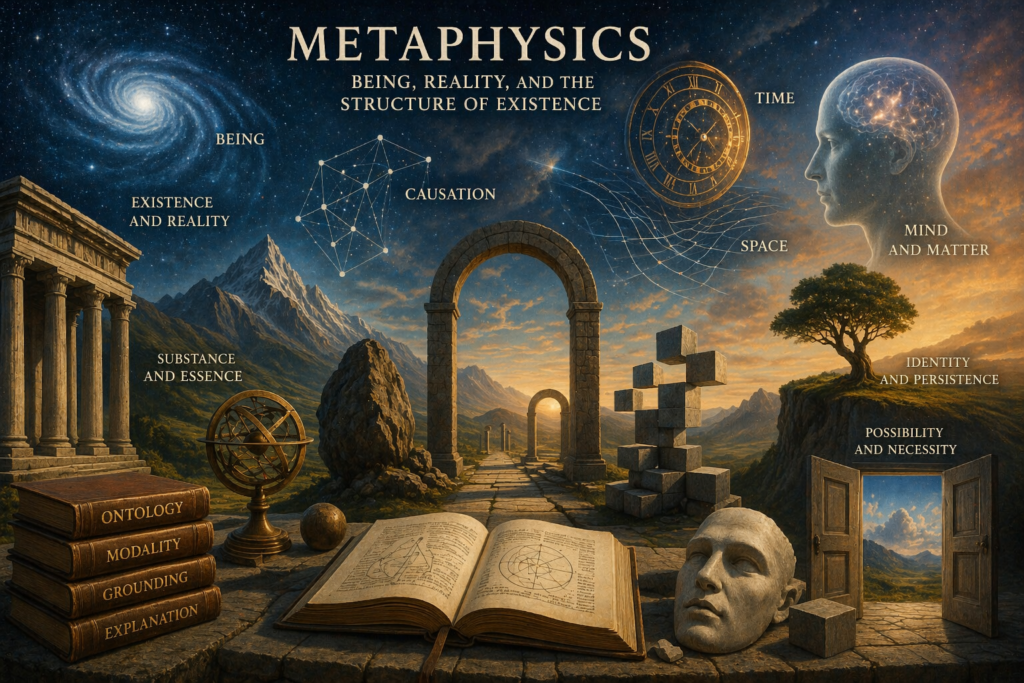
Surreal editorial image representing metaphysics through cosmic space, ancient architecture, books, geometric forms, a human head, and symbolic scenes of being, causation, time, possibility, and reality

Metaphysics: Being, Reality, and the Structure of Existence

Metaphysics examines the most fundamental questions about reality, being, existence, identity, change, causation, possibility, time, space, mind, matter, and the basic structure of what there is. This field is not speculative excess detached from the world, but a disciplined inquiry into the deepest conditions of intelligibility: what kinds of things exist, what it means for something to be real, how things persist or change, what causes and grounds phenomena, and how reality is structured at its most basic level. At its core lies a defining philosophical question: what is the world ultimately made of, and how does what exists hang together? This content pillar explores ontology, substance, essence, identity, persistence, modality, grounding, time, space, mind, personhood, realism, and metaphysical explanation, showing why metaphysics remains indispensable wherever inquiry presupposes some account of what exists and how reality is ordered.

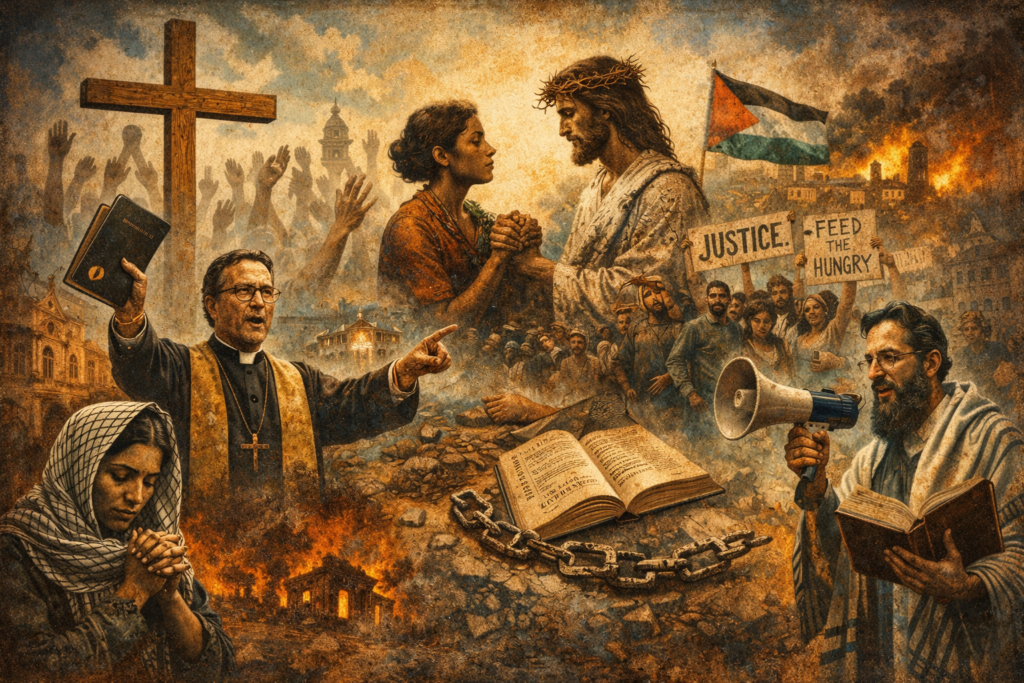
Editorial-style image depicting liberation theology through Christian, Jewish, and Muslim figures, protest, scripture, solidarity, poverty, and collective struggles for justice

Liberation Theology: Faith, Justice, and the Preferential Option for the Poor

Liberation theology is one of the most important and contested developments in modern religious thought. It is not a single doctrine but a broad and internally diverse family of theological approaches that read faith through the realities of poverty, oppression, exclusion, violence, and structural injustice. At its core lies a defining theological and political question: what does it mean to speak of God, salvation, church, discipleship, and moral responsibility in a world marked by exploitation, empire, racial domination, occupation, and the suffering of the poor? This content pillar explores liberation theology from its Latin American Catholic origins through Black, womanist, feminist, mujerista, Palestinian, Dalit, Indigenous, Jewish, Muslim, and interfaith liberationist traditions, showing how faith becomes a site of struggle over justice, anti-imperial resistance, social sin, and solidarity with the oppressed.

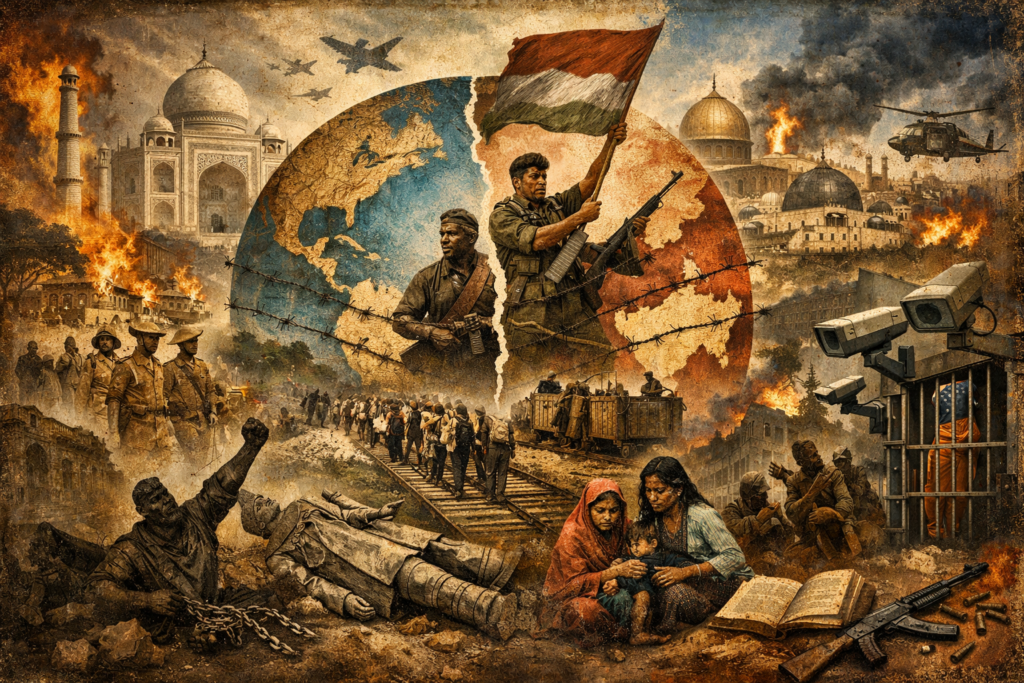
Editorial-style image depicting anti-colonial and decolonial thought through liberation fighters, partition, war, displacement, surveillance, and the fractured political geography of empire

Liberation, Anti-Colonial, and Decolonial Thought: Empire, Freedom, and the Struggle to Rebuild the Political World

Liberation, anti-colonial, and decolonial thought form one of the central constellations of political philosophy. This field is not a single doctrine but a broad and internally diverse body of reflection organized around the historical experiences of conquest, occupation, enslavement, empire, settler colonialism, racial domination, extractive rule, epistemic violence, and the long struggle to reclaim land, dignity, self-determination, and historical agency. At its core lies a defining political question: how should freedom, sovereignty, justice, and political community be rethought in a world shaped by colonial domination and by the unfinished aftermath of empire? This content pillar explores that question across Africa, South Asia, Indochina, Indonesia, Palestine, West Asia, Latin America, and Indigenous worlds, connecting anti-colonial struggle to partition, occupation, proxy rule, neocolonial dependency, surveillance, and the enduring political structures of empire.

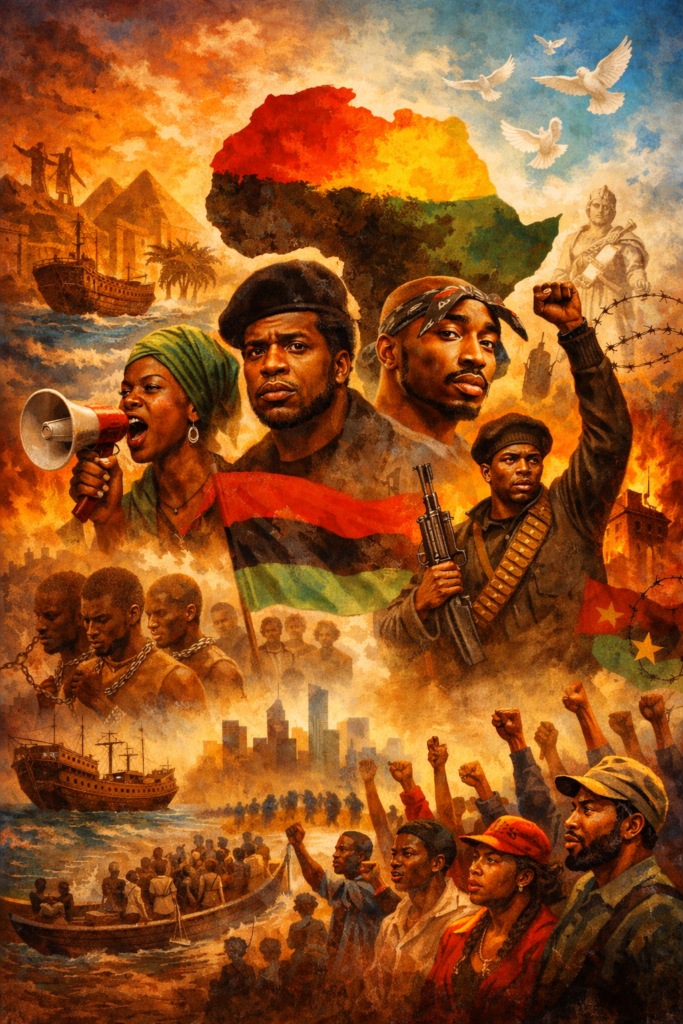
Editorial-style image depicting Pan-African and Black political thought through symbolic figures of resistance, the African continent, anti-colonial struggle, diaspora memory, and collective movements for liberation and justice

Pan-African and Black Political Thought: Diaspora, Liberation, Race, and the Struggle for Political Freedom

Pan-African and Black political thought form one of the central constellations of political philosophy. This field is not a single doctrine but a broad and internally diverse body of reflection organized around the historical experiences of slavery, colonialism, racial hierarchy, diaspora, empire, dispossession, and the struggle for liberation. At its core lies a defining political question: how should freedom, equality, community, sovereignty, and justice be rethought in a world shaped by anti-Blackness, colonial domination, racial capitalism, and the violent denial of Black humanity? This content pillar explores that question from slavery, abolition, and nineteenth-century Black political struggle through Pan-Africanism, anti-colonial thought, Negritude, Black radicalism, Black Marxism, Black feminist thought, Africana philosophy, and contemporary debates over reparations, policing, migration, citizenship, and decolonial justice.

Scroll to Top