Psychological Types: Introversion, Extraversion, and the Four Functions
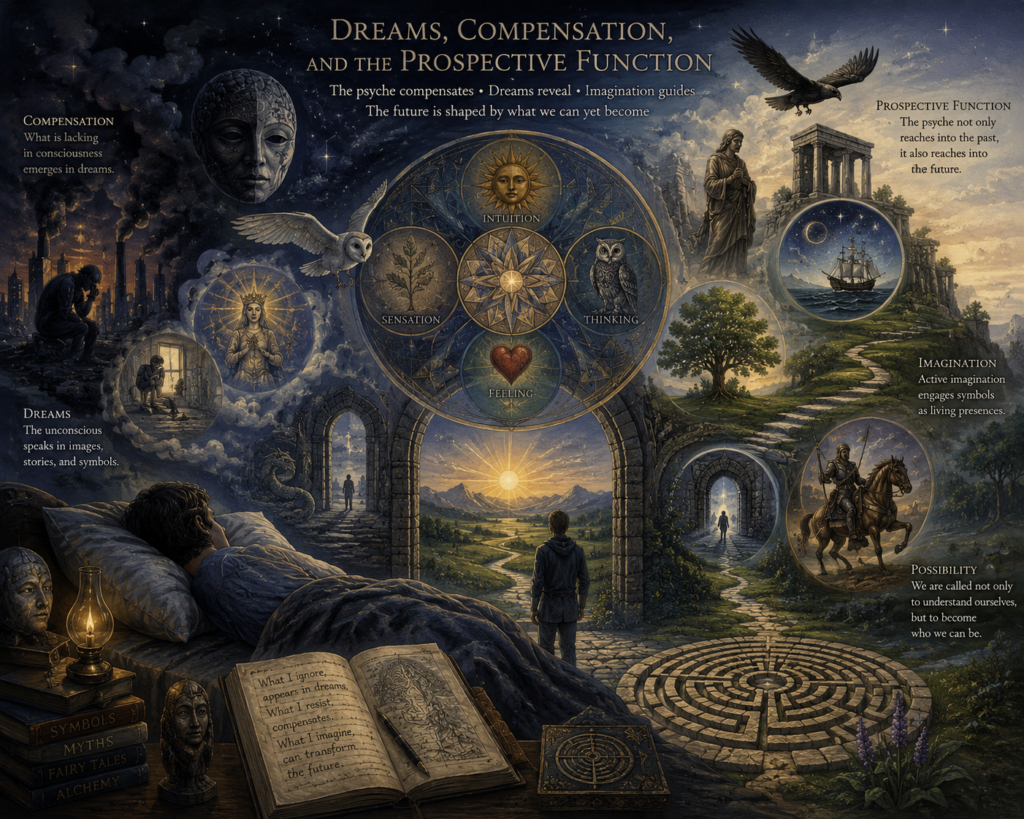
Jung’s theory of psychological types is far richer than the simplified type labels that later popular culture often associates with it. In analytical psychology, introversion and extraversion describe the basic attitudes of psychic orientation, while thinking, feeling, sensation, and intuition describe the principal functions through which consciousness perceives and evaluates reality. This article explains how Jung understood these attitudes and functions as a dynamic structure of conscious organization rather than as a static set of personality boxes. It also explores dominant and inferior functions, the problem of one-sided development, and the role of typology in psychic differentiation, showing that type theory is ultimately a psychology of both strength and imbalance rather than a flattering vocabulary of fixed identity.