Smart Grids: Digital Infrastructure, Automation, and Flexible Energy Systems
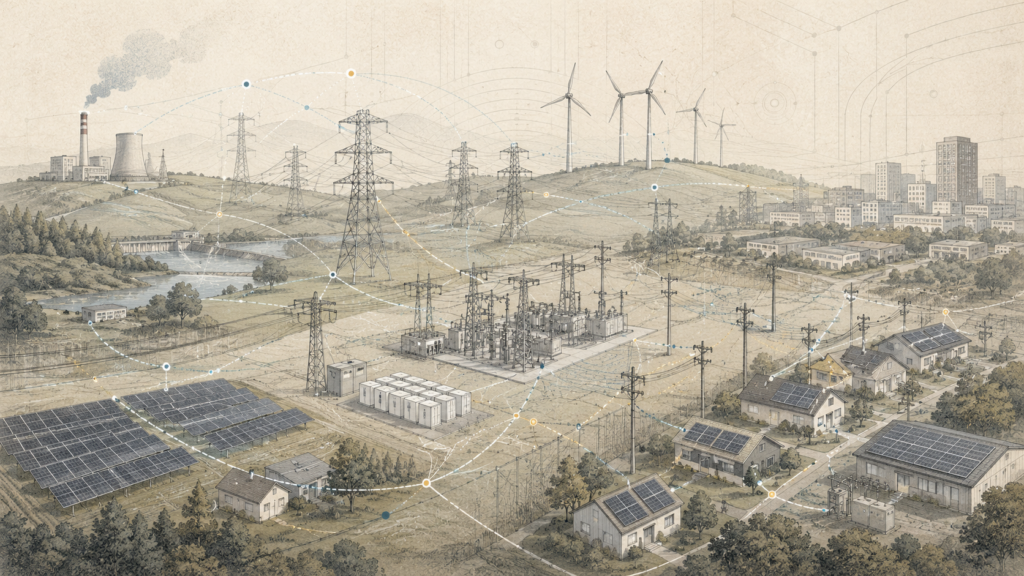
Smart grids combine electrical infrastructure with digital sensing, communications, automation, analytics, and flexible control to improve visibility and coordination across power systems. This article explains advanced metering infrastructure, smart meters, SCADA, distribution automation, fault location and service restoration, advanced distribution management systems, Volt/VAR optimization, distributed energy resource management, demand response, dynamic pricing, electric-vehicle charging, battery storage, forecasting, state estimation, synchrophasors, digital substations, asset-health monitoring, interoperability, cybersecurity, and customer data privacy. Readers learn how smart-grid technologies can reduce outage duration, shift demand, integrate distributed resources, improve voltage management, and support more adaptive operations while remaining constrained by the physical network. Worked examples and computational workflows connect interval data, managed charging, demand response, automation, communications reliability, and distributed flexibility to grid decisions. Together, these tools show how digital intelligence can strengthen electricity systems without replacing infrastructure, engineering judgment, or resilient operating practices.