
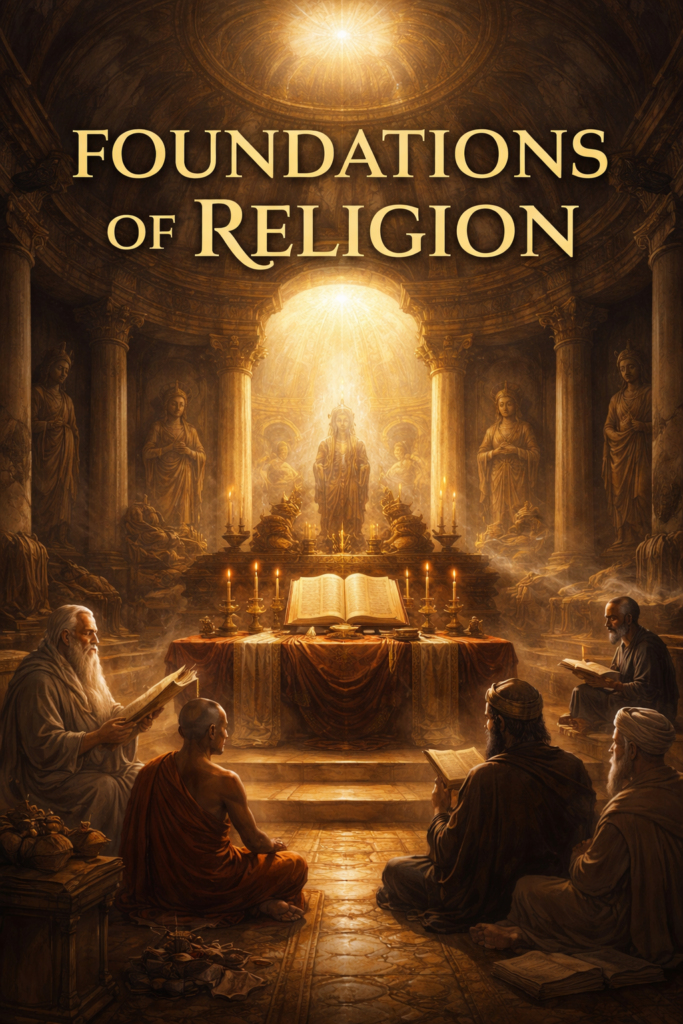
Foundations of Religion
Foundations of Religion examines the conceptual, historical, textual, ritual, and institutional structures through which religious traditions have interpreted reality, organized communal life, and articulated humanity’s relation to the sacred. This pillar explores the problem of defining religion, the distinction between sacred and ordinary orders, the role of myth and ritual, the formation of scripture and canon, the politics of interpretation and authority, and the importance of oral, embodied, and place-based traditions that cannot be reduced to text alone. By grounding the study of religion in history, comparison, sacred transmission, and civilizational analysis, this category provides the framework for understanding how religious worlds shape meaning, law, memory, identity, and the structure of social order across time and place.