
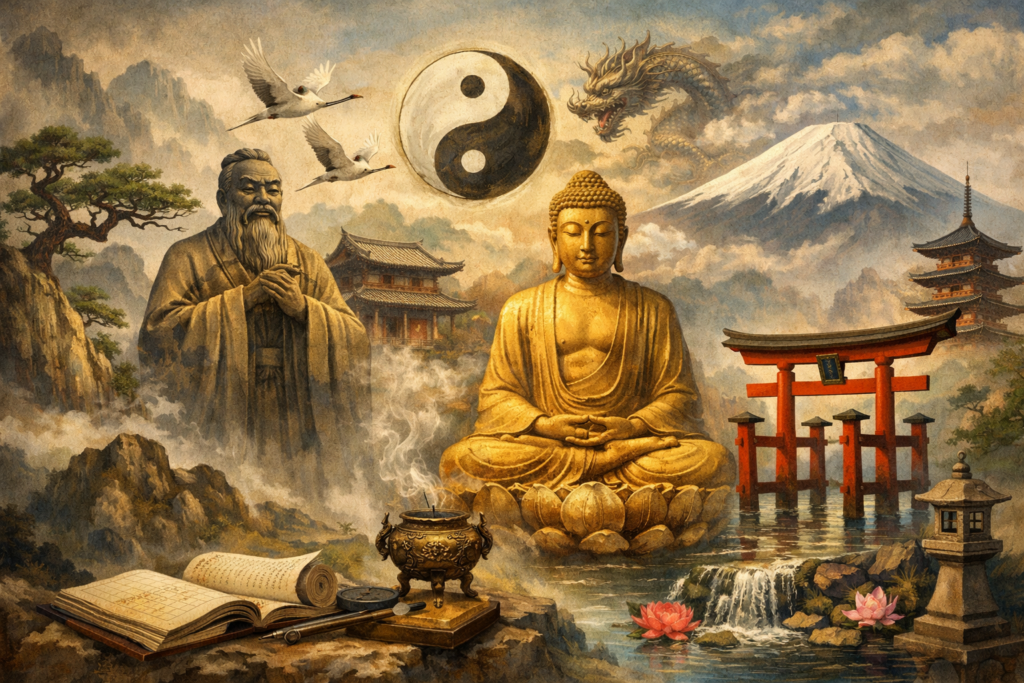
East Asian Traditions: Harmony, Ritual, Emptiness, and Civilizational Order
East Asian Traditions examines the religious, philosophical, ritual, and civilizational worlds that emerged across China, Korea, Japan, and the wider Sinosphere through sacred texts, canonical teachings, contemplative disciplines, ritual orders, ethical traditions, state formations, and enduring reflections on harmony, self-cultivation, cosmic order, moral duty, emptiness, transformation, and the relationship between Heaven, Earth, and human life. This pillar explores Confucian ethics, Daoist cosmology, East Asian Buddhist thought, Shinto ritual life, ancestor reverence, sacred kingship, meditative discipline, and the long civilizational interplay between philosophy, spirituality, governance, and social order. By treating these traditions as internally rich and historically layered worlds rather than as a vague language of balance or wisdom, the category provides a serious framework for understanding one of the deepest religious and philosophical archives in human history.