
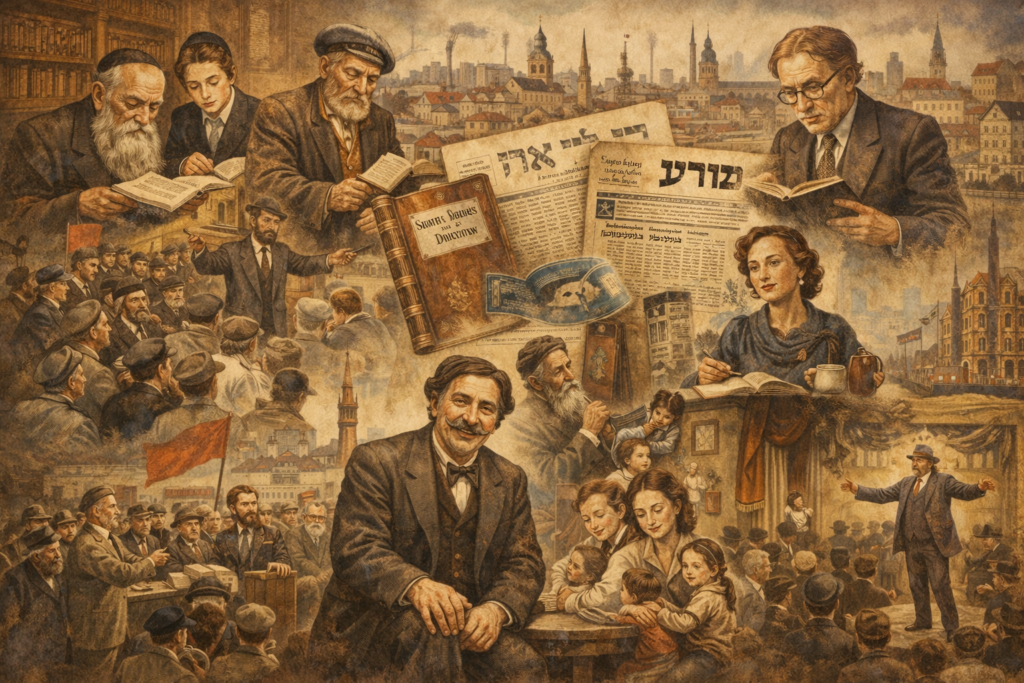
Yiddish Thought: Exile, Memory, Humor, and Human Dignity in a Vernacular Intellectual Tradition
Yiddish thought preserves one of the most distinctive vernacular traditions of reflection in modern intellectual history: a world in which exile, faith, humor, labor, language, memory, and human dignity are thought through not only in theology or formal philosophy, but in stories, journalism, theater, political argument, memoir, and everyday speech. Shaped by rabbinic ethics, Hasidic spirituality, Musar discipline, the Haskalah, urban modernity, socialism, migration, and postwar witness, this tradition reveals how Yiddish-speaking communities reflected on justice, suffering, class, doubt, communal obligation, and the struggle to remain human under unstable historical conditions. This article explores Yiddish thought in its full civilizational range, from sacred inheritance and vernacular moral worlds to literature, labor politics, public debate, postwar memory, and the philosophy of diaspora itself, showing how a language of ordinary life became a language of extraordinary moral seriousness.