
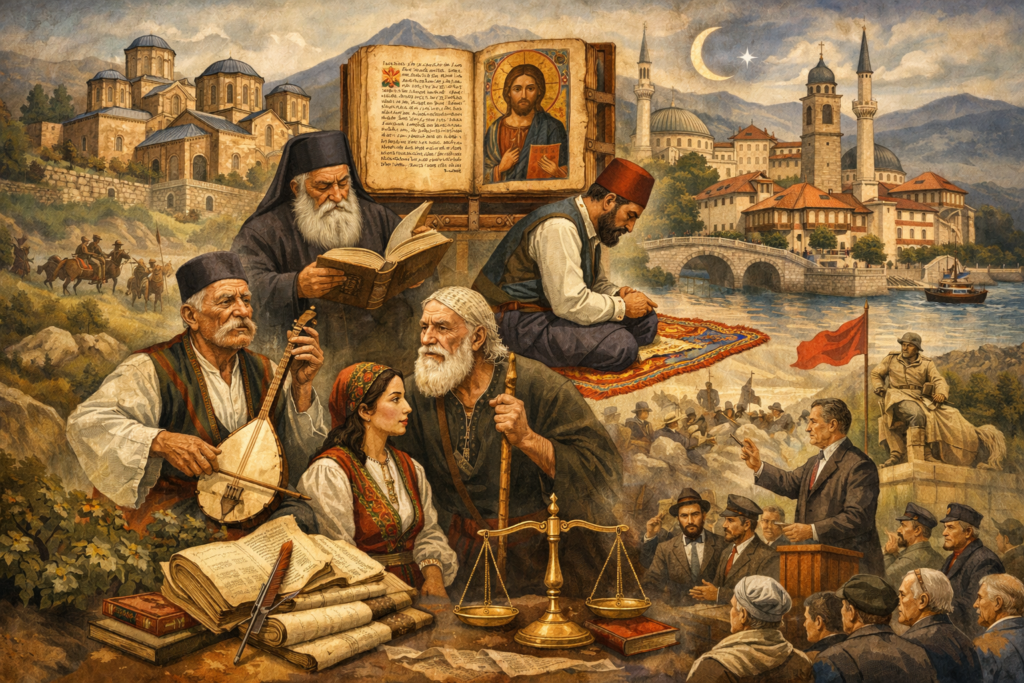
South Slavic Thought: Memory, Faith, Empire, and Identity
South Slavic thought preserves one of Europe’s most historically layered traditions of reflection on faith, empire, memory, justice, and collective identity. Shaped by pre-Christian Slavic inheritances, Orthodox and Catholic Christianity, Islamic and Ottoman influence, oral epic culture, monastic writing, vernacular literature, legal and political struggle, and the long contact histories of the Balkans, this tradition reveals how communities in southeastern Europe thought through sovereignty, suffering, plural coexistence, language, law, and the burdens of historical memory. This article explores South Slavic thought in its full civilizational range, from sacred and customary worlds to theological writing, epic memory, national awakening, Yugoslavism, socialism, and post-socialist reflection, showing how philosophy in the Balkan world has often been carried through poetry, history, religion, law, and political imagination as much as through formal philosophical systems.