
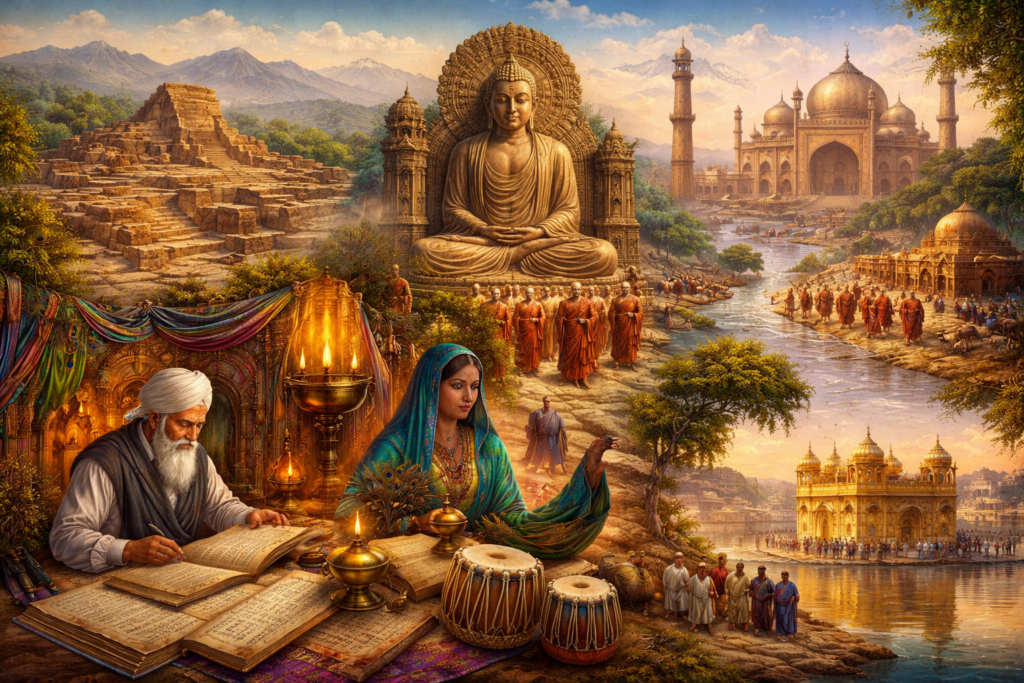
Indus Region Thought: Civilizational Memory, Sacred Exchange, and the Intellectual Worlds of the Northwest
Indus Region thought preserves one of the great connective intellectual zones of world history: a layered regional tradition shaped by Harappan urban symbolism, Vedic and Brahmanical encounter, Gandharan Buddhism, Sindhi Sufi devotion, Punjabi ethical and poetic worlds, Sikh theology, Persianate political culture, and the long afterlives of colonial archaeology and partition. Stretching across the Indus basin and its surrounding corridors, this civilizational world shows how thought develops not only through formal doctrine, but through cities, shrines, sculpture, song, scripture, legal practice, pilgrimage, frontier exchange, and regional memory. By treating Sindh, Punjab, Gandhara, and the wider northwest as a polycentric zone of sacred geography, multilingual transmission, artistic form, and historical fracture, this article presents the Indus region as a major archive of coexistence, continuity, devotion, sovereignty, and loss.