
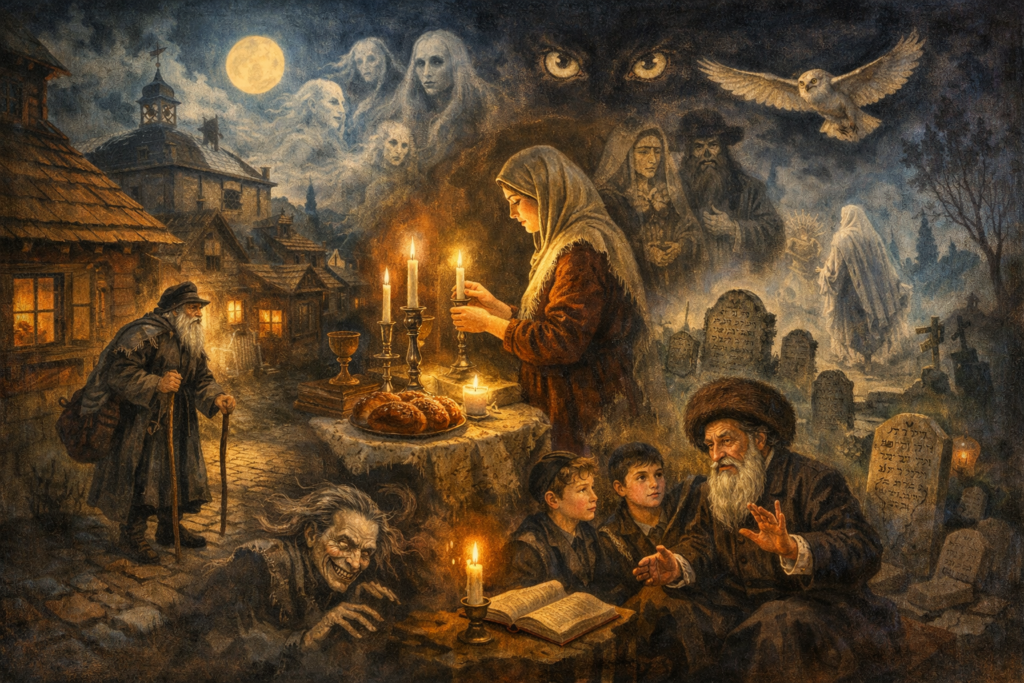
Yiddish Legend, Folklore, and Sacred Imagination: Exile, Hidden Holiness, and the Vernacular Life of the Unseen
Yiddish legend, folklore, and sacred imagination preserve one of the most intricate vernacular sacred worlds in Jewish history: a world of dybbuks and demons, hidden righteous figures, miracle-working rebbes, wandering souls, women’s ritual life, comic wisdom, messianic longing, and the moral pressures of diaspora. Shaped by medieval Ashkenazi piety, rabbinic and mystical tradition, Hasidic storytelling, domestic custom, communal memory, and the lived realities of exile, these traditions reveal how Yiddish-speaking communities imagined divine hiddenness, spiritual danger, blessing, suffering, and the unseen dimensions of everyday life. This article explores the field in its full historical range, from premodern Ashkenazi origins and the shtetl world to modern literary transformation, wartime rupture, postwar witness, archival rescue, performance, and continuing Yiddish cultural life, showing how folklore became one of the central ways a people preserved meaning, fear, humor, and sacred endurance across historical change.