
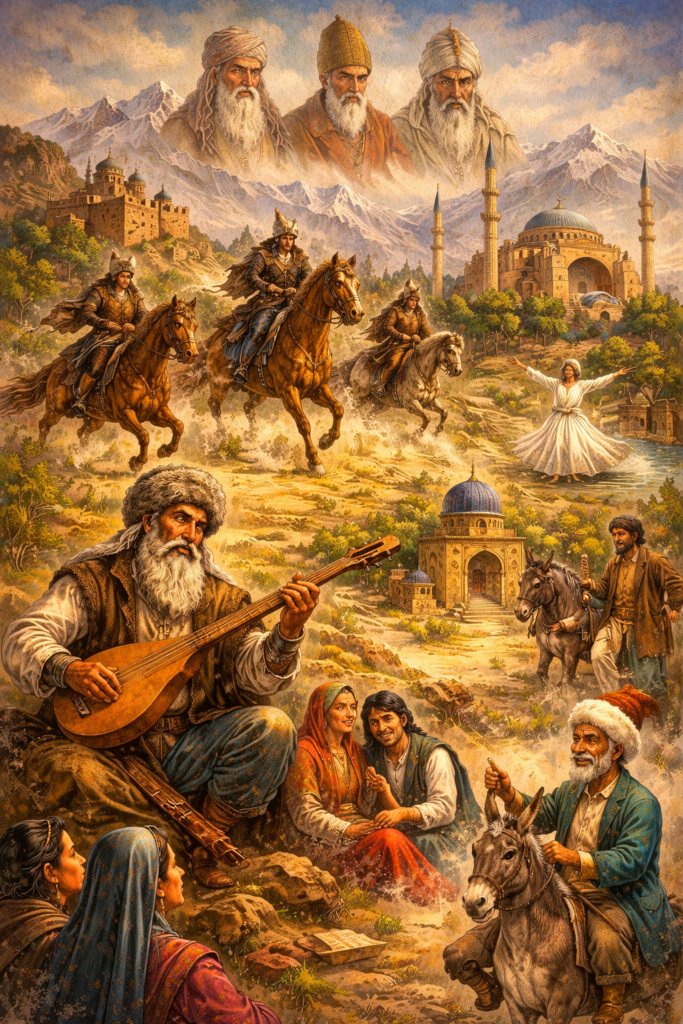
Turkic and Ottoman Myth, Epic, and Folklore
Turkic and Ottoman myth, epic, and folklore preserve one of the great narrative worlds of Eurasia, joining Inner Asian cosmology, heroic memory, sacred charisma, frontier legend, and imperial imagination across centuries of transformation. From wolves, horses, mountains, and ancestral lineages to bardic epics, saint legends, dervish lore, Ottoman founding myths, trickster tales, and regional folk traditions, these story worlds reveal how Turkic-speaking peoples and Ottoman societies understood sovereignty, migration, sanctity, justice, longing, and communal survival. This article explores the field as a layered civilizational archive rather than a single canon, tracing the interplay of steppe inheritance, Islamicate transformation, Anatolian and Ottoman synthesis, oral performance, sacred geography, and popular narrative across a vast transregional world.