
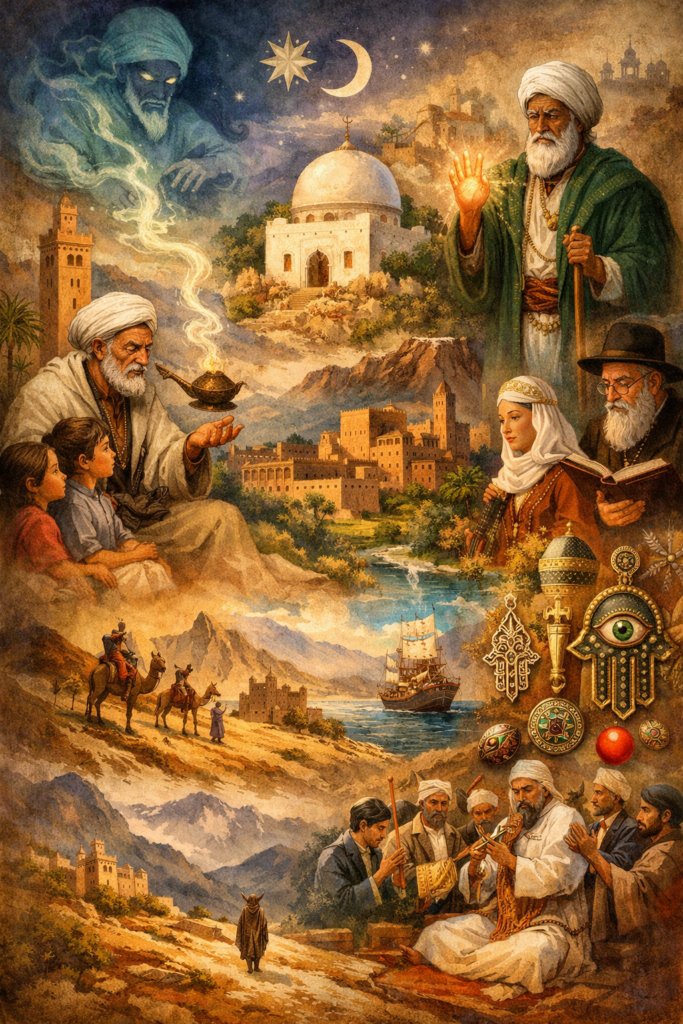
Maghrebi and Andalusi Legend, Folklore, and Sacred Imagination
Maghrebi and Andalusi legend, folklore, and sacred imagination explore the legendary, devotional, and symbolic worlds through which North Africa and al-Andalus imagined sanctity, baraka, exile, memory, spiritual danger, and the hidden life of the world. This tradition is not organized around a single mythological canon, but around layered sacred narratives shaped by Amazigh oral inheritance, Arab and Islamic expansion, Jewish and Muslim folklore, shrine culture, healing ritual, pilgrimage, jinn lore, and the remembered afterlives of al-Andalus. At its core lies a defining question: how do communities preserve blessing, belonging, and civilizational memory through story when worlds are fractured by migration, loss, reform, and historical change? This content pillar explores saints, shrines, marabouts, zawiyas, sacred cities, desert and mountain imaginaries, protective folklore, Gnawa and confraternal ritual traditions, Andalusi and Morisco memory, Sephardi afterlives, and the sacred Mediterranean, showing why Maghrebi and Andalusi sacred imagination remains one of the richest regional traditions of folklore, devotion, and place-based memory.