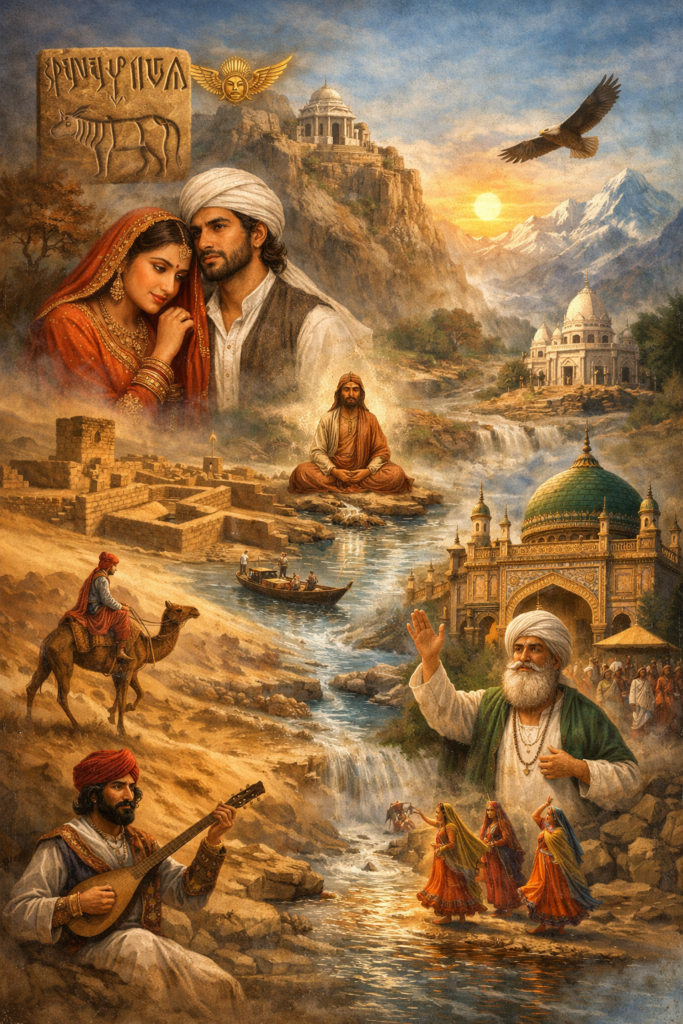
Indus Region Myth, Folklore & Sacred Narrative
Indus Region Myth, Folklore & Sacred Narrative examines the narrative traditions through which the peoples of the Indus basin and its adjoining landscapes have expressed sacred presence, longing, homeland, moral testing, devotion, heroic memory, and the endurance of cultural imagination across time. In the history of ideas, these traditions have linked river civilization, oral poetry, folklore, shrine culture, sacred geography, and vernacular spirituality in ways that illuminate both ancient symbolic worlds and later regional understandings of love, sanctity, belonging, and the moral meanings of place.
This category explores mythic and folkloric narratives associated with the Indus region, including their approaches to sacred landscape, river and desert symbolism, love epic, saint traditions, oral memory, heroic consciousness, and the transmission of story through both oral and literary forms. It considers how narrative sustains continuity across political, religious, and historical change, how folklore and devotion shape understandings of honor, suffering, destiny, and spiritual longing, and how sacred and popular imagination together form a language of identity, memory, and regional inheritance.
Indus-region myth, folklore, and sacred narrative play an important role in comparative literary and cultural study because they reveal a narrative world of unusual depth, where oral tradition, sacred imagination, and symbolic storytelling are inseparable from landscape, historical consciousness, and everyday forms of meaning. By engaging these traditions seriously, this category deepens understanding of regional cultural inheritance and broadens reflection on river civilizations, storytelling, memory, sacred worlds, and the enduring life of narrative across the Indus imagination.