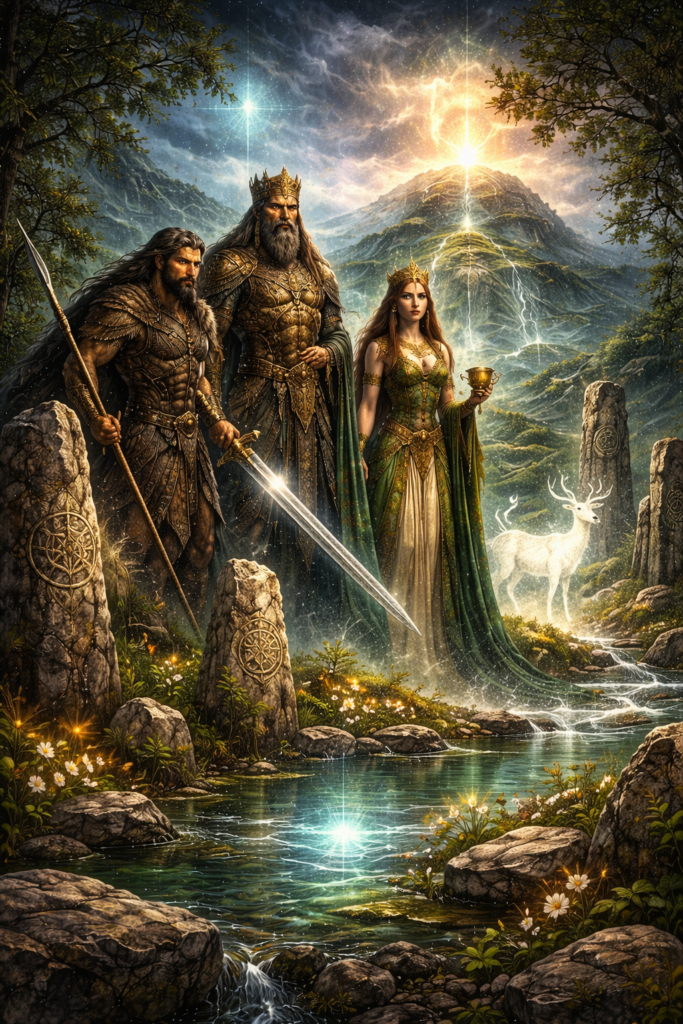
Celtic Mythology
Celtic Mythology examines the mythic and legendary traditions associated with the Celtic-speaking peoples of Ireland, Wales, Scotland, and related cultural worlds, with attention to their visions of sovereignty, heroism, sacred landscape, otherworld encounter, and poetic memory. In the history of ideas, Celtic myth developed distinctive ways of linking land, lineage, ritual imagination, and supernatural presence, preserving a symbolic world in which the human and otherworldly remain closely intertwined.
This category explores divine figures, heroic cycles, bardic traditions, legendary journeys, and mythic narratives of transformation, including their approaches to kingship, fate, enchantment, sacrifice, and the moral significance of place. It considers how sovereignty is symbolically mediated, how memory is carried through oral and literary tradition, and how mythic imagination animates forests, rivers, hills, and thresholds between worlds.
Celtic mythology plays an important role in comparative mythology because it offers a richly textured vision of narrative, place, and sacred power shaped by oral inheritance and symbolic continuity. By engaging these traditions seriously, this category deepens understanding of Celtic cultural imagination and broadens reflection on landscape, legend, and the enduring relationship between story, memory, and the supernatural.
Celtic Mythology: Sovereignty, Sacred Landscape, and the Otherworld Imagination examines a richly layered mythic archive in which divine rule, heroic legend, enchanted crossings, poetic power, and place-bound memory converge. From the Táin Bó Cúailnge and Lebor Gabála Érenn to the Welsh tales later grouped as the Mabinogion, this category explores how Celtic myth was preserved, transformed, and continually reimagined across oral tradition, manuscript culture, sacred geography, and the enduring otherworldly imagination of the Celtic world.