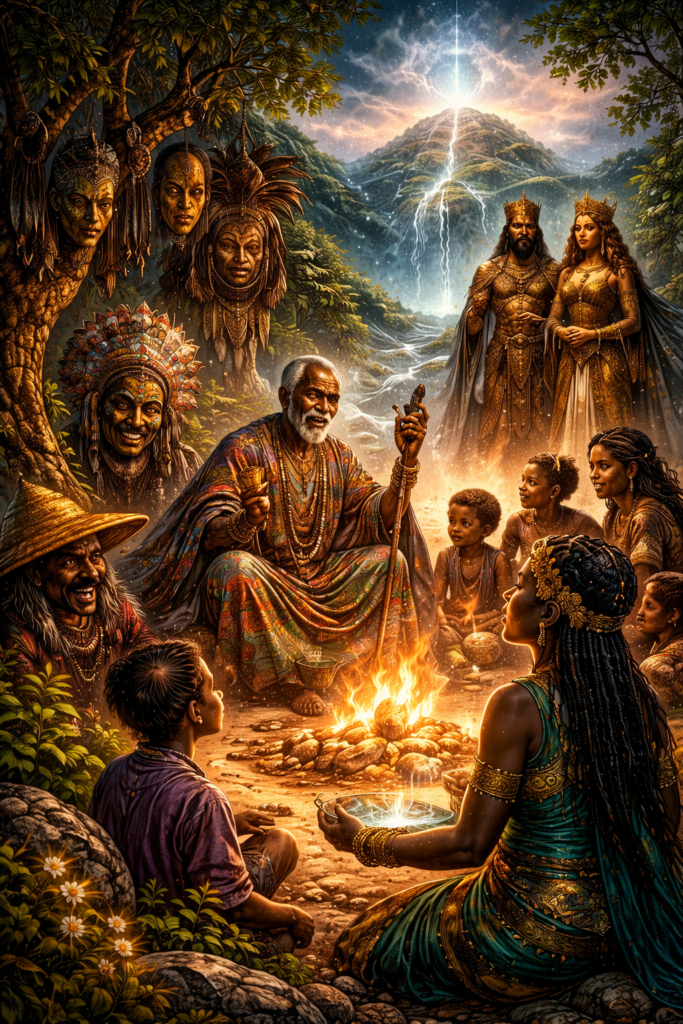
African Myth, Folklore & Sacred Narrative
African Myth, Folklore & Sacred Narrative examines the diverse sacred stories, oral traditions, cosmologies, heroic cycles, ancestral teachings, and ritual narratives through which societies across Africa have interpreted creation, community, spiritual power, moral order, and the relationship between human life, nature, and the unseen world. In the history of ideas, African narrative traditions have preserved richly varied frameworks of memory, wisdom, and sacred meaning that cannot be reduced to a single mythology, but instead reflect the linguistic, cultural, and religious plurality of the continent.
This category explores mythic and folkloric traditions from across African cultural worlds, including their approaches to origin, kinship, kingship, trickster intelligence, ancestral presence, sacred landscape, transformation, and the moral significance of storytelling itself. It considers how oral transmission sustains collective memory, how narrative encodes ecological and social knowledge, and how sacred stories shape understandings of obligation, identity, continuity, and the bonds between the living, the dead, and the spiritual realm.
African myth, folklore, and sacred narrative play an important role in comparative inquiry because they illuminate major traditions of oral thought, symbolic imagination, and sacred history that have profoundly shaped cultural life across the continent and beyond. By engaging these traditions seriously, this category deepens understanding of plurality in mythic expression and broadens reflection on memory, ancestry, cosmology, and the narrative forms through which communities preserve meaning across generations.