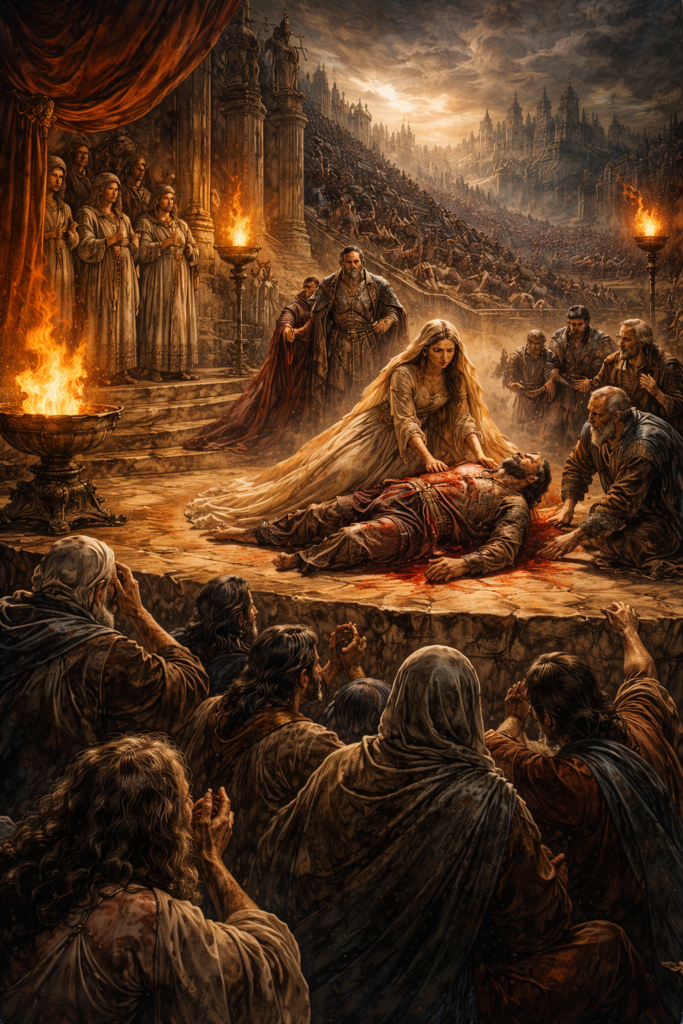
Tragedy, Drama, and Collective Memory
Tragedy, Drama, and Collective Memory explores dramatic literature as a public medium through which societies stage conflict, preserve emotional knowledge, remember catastrophe, and confront the limits of justice, power, kinship, and human action. Drama differs from other literary forms in that it places memory before a witnessing community. Through performance, voice, gesture, ritual structure, and embodied conflict, tragedy and drama transform private suffering into shared reflection. They make visible the tensions that societies cannot easily resolve and preserve, in performative form, the memory of what a community fears, mourns, condemns, or cannot forget.
This category examines tragedy, sacred drama, historical drama, court theater, vernacular performance traditions, modern political theater, and dramatic responses to war, tyranny, exile, communal breakdown, and social transformation. It considers how dramatic forms mediate between ritual and literature, spectacle and moral reflection, civic life and emotional release. It also explores how tragedy in particular becomes a powerful vehicle for collective memory by staging irreparable loss, inherited guilt, public grief, and the consequences of human blindness under conditions of historical and political consequence.
Tragedy, Drama, and Collective Memory is essential for understanding literature as a communal art of reckoning. It studies how performance traditions preserve the memory of violence, conflict, sacrifice, and moral fracture while creating space for recognition, mourning, warning, and reinterpretation. By linking drama to ritual, politics, law, religion, public culture, and historical trauma, this category illuminates how societies remember themselves not only through narrative and archive, but through staged confrontation with the human condition.