
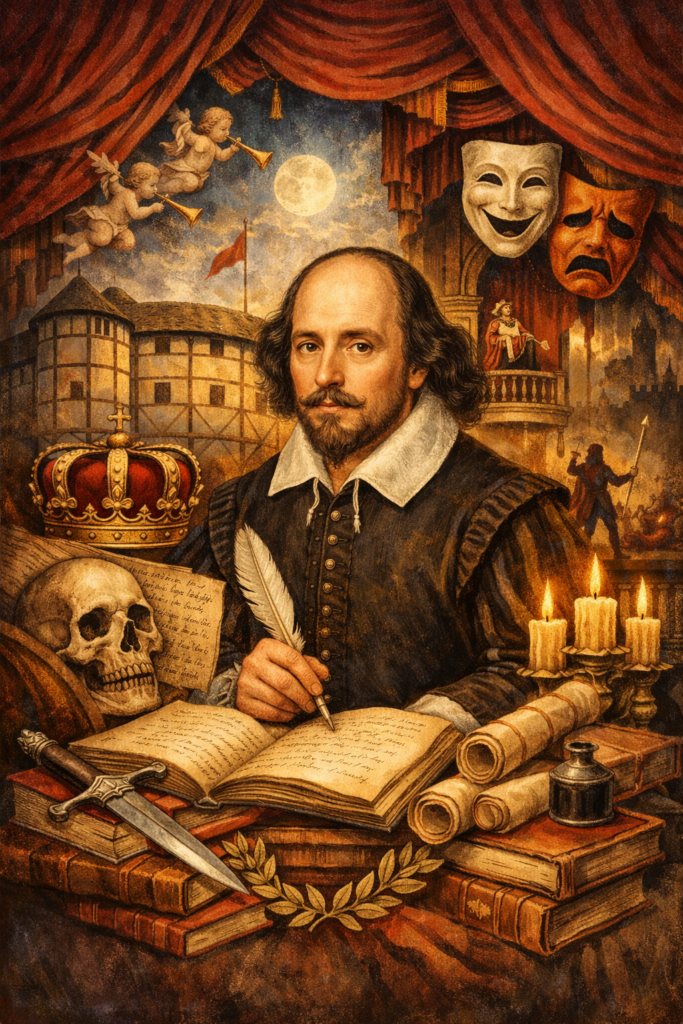
Shakespeare and Early Modern Literature: Plays, Power, Tragedy, and Literary Afterlife
Shakespeare and early modern literature preserve one of the decisive archives of literary and civilizational transition in the modern West, but this category is centered above all on Shakespeare himself: on the plays, poems, theatrical imagination, afterlife, and interpretive force through which he became the most influential writer in the English language. From the histories, tragedies, comedies, romances, sonnets, and narrative poems to questions of kingship, conscience, rhetoric, law, gender, religion, race, empire, and the Shakespeare authorship debate, this article approaches Shakespeare as the central literary intelligence through whom the early modern age most fully staged its tensions and through whom later centuries continued to think about power, desire, justice, mortality, and the unstable problem of human action.