Poetry, Memory, and Imagination
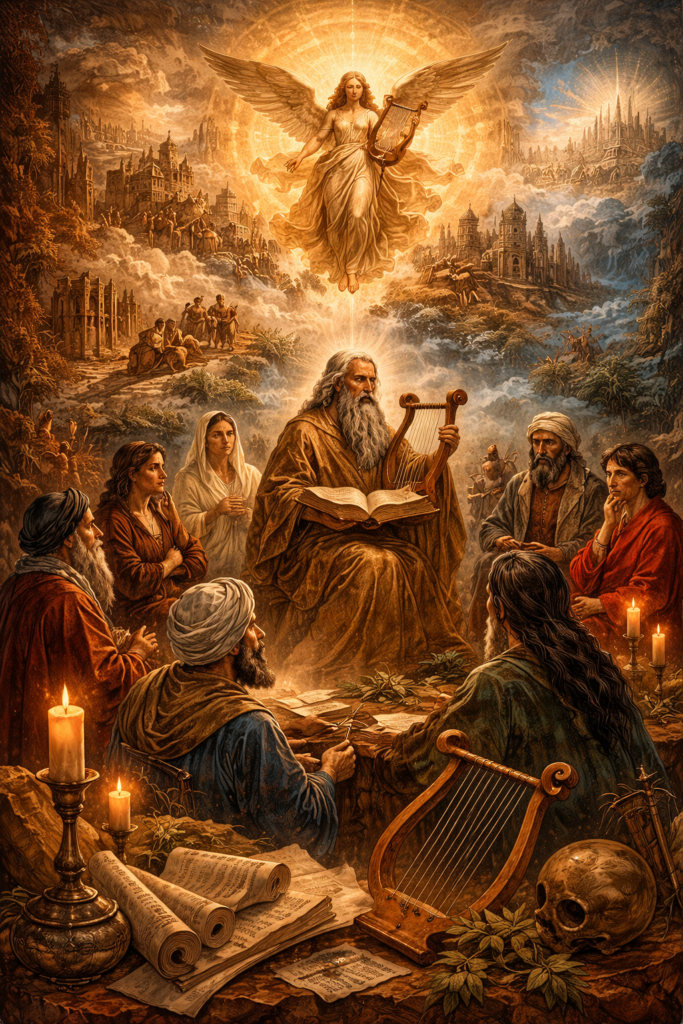
Poetry, Memory, and Imagination explores poetry as one of humanity’s oldest and most powerful forms for preserving experience, shaping symbolic worlds, and transmitting emotional, moral, and civilizational inheritance across generations. Poetry condenses memory into rhythm, image, voice, repetition, and form. It can carry grief, praise, longing, protest, sacred devotion, landscape, political vision, and ancestral presence with an intensity often unavailable to more discursive genres. For this reason, poetry has frequently stood near the center of cultural memory, preserving what communities fear to lose and imagining meanings that prose alone cannot fully contain.
This category examines lyric, epic, elegy, devotional verse, oral poetry, praise poetry, love poetry, mystical poetry, political poetry, and experimental poetics across traditions. It considers how poetic form supports remembrance through sound, meter, allusion, and symbolic compression, and how poetry becomes a site where memory and imagination are not opposites but mutually sustaining forces. Poetry recalls the lost, names the absent, transforms historical suffering into voice, and creates images through which individuals and communities may continue to think and feel beyond rupture.
Poetry, Memory, and Imagination is therefore a study of the most concentrated forms of literary inheritance. It brings poetic traditions into relation with ritual, performance, language, music, mourning, desire, cosmology, and artistic innovation. By examining poetry as both cultural archive and creative reworlding, this category clarifies how literary form preserves continuity while also opening new possibilities of feeling, perception, and collective imagination.