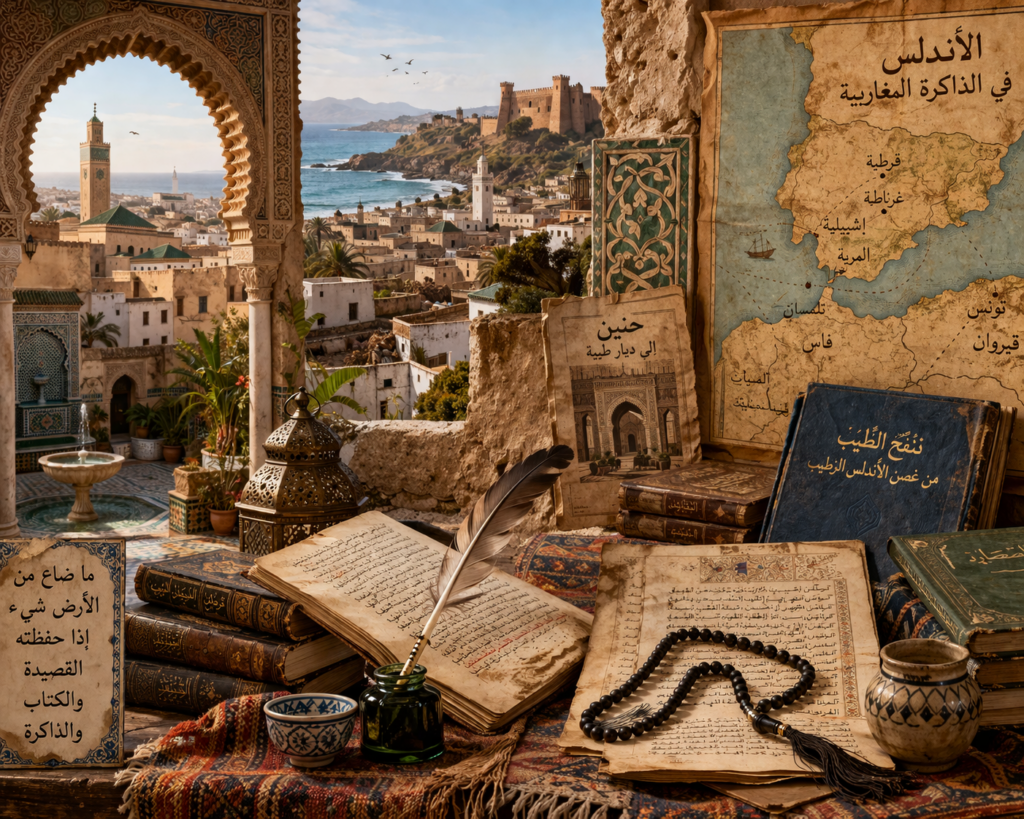
Maghrebi and Andalusi Literature and Cultural Memory
Maghrebi and Andalusi Literature and Cultural Memory explores the literary traditions of North Africa and al-Andalus as intertwined archives of place, loss, devotion, refinement, exile, and historical remembrance. Shaped by Amazigh, Arab, Islamic, Jewish, Mediterranean, and Andalusi inheritances, these traditions preserve a rich and layered memory of cities, courts, scholars, poets, saints, communities, and homelands marked by both flourishing and rupture. Literature in these worlds has often carried the emotional and symbolic burden of remembering what political history displaced, fragmented, or transformed.
This category examines poetry, prose, adab, devotional writing, travel literature, historical reflection, exile literature, and oral traditions emerging from the Maghreb and from the memory-world of al-Andalus. It considers how literary expression has preserved ideals of cultivated life, sacred learning, urban beauty, convivencia, longing for lost homelands, and the afterlives of Andalusi civilization in North African consciousness. It also explores how Maghrebi and Andalusi literary memory has been shaped by migration, conquest, dynastic change, colonial violence, religious coexistence and conflict, and the continuing symbolic force of Andalusian loss in later intellectual and artistic traditions.
Maghrebi and Andalusi Literature and Cultural Memory is therefore concerned with literature as an archive of both rootedness and displacement. It studies how texts, songs, poems, and recollective traditions sustain memory across borders, preserve cultural forms beyond the life of political regimes, and transmit regional worlds of feeling that remain central to North African and Mediterranean self-understanding. By linking literary tradition to exile, sacred geography, language, and post-imperial memory, this category reveals how literature can become a home for worlds that history has unsettled.