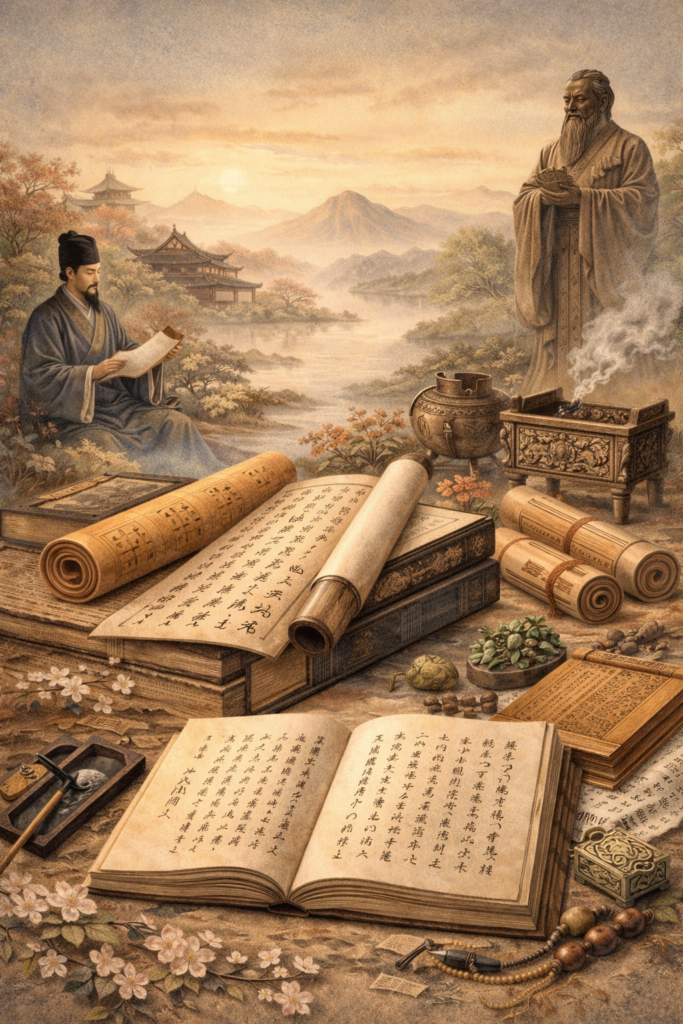
Chinese Literature and Classical Memory
Chinese Literature and Classical Memory explores the literary traditions through which Chinese civilization has preserved moral order, dynastic remembrance, philosophical sensibility, poetic refinement, historical reflection, and the continuity of cultural form across millennia. Literature in the Chinese world has long functioned as a medium of remembrance, cultivation, and transmission: poetry preserved feeling within order, history recorded moral judgment through narrative, prose expressed ethical and political vision, and canonical texts shaped education, governance, and civilizational identity. Chinese literature therefore stands as one of the great archives of classical memory in world history.
This category examines poetry, historical writing, classical prose, philosophical texts, fiction, drama, regulated verse, lyric traditions, literati culture, and literary responses to political upheaval, exile, dynastic transition, and cultural transformation. It considers how literary traditions preserve classical ideals while also registering grief, withdrawal, loyalty, ruin, longing, and the instability of worldly power. It also explores the role of examination culture, commentary, canon formation, manuscript and print transmission, and regional variation in sustaining Chinese literary continuity over time.
Chinese Literature and Classical Memory is central to understanding literature as both cultural inheritance and moral discipline. It reveals how literary expression can preserve a civilization’s patterns of feeling, judgment, beauty, and order while remaining responsive to historical change. By linking literature to Confucian learning, Daoist sensibility, Buddhist influence, statecraft, family order, historiography, and artistic cultivation, this category illuminates the long memory through which Chinese literary culture has endured and renewed itself.