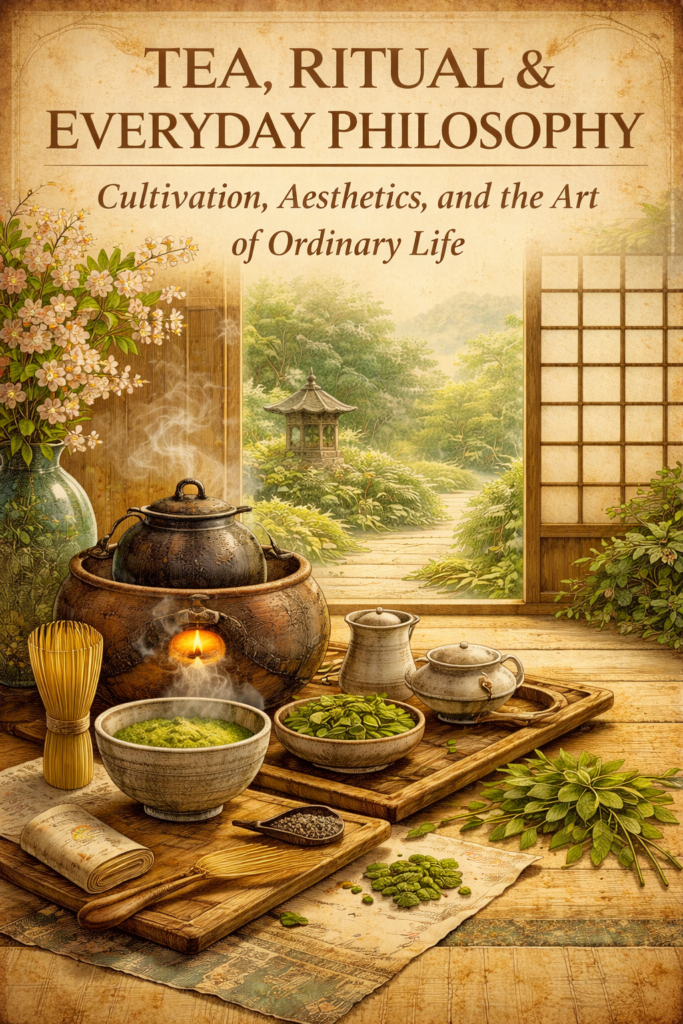
Tea, Ritual & Everyday Philosophy
Tea, Ritual & Everyday Philosophy examines the symbolic, aesthetic, and philosophical dimensions of tea as a practice through which cultures have expressed refinement, attentiveness, hospitality, discipline, and the cultivation of everyday life. In the history of ideas, tea has often carried meanings beyond nourishment or consumption alone, serving as a medium for ritual order, social relation, contemplation, and the shaping of sensibility.
This category explores traditions of tea in relation to ritual form, atmosphere, beauty, simplicity, rhythm, and the moral significance of ordinary acts. It considers how everyday practices can become vehicles of cultivation, how ritual can shape perception and conduct, and how the preparation and sharing of tea can reflect larger ideas about harmony, presence, restraint, and the ordering of life.
Tea, ritual, and everyday philosophy play an important role in cultural inquiry because they show how meaning may be embodied in gesture, form, and repeated practice rather than abstract doctrine alone. By engaging these traditions seriously, this category deepens understanding of ritualized daily life and broadens reflection on aesthetics, cultivation, and the philosophical significance of ordinary human experience.
Tea, Ritual & Everyday Philosophy: Cultivation, Aesthetics, and the Art of Ordinary Life explores a distinctive cultural and philosophical field in which tea becomes a medium of attentiveness, hospitality, refinement, atmosphere, and disciplined daily life. From Lu Yu’s Classic of Tea and Chinese literati traditions to Sen no Rikyū, chanoyu, and Okakura Kakuzō’s The Book of Tea, this category examines how tea has been shaped into a practice of ritual form, aesthetic perception, and everyday cultivation.