
Healing Traditions

Healing Traditions examines the medical, ritual, philosophical, and cultural systems through which societies have understood illness, balance, restoration, and the cultivation of human wellbeing. In the history of ideas, healing has rarely been limited to technical treatment alone. It has also involved conceptions of harmony, nature, spirit, ethics, and the proper ordering of life within larger cosmological, communal, and environmental frameworks.

This category explores healing as a civilizational expression of knowledge and care, including traditional medical systems, plant knowledge, ritual practices, symbolic forms of restoration, and everyday disciplines of balance and cultivation. It considers how different cultures have interpreted the causes of suffering, the relationship between body and world, the moral dimensions of care, and the roles of ritual, environment, and inherited wisdom in sustaining life.

Healing traditions play an important role in comparative inquiry because they reveal how societies have linked medicine, philosophy, spirituality, and practical knowledge in attempts to preserve health and respond to vulnerability. By engaging these traditions seriously, this category deepens understanding of healing as both a material and symbolic practice, and broadens reflection on care, wholeness, and the diverse ways human beings have sought restoration.

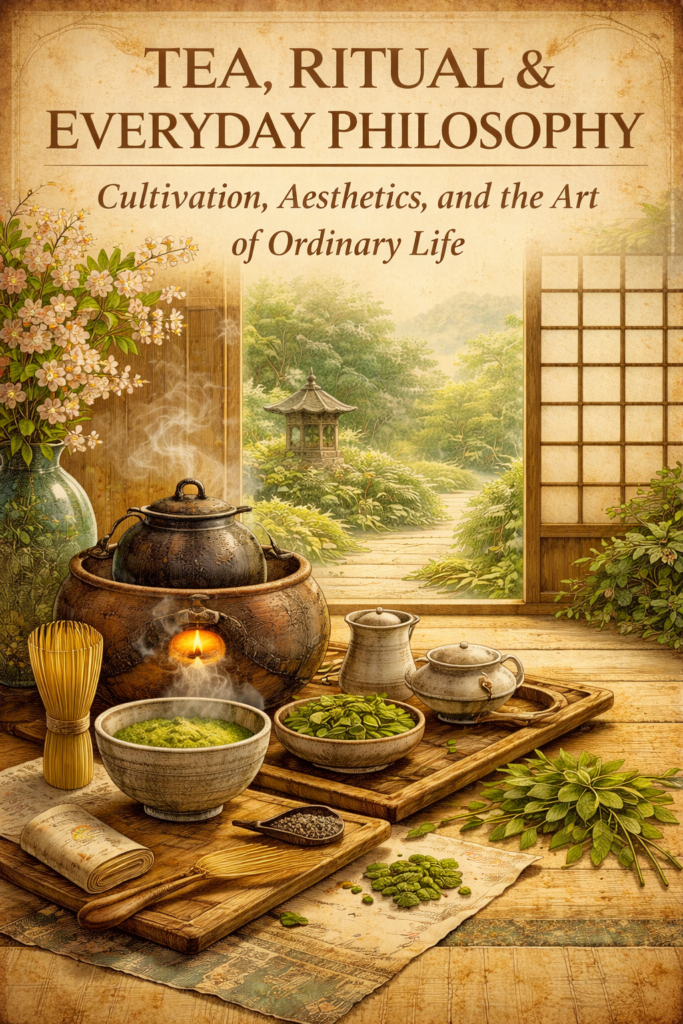
Editorial illustration inspired by tea culture featuring a kettle, bowl, whisk, tea leaves, blossoms, and a serene garden setting that evokes ritual, cultivation, and everyday philosophical life.

Tea, Ritual & Everyday Philosophy: Cultivation, Aesthetics, and the Art of Ordinary Life

Tea, Ritual & Everyday Philosophy: Cultivation, Aesthetics, and the Art of Ordinary Life explores a distinctive cultural and philosophical field in which tea becomes a medium of attentiveness, hospitality, refinement, atmosphere, and disciplined daily life. From Lu Yu’s Classic of Tea and Chinese literati traditions to Sen no Rikyū, chanoyu, and Okakura Kakuzō’s The Book of Tea, this category examines how tea has been shaped into a practice of ritual form, aesthetic perception, and everyday cultivation.
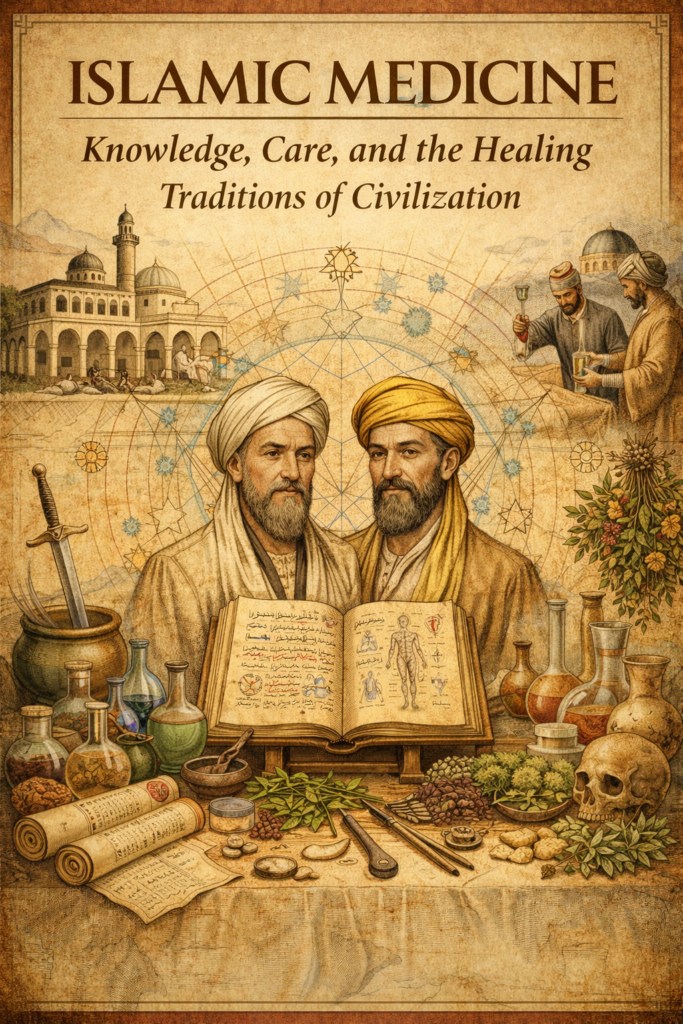
Editorial illustration inspired by Islamic medicine featuring major physicians, a medical manuscript, herbs, vessels, surgical tools, and a hospital setting within an illuminated scholarly composition.

Islamic Medicine: Knowledge, Care, and the Healing Traditions of Civilization

Islamic Medicine: Knowledge, Care, and the Healing Traditions of Civilization explores a major medical tradition shaped by translation, clinical observation, hospital practice, pharmacology, surgery, ethics, and the disciplined preservation and development of inherited knowledge. From al-Razi, Ibn Sina, and al-Zahrawi to bimaristans, manuscript traditions, and the wider medical culture of Islamic civilization, this category examines how healing was understood as a field of learned knowledge, practical care, and civilizational exchange.

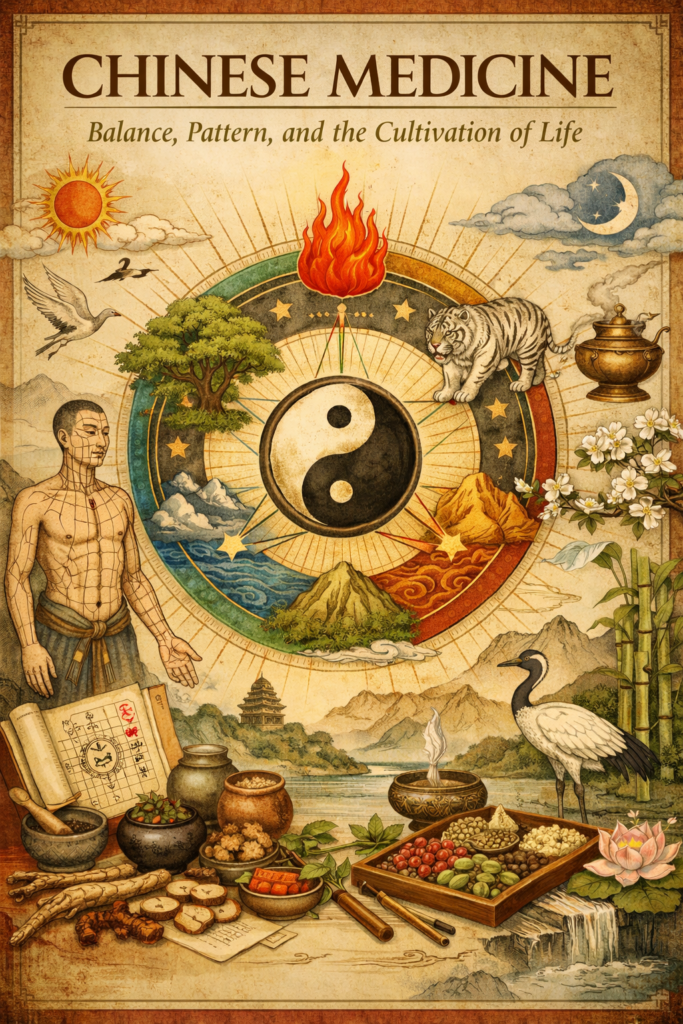
Editorial illustration inspired by Chinese medicine featuring yin-yang symbolism, the Five Phases, acupuncture meridians, herbs, vessels, mountains, cranes, and a balanced cosmological composition.

Chinese Medicine: Balance, Pattern, and the Cultivation of Life

Chinese medicine examines a major healing tradition grounded in qi, yin and yang, the Five Phases, organ networks, seasonal change, and the patterned interpretation of health and disorder. From the Huangdi neijing and Nanjing to herbal formula traditions, acupuncture, moxibustion, pulse diagnosis, and preventive care, this category explores how Chinese medicine developed as an integrated medical-philosophical system of balance, regulation, correspondence, and cultivation.

Scroll to Top