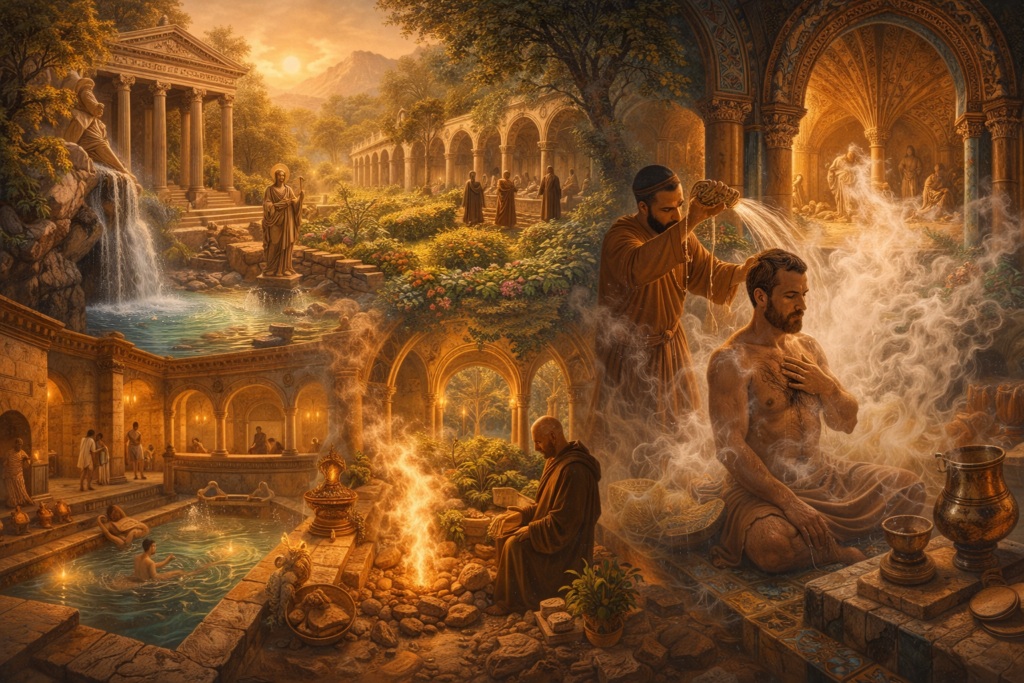
Healing Spaces, Baths & Sacred Environments
Healing Spaces, Baths & Sacred Environments examine the places, structures, and environmental settings through which cultures have pursued cleansing, restoration, ritual healing, bodily care, and the renewal of life. In the history of ideas, healing has often been shaped not only by remedies, regimens, and practitioners, but also by environments understood as therapeutic, purifying, protective, or spiritually charged, including baths, springs, sanctuaries, temples, gardens, monastic spaces, and other settings where architecture, water, atmosphere, and ritual formed part of the work of restoration.
This category explores bathing cultures, sacred springs, temple healing, pilgrimage environments, Roman baths, monastic infirmaries, ritual cleansing, healing landscapes, and the relationship between built space, environment, embodiment, and care. It considers how places may be understood as restorative in physical, symbolic, communal, and spiritual terms, how water and atmosphere can become part of healing practice, and how environments can shape experiences of purity, relief, balance, and renewal.
Healing spaces, baths, and sacred environments play an important role in comparative inquiry because they show that healing has often depended not only on substances or interventions, but on the spatial, ritual, and ecological worlds in which care takes place. By engaging these traditions seriously, this category deepens understanding of healing as an environmental and civilizational practice, while broadening reflection on the relationship between place, architecture, ritual, and the restoration of body and spirit.