Global Governance

Global governance refers to the institutions, norms, and cooperative arrangements through which international actors manage collective problems at the global scale. Unlike traditional government structures, global governance operates through networks of states, international organizations, private actors, and civil society institutions.

Institutions such as the United Nations, World Bank, International Monetary Fund, and World Trade Organization play central roles in coordinating economic policy, humanitarian assistance, environmental protection, and conflict resolution. Informal networks and multilateral agreements also contribute to global governance structures.

The effectiveness of global governance systems depends on institutional legitimacy, coordination capacity, and the ability of actors to negotiate shared solutions to transnational challenges. As issues such as climate change, financial stability, and technological regulation increasingly require global cooperation, the study of global governance has become central to international relations and sustainable development.

Editorial illustration of the sources of international law shown as a circular layered legal architecture with treaty-like documents, institutional chambers, archives, legal pathways, human figures, and outer rings representing sovereignty, custom, hierarchy, unequal power, and contested global authority.

Sources of International Law: Treaties, Custom, and Legal Principles

International law examines the recognized legal sources through which rules arise, acquire authority, and are interpreted within the international system. Because there is no single global legislature, international law develops through treaties, customary international law, general principles of law, judicial decisions, scholarly writings, and the evolving practice of states and international institutions. This article explores how Article 38 of the Statute of the International Court of Justice became the classical framework for identifying those sources, while also examining the dynamic interaction between treaty law, custom, legal principles, soft law, and peremptory norms in the development of international legal order. By clarifying how international law is made, argued, and applied, the article provides a foundation for understanding sovereignty, human rights, armed conflict, maritime governance, dispute settlement, and the wider structure of global legal authority.
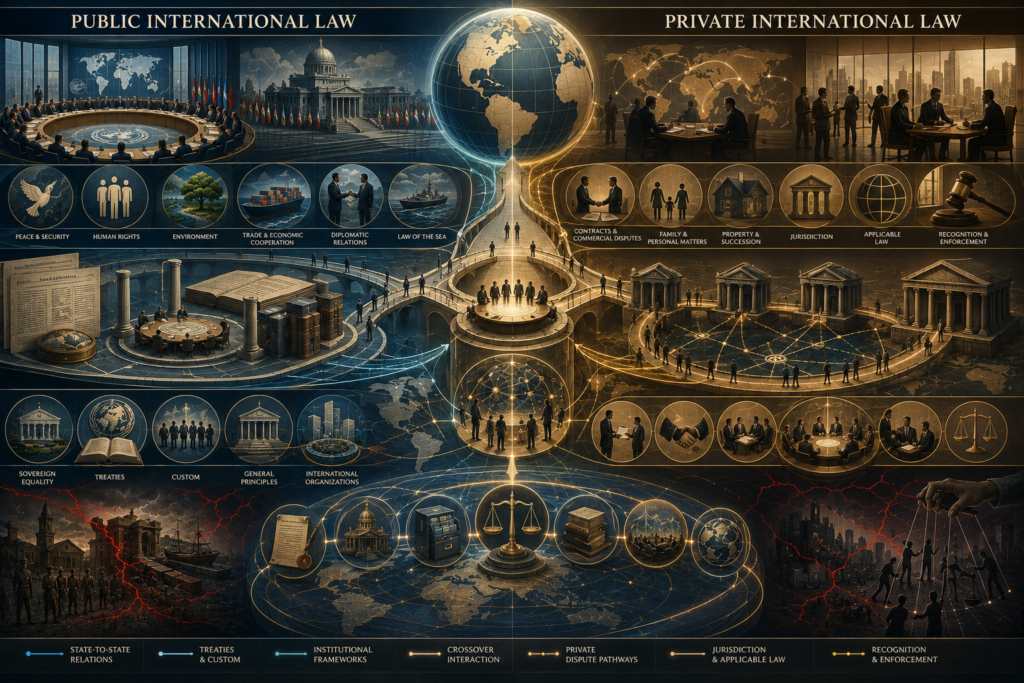

Abstract legal-studies illustration comparing public international law and private international law, showing state-centered legal order, international institutions, treaties, cross-border private disputes, jurisdiction, applicable law, recognition of judgments, arbitration, and global commerce.

Public vs Private International Law: Understanding the Distinction

Public international law and private international law are closely related but distinct fields. Public international law governs relations among states, international organizations, peoples, and other international legal subjects, including treaties, custom, human rights, state responsibility, diplomatic relations, the law of the sea, and the use of force. Private international law, often called conflict of laws, governs cross-border disputes between private actors by determining which court has jurisdiction, which legal system applies, and whether foreign judgments can be recognized or enforced. This article explains the doctrinal distinction while showing where the fields increasingly overlap through investment arbitration, commercial disputes, global supply chains, digital platforms, cross-border family law, and access-to-justice questions in an interconnected world.

Abstract legal-studies illustration of international law as a global legal architecture, showing states, treaties, custom, general principles, institutions, courts, human rights, diplomacy, maritime routes, environmental cooperation, and selective enforcement.

What Is International Law? Foundations of Global Governance

International law provides the legal framework for relations among states, international organizations, peoples, individuals, courts, and other global actors. This introductory article explains how international law structures diplomacy, treaties, trade, environmental protection, human rights, armed conflict, maritime navigation, public health cooperation, and international institutions. It distinguishes public international law from domestic law and private international law, introduces core sources such as treaties, custom, general principles, judicial decisions, and scholarly writings, and explains why international law operates as a decentralized legal order rather than a domestic-style hierarchy. It also examines everyday examples of international law, the role of the United Nations and International Court of Justice, the question of whether international law is “really law,” and the field’s unresolved tensions around empire, decolonization, unequal power, selective enforcement, and global governance.

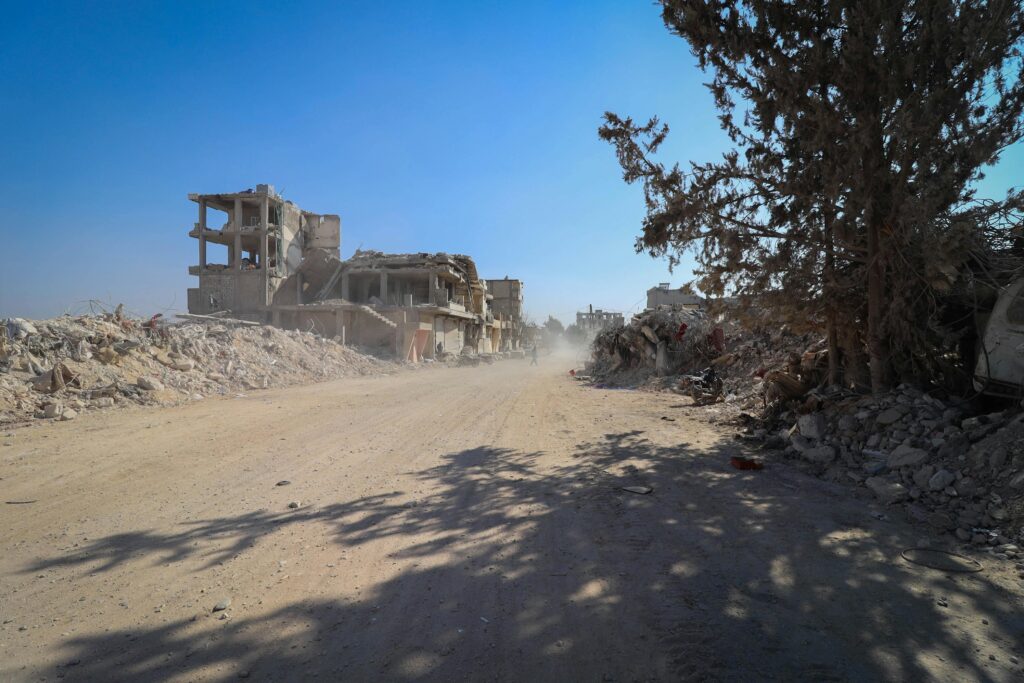
Destroyed urban landscape illustrating the long-term impact of attrition warfare in armed conflict.

War of Attrition Game Theory: Strategic Endurance in Prolonged Conflict

War of Attrition Game Theory explains why conflicts can persist long after their costs appear to outweigh the value of victory. In prolonged contests, strategy turns on endurance, uncertainty, signaling, resource depletion, and the credibility of each actor’s willingness to suffer longer than its opponent. This article examines the war-of-attrition model from evolutionary game theory and applies it to military conflict, bargaining, commitment problems, sunk costs, asymmetric warfare, logistics, institutions, and humanitarian limits. It shows how wars become systemic stress tests for societies, exposing the resilience or fragility of states, alliances, economies, public legitimacy, and social cohesion. Rather than treating attrition as simple persistence, the article frames it as a dynamic interaction among power, time, information, suffering, and political order.

Vintage car driving past Che Guevara mural in Havana Cuba illustrating the long-term impact of economic sanctions on Cuban society and infrastructure

Why Economic Sanctions Are Bad Policy

Economic sanctions are often framed as a civilized alternative to war, but their real-world effects are far more complex. This article examines sanctions as instruments of economic statecraft that can punish aggression, corruption, human-rights violations, and breaches of international law while also weakening institutions, harming civilians, disrupting development, and destabilizing critical infrastructure. It explores the institutional impact of sanctions, the ethical problem of collective punishment, their long-term consequences for sustainable development, and their uneven record of policy effectiveness. Through a systems lens, mathematical framing, and Python and R modeling snippets, the article shows how sanctions reshape financial networks, public services, trade systems, humanitarian access, and political incentives. Rather than treating sanctions as clean or bloodless tools, it argues for more precise, accountable, humane, and evidence-based forms of economic statecraft.

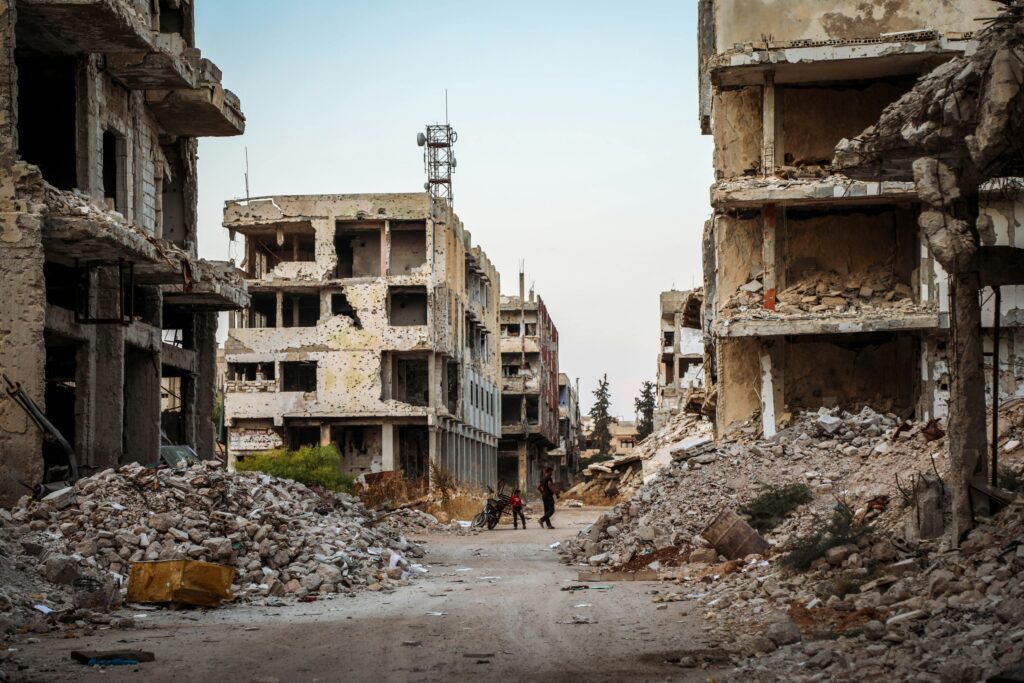
War-damaged buildings in Syria showing destroyed civilian infrastructure during armed conflict.

Does International Law Still Matter? The Erosion of Global Legal Norms

International law remains one of the central legal frameworks for limiting force, protecting civilians, and holding power accountable in global politics. Emerging from the devastation of world war, decolonization, genocide, and mass displacement, the modern international legal system is built around the UN Charter, Geneva Conventions, International Court of Justice, International Criminal Court, human-rights law, humanitarian law, and customary legal norms. This article examines whether international law still meaningfully constrains state behavior in an era of armed conflict, selective enforcement, sovereignty disputes, civilian harm, geopolitical rivalry, and institutional distrust. It explores the foundations of international law, the protection of civilians, international criminal accountability, enforcement gaps, legitimacy, marginalized peoples, and the tension between law and power. Rather than treating international law as either powerless or perfect, it frames it as a fragile but necessary guardrail against impunity.

Finnish public school campus surrounded by trees illustrating the Finland education system and its learning environment

The Institutional Logic of the Finland Education System

The institutional logic of the Finland education system reveals how public education can function as a deeply designed institution rather than a competitive sorting mechanism. This article examines Finland’s schools through the lens of Institutions & Governance, focusing on public funding, comprehensive schooling, equity, teacher professionalism, assessment restraint, student well-being, local autonomy, and public trust. It argues that Finland’s visible education practices rest on deeper institutional foundations: strong teacher preparation, national purpose, municipal implementation, welfare-state support, and a commitment to reducing disparities between schools and communities. Rather than treating Finland as a simple model to copy, the article explores what other systems can learn from its governance architecture: education works best when society treats learning as a public good, teachers as trusted professionals, and equity as a design obligation.

China green energy transition illustrated by large-scale solar and wind power infrastructure

China Green Energy Transition: Industrial Policy, Infrastructure, and Global Climate Leadership

China’s green energy transition is not only an energy story, but an institutional story about state capacity, industrial policy, infrastructure planning, regulatory coordination, and long-term climate governance. As the world’s largest energy consumer and greenhouse gas emitter, China occupies a decisive position in global decarbonization. This article examines how China has expanded solar, wind, storage, electric vehicles, transmission infrastructure, and clean-technology manufacturing through coordinated public investment and national planning. It argues that decarbonization requires more than cleaner technology; it requires institutions capable of financing infrastructure, integrating renewable power, managing coal dependence, coordinating regional development, and shaping global supply chains. China’s transition remains incomplete and contested, but it demonstrates how climate leadership increasingly depends on industrial capacity, infrastructure governance, and the ability to align national development with planetary responsibility.

American classroom illustrating structural challenges in the American education system

The Structural Failures of the American Education System

The structural failures of the American education system are not mainly failures of teachers, students, families, or individual schools. They are failures of institutional design: how public education is funded, governed, measured, staffed, segregated, disciplined, professionalized, and connected to housing, public finance, higher education, debt, and social inequality. This article examines American education as an Institutions & Governance problem, showing how local property-tax dependence, district boundaries, residential segregation, unequal facilities, teacher workforce pressure, test-driven accountability, curriculum stratification, civil-rights disparities, and debt-financed higher education distribute opportunity unevenly. It argues that educational inequality is not accidental or marginal, but built into the public architecture of the system. A more democratic education system would require equitable finance, professional trust, strong facilities, broad curriculum access, civil-rights enforcement, affordable higher education, and public accountability for the conditions of learning.

Scroll to Top