
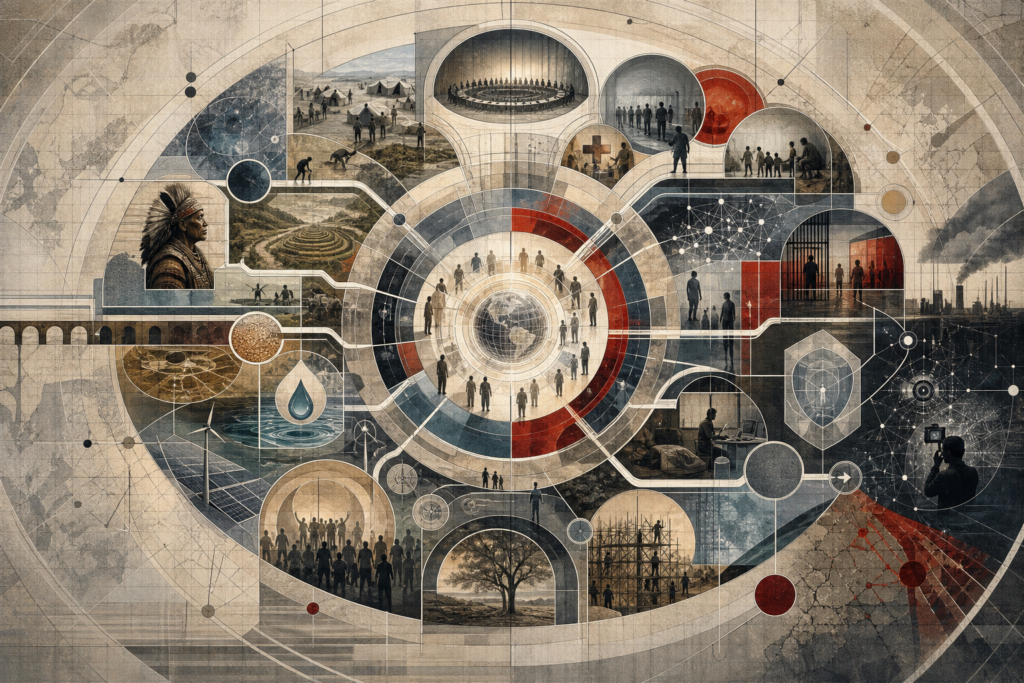
International Organizations: Global Governance, Human Protection, and Institutional Accountability
International organizations shape how the modern world coordinates cooperation, manages conflict, distributes resources, documents harm, and contests institutional power. This pillar examines the United Nations, Bretton Woods institutions, specialized agencies, regional organizations, humanitarian systems, development banks, human-rights organizations, medical humanitarian groups, anti-torture and anti-surveillance networks, migrant-rights institutions, Indigenous-rights organizations, labor movements, peace organizations, climate justice networks, tax justice advocates, investigative journalists, and open-source accountability actors. It treats international organizations not as neutral machinery, but as historically formed institutions shaped by sovereignty, colonial legacies, debt, donor power, selective enforcement, public evidence, resistance, and struggles for legitimacy.