
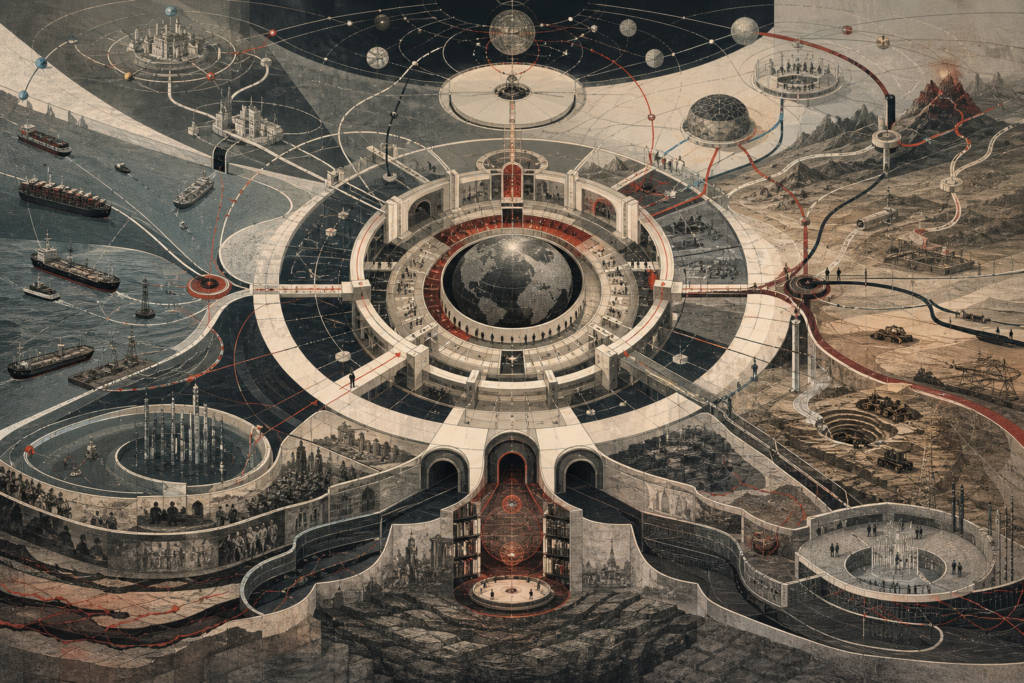
Geopolitics & Global Order: Power, Institutions, and the Architecture of the International System
Geopolitics and global order examine how power, geography, institutions, alliances, economic systems, technology, resources, security, and historical memory shape the international system. This pillar studies global order as a structured but contested world system, connecting great power competition, regional politics, international organizations, economic statecraft, energy security, digital infrastructure, climate pressure, and strategic corridors. It treats geopolitics not only as rivalry among states, but also as a field shaped by empire, colonial legacies, dependency, nonalignment, unequal sovereignty, development finance, resource extraction, and the uneven distribution of global risk. Through planned articles on institutions, regions, security, technology, economics, environmental stress, and critical geopolitics, the series builds a research-grade framework for understanding how global stability is organized, how power is exercised, and how world order changes under pressure.