
Environmental Science

Environmental Science examines the interactions between natural systems, living organisms, and human activity. It seeks to explain how ecosystems function, how environmental conditions change, and how human societies alter the material, chemical, and biological processes that sustain life and habitability.

This field brings together knowledge from ecology, biology, chemistry, Earth science, climate science, and related disciplines in order to study pollution, biodiversity, resource use, environmental degradation, resilience, and sustainability. It focuses not only on the behavior of natural systems, but also on the feedbacks that connect environmental change to social organization, public health, economic activity, and political decision-making.

Environmental Science plays a vital role in contemporary thought because it clarifies the conditions under which ecological and human systems endure or break down. By linking scientific analysis to questions of risk, stewardship, adaptation, and long-term viability, it helps societies understand the environmental consequences of development and the practical requirements of responsible coexistence within the Earth system.

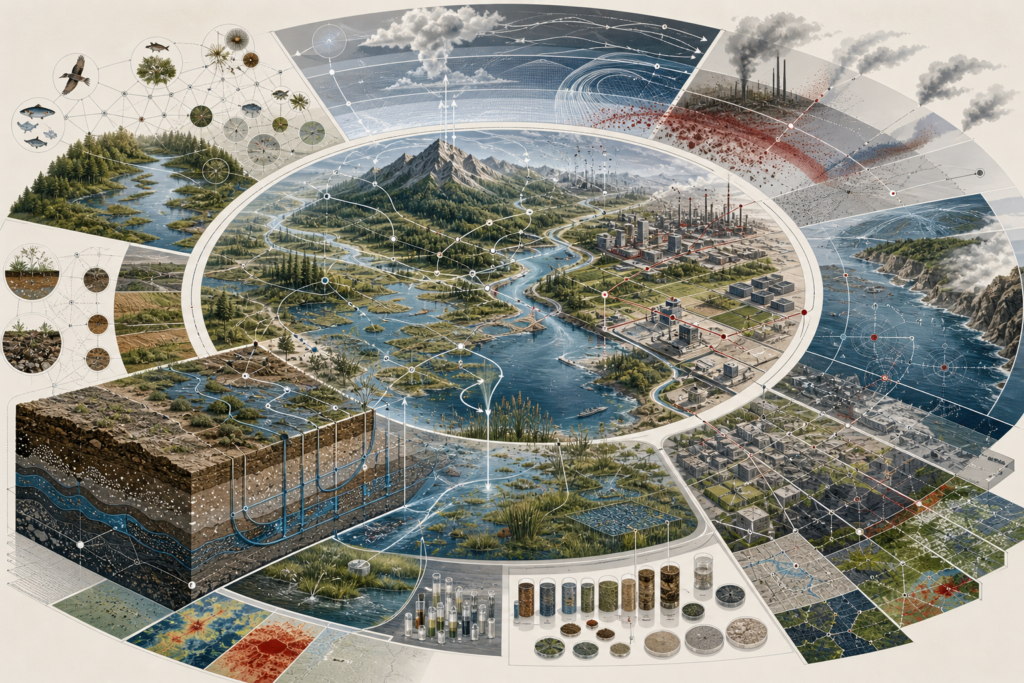
Scientific illustration of environmental science showing ecosystems, watersheds, wetlands, groundwater, soils, atmosphere, pollution pathways, monitoring networks, laboratory samples, urban infrastructure, coastal systems, and environmental data flows.

Environmental Science: Ecosystems, Climate, Pollution, Risk, and Habitability

Environmental Science examines the interactions between natural systems, living organisms, and human activity. As a foundational natural science, it explains how ecosystems function, how environmental conditions change, and how human societies alter the processes that sustain life and habitability. This pillar explores ecology, biodiversity, climate, pollution, toxicology, water, soils, environmental health, sustainability, and the wider scientific and civilizational significance of understanding a changing environment.
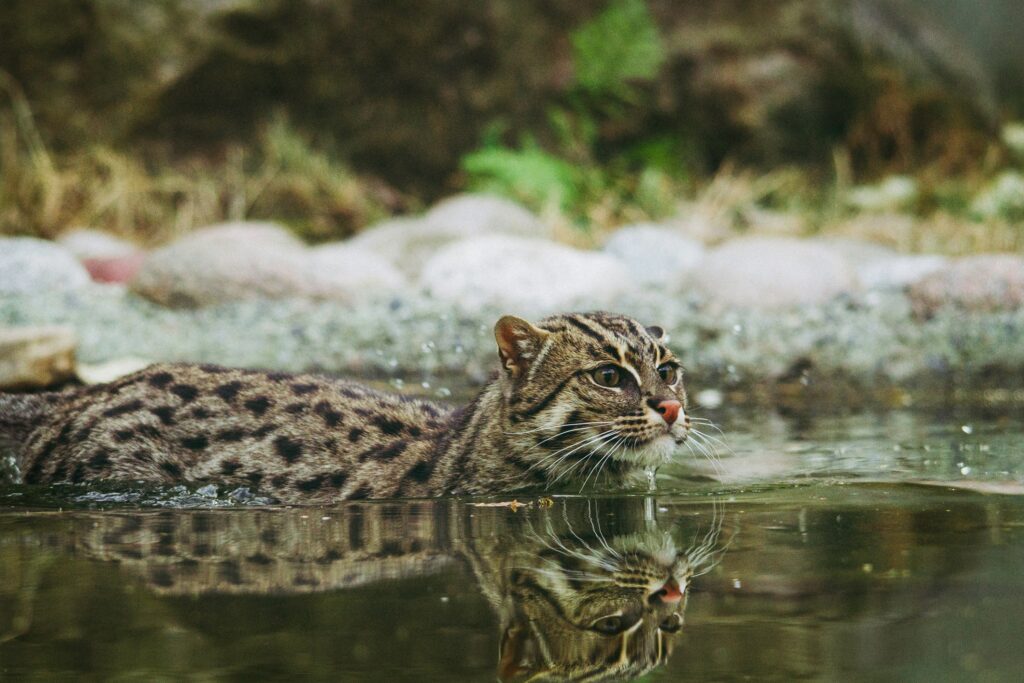
Fishing cat wetland habitat illustrating wetland loss and the hidden cost of development.

Wetland Loss and the Fishing Cat: When Ecosystems Collapse

Fishing cats, wetland loss, and the hidden infrastructure of resilience reveal how biodiversity decline is inseparable from environmental systems change. This article uses the fishing cat as an indicator of wetland degradation, showing how marshes, mangroves, floodplains, tidal creeks, and aquatic food webs support both wildlife and human communities. It examines wetland loss as a crisis of hydrology, water quality, carbon storage, fisheries, coastal protection, habitat connectivity, and natural infrastructure. As wetlands are drained, polluted, fragmented, or converted for development and aquaculture, fishing cats lose habitat while people lose flood buffers, water filtration, storm protection, and ecological security. The article argues that protecting fishing cats is not only species conservation; it is part of a broader environmental science strategy to defend wetlands as living systems that sustain resilience.

Scroll to Top