
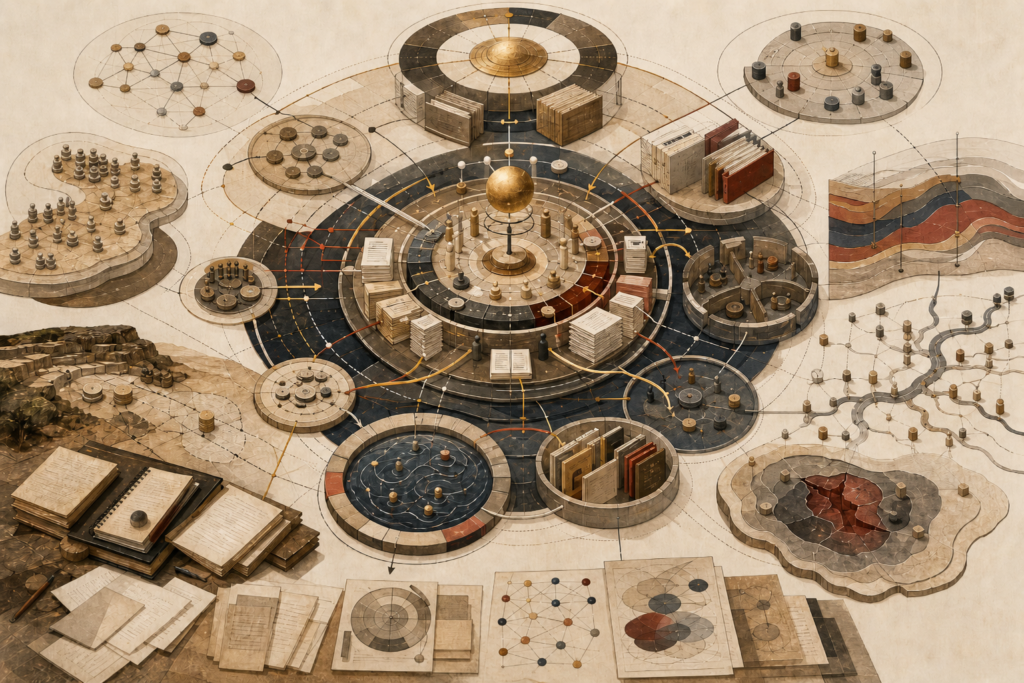
Power, Norms, and Institutions
Power, norms, and institutions examine how authority, legitimacy, custom, informal expectation, hierarchy, discipline, and social recognition shape social order within human communities. In cultural anthropology, institutions are not limited to formal organizations, legal systems, or bureaucratic structures. They are also embedded in norms, roles, rituals, sanctions, status systems, moral expectations, and everyday practices that define what is proper, possible, binding, deviant, honorable, or forbidden. This pillar explores how power becomes ordinary, how norms regulate behavior, how legitimacy sustains authority, how informal institutions shape formal rules, and how systems of status, trust, symbolic authority, and institutional memory reproduce social order. It also examines institutional change, contestation, inequality, governance, and the ethical challenges of studying power in lived settings.