
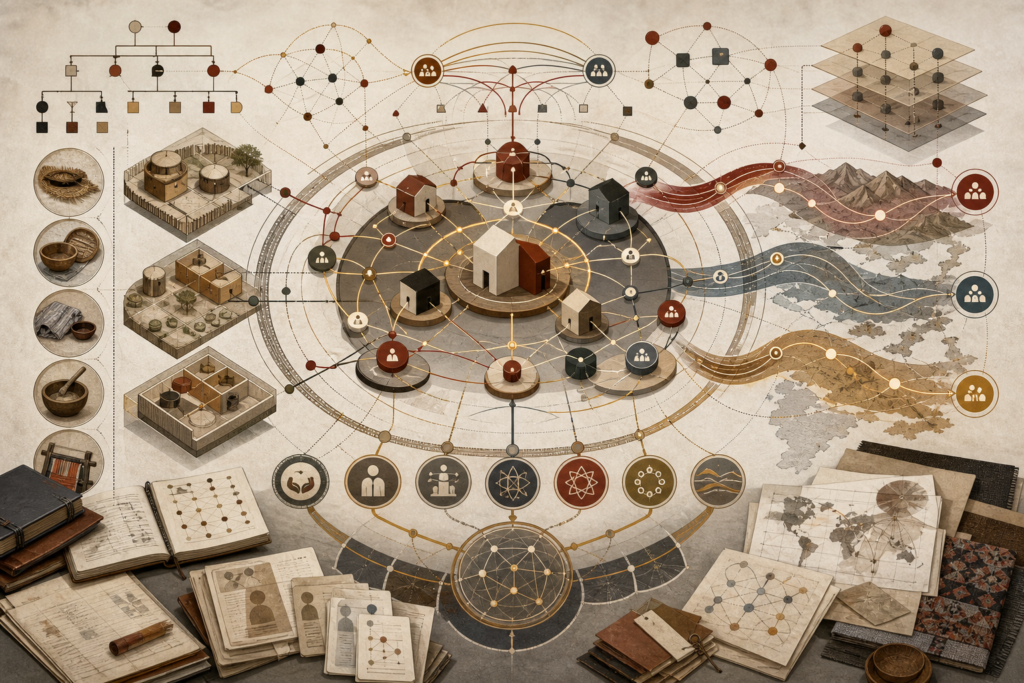
Kinship, Reciprocity, and Social Organization
Kinship, reciprocity, and social organization examine how human communities organize belonging, obligation, exchange, care, inheritance, alliance, and continuity across generations. In cultural anthropology, kinship is not limited to biological or legal family structures. It includes the culturally specific ways societies create relatedness through descent, marriage, households, feeding, co-residence, ritual ties, adoption, labor, memory, migration, and care. This pillar explores how kinship systems define persons and roles, how reciprocity sustains trust and obligation, how households distribute labor and resources, and how exchange creates durable social ties. It also examines the power and inequality embedded in relational life, including gendered labor, inheritance, dependency, migration, remittances, social support, and the ethical challenges of studying sensitive relational data.