
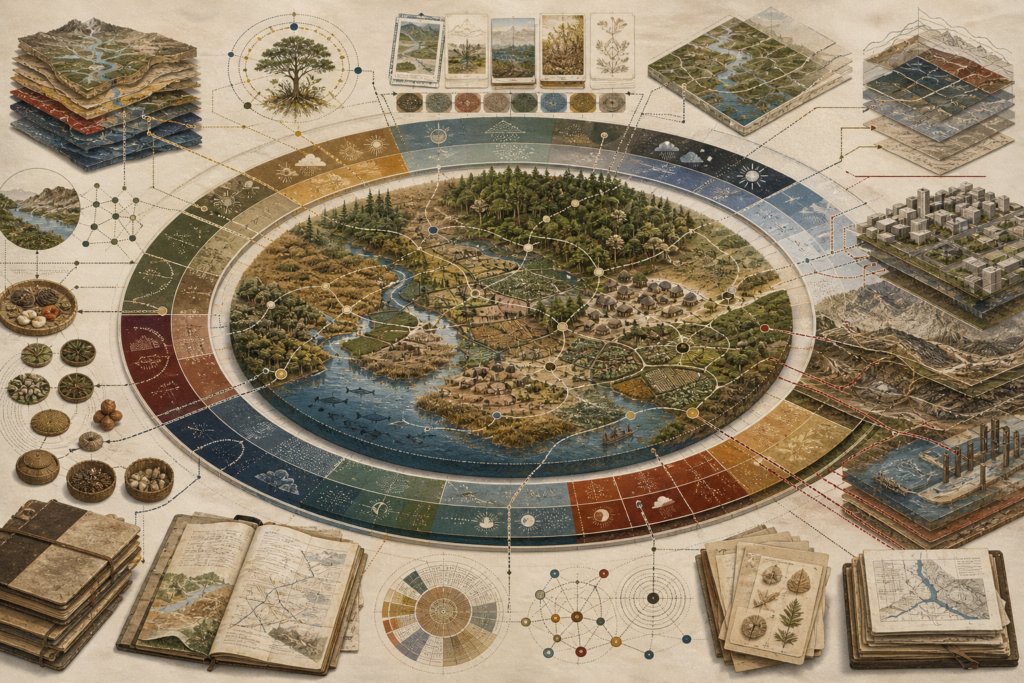
Environment, Place, and Ecological Knowledge
Environment, place, and ecological knowledge examine how human communities understand, inhabit, interpret, adapt to, and struggle over the natural worlds around them. In cultural anthropology, environments are not treated only as physical settings, resource bases, ecological constraints, or technical management problems. They are also lived landscapes shaped by memory, livelihood, risk, symbolism, mobility, territorial belonging, local knowledge, environmental change, and systems of stewardship. This pillar explores how communities classify plants, animals, water, weather, soils, and territory; how place becomes embedded in identity, social memory, and obligation; how ecological knowledge is transmitted through practice; and how environmental conflict, conservation, extraction, climate adaptation, and environmental justice reveal the unequal power relations that shape human-environment life.