
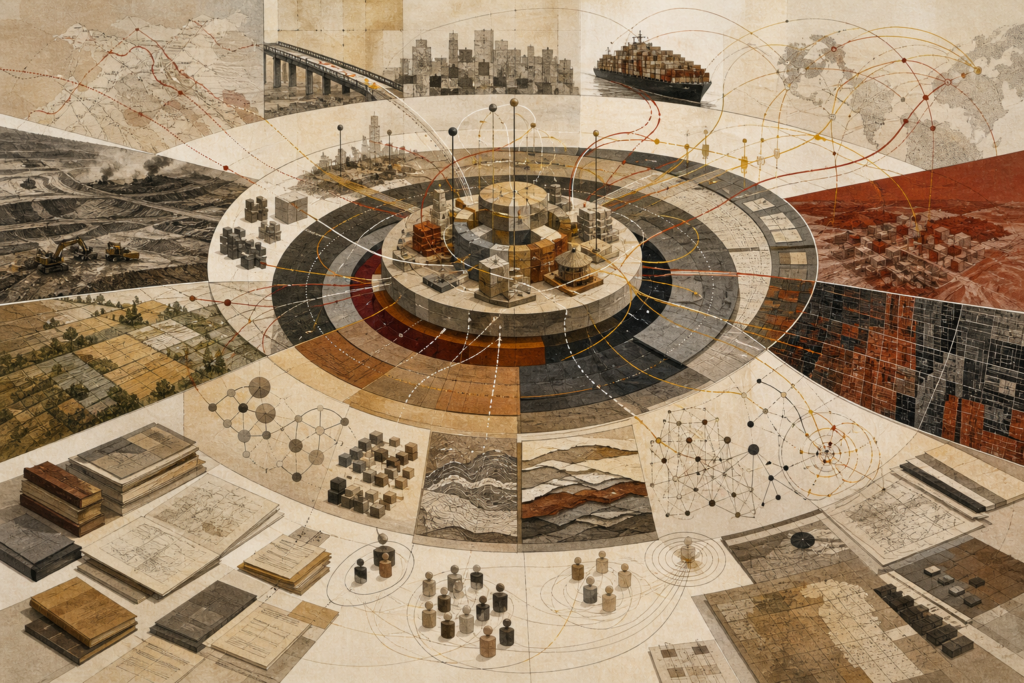
Development, Modernity, and Global Change
Development, modernity, and global change examine how communities experience economic transformation, modernization, globalization, infrastructure, migration, state power, market expansion, expert knowledge, and social upheaval within changing historical conditions. In cultural anthropology, development is not understood only through aggregate growth, institutional reform, technical assistance, or economic indicators. It is also understood through lived experiences of displacement, aspiration, inequality, cultural change, ecological disruption, institutional intervention, and shifting relations of power across local and transnational worlds. This pillar explores how development projects reorganize everyday life, how modernity alters social expectations, how global integration generates mobility and disruption, and how communities reinterpret, resist, inhabit, and transform large-scale change through memory, obligation, local knowledge, survival, and contested futures.