
Culture, Ritual, and Symbolism
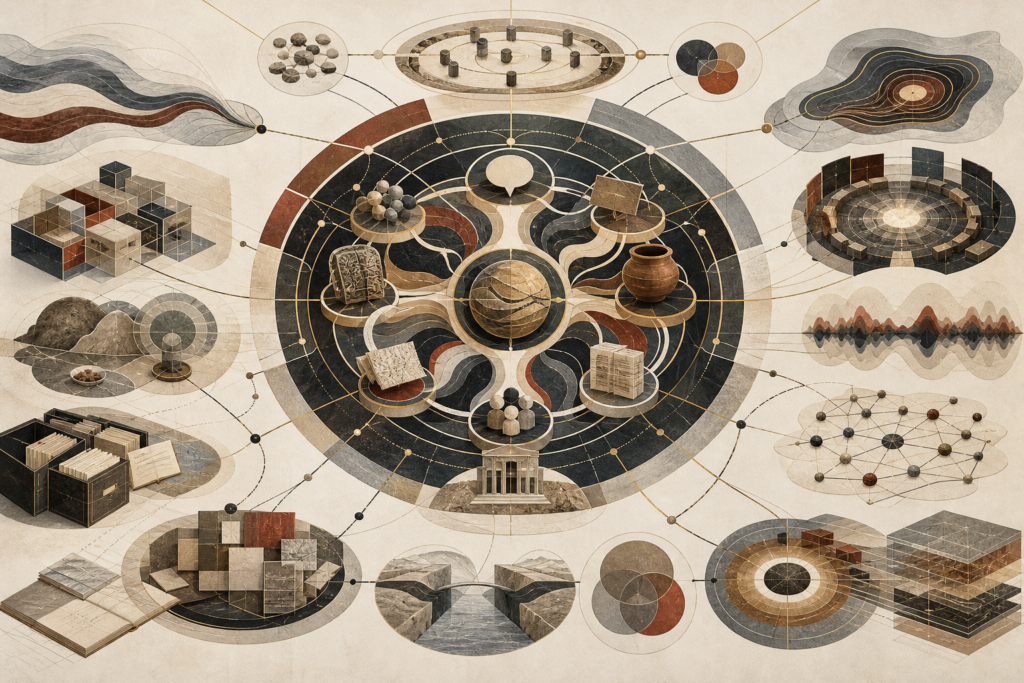
Culture, meaning, and symbolism examine how human beings construct shared worlds through language, myth, ritual, narrative, classification, material practice, and public symbols. In cultural anthropology, culture is not treated as decoration, lifestyle, or inherited custom alone, but as a symbolic system through which communities perceive reality, define belonging, organize memory, regulate moral life, and make social order intelligible. This pillar explores how symbols acquire authority, how rituals make values visible, how stories preserve collective memory, how classifications create boundaries, and how symbolic systems can both legitimize power and support resistance. It also introduces research workflows for organizing sources, fieldnotes, interpretive codebooks, qualitative coding, and symbolic analysis while preserving context, ethics, reflexivity, and the central anthropological responsibility of interpretation.