Author name: Tariq Ahmad

Non-figurative editorial illustration of blank parchment folios, scrolls, olive branches, folded linen, stone thresholds, water, and converging streams of light representing Mary / Maryam in Christian and Qur’anic sacred memory.

Mary / Maryam in Christian and Qur’anic Sacred Memory

Mary / Maryam stands at one of the most luminous meeting points in Abrahamic sacred memory. In Christianity, she is remembered as the mother of Jesus, the faithful servant whose consent, song, sorrow, and discipleship become inseparable from the Gospel story. In the Qur’an, Maryam is chosen, purified, protected, and vindicated; she is the only woman named directly in the Qur’an and is honored as a truthful woman whose life becomes a sign of divine mercy. This article reads Mary/Maryam across the New Testament, Qur’an, and later Christian and Islamic interpretation, emphasizing shared monotheism, revelation, moral purity, sacred motherhood, and divine nearness while carefully preserving real theological differences over Jesus, incarnation, prophecy, and sacred history.

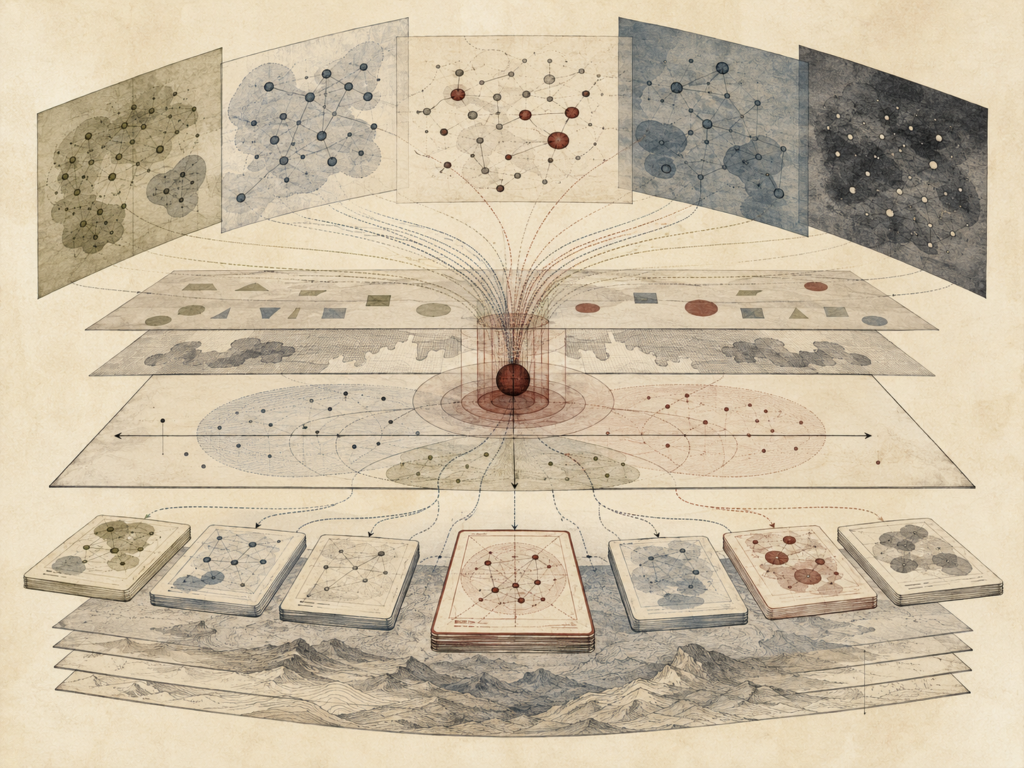
Non-figurative editorial illustration of layered parchment, luminous light pathways, circular astronomical geometry, blank scholarly folios, water traces, olive leaves, stone thresholds, and soft gold illumination representing optics, astronomy, and scientific inquiry in the Islamic Golden Age.

Optics, Astronomy, and Scientific Inquiry in the Islamic Golden Age

Optics, astronomy, and scientific inquiry in the Islamic Golden Age show how Islamic civilization transformed inherited knowledge through translation, mathematics, observation, criticism, instrumentation, and disciplined reasoning. Scholars working in Arabic, Persian, and other Islamicate languages studied light, vision, celestial motion, calendars, geography, instruments, planetary models, and the mathematical order of nature. Ibn al-Haytham’s Book of Optics became a landmark in the study of vision, light, experimentation, and mathematical analysis, while astronomers from al-Battani and al-Biruni to Nasir al-Din al-Tusi and the Maragha tradition refined observation and challenged inherited Ptolemaic models.

Non-figurative editorial illustration of layered parchment, blank medical folios, luminous healing pathways, water traces, botanical forms, olive branches, folded linen, stone thresholds, circular natural-knowledge geometry, and soft gold illumination representing Islamic medicine and the ordering of natural knowledge.

Islamic Medicine and the Ordering of Natural Knowledge

Islamic medicine emerged within a civilization where healing, philosophy, observation, ethics, translation, hospitals, pharmacology, regimen, and the study of nature belonged to a wider order of knowledge. Drawing on Greek, Syriac, Persian, Indian, and local medical traditions, Muslim, Christian, Jewish, and other scholars translated, criticized, reorganized, and extended ancient medicine in Arabic. Figures such as al-Razi, Ibn Sina, al-Zahrawi, Ibn al-Nafis, and many others helped shape medicine as both practical care and disciplined natural knowledge.

Non-figurative editorial illustration of layered parchment, blank philosophical folios, luminous reasoning pathways, circular conceptual geometry, water traces, olive branches, folded linen, stone thresholds, and abstract classical stone fragments representing falsafa and the Greek inheritance in Islamic civilization.

Falsafa and the Greek Inheritance in Islamic Civilization

Falsafa and the Greek inheritance in Islamic civilization describe one of the great intellectual encounters of world history: the movement of Greek, Syriac, Persian, and late antique philosophical knowledge into Arabic and its transformation within Islamic scholarly culture. Muslim, Christian, Jewish, Sabian, and other scholars translated and debated works associated with Plato, Aristotle, Plotinus, Galen, Euclid, Ptolemy, and later commentators, but falsafa was not passive preservation. Philosophers such as al-Kindi, al-Farabi, Ibn Sina, and Ibn Rushd reworked metaphysics, logic, psychology, ethics, political philosophy, medicine, astronomy, and the theory of prophecy within a world shaped by Qur’an, tawhid, kalam, law, and revelation.

Non-figurative editorial illustration of layered parchment, manuscript folios, luminous knowledge pathways, geometric world-history networks, water channels, olive branches, folded linen, stone thresholds, and soft gold illumination representing Islamic civilization, knowledge, and world history.

Islamic Civilization, Knowledge, and World History

Islamic civilization, knowledge, and world history cannot be understood as separate subjects. Islam emerged as revelation, recitation, prophecy, worship, law, mercy, theology, and moral discipline, but it also became a world-historical civilization of cities, institutions, scholarship, trade, translation, medicine, astronomy, mathematics, law, architecture, literature, governance, and global exchange. The Qur’an’s call to read, reflect, remember, judge with justice, seek wisdom, and recognize signs in creation helped form a civilization in which sacred text, language, law, reasoning, devotion, and inquiry were deeply entangled.

Non-figurative editorial illustration of layered parchment, luminous mercy pathways, balanced geometric structures, water traces, olive branches, folded linen, stone thresholds, and soft gold illumination representing mercy, beauty, and discipline in the Islamic tradition.

Mercy, Beauty, and Discipline in the Islamic Tradition

Mercy, beauty, and discipline belong together in the Islamic tradition because Islam does not separate compassion from order, devotion from ethics, or spiritual refinement from daily practice. The Qur’an opens with the divine names of beneficence and mercy, presents Muhammad as a mercy to the worlds, and calls human beings toward justice, remembrance, restraint, gratitude, and purification. Beauty appears in creation, recitation, adab, worship, moral character, art, architecture, poetry, and the inner refinement of the heart. Discipline appears in prayer, fasting, charity, law, self-restraint, and the struggle against ego.

Non-figurative editorial illustration of layered parchment, compact blank wisdom panels, circular discipline geometry, luminous pathways, water traces, olive branches, folded linen, stone thresholds, and soft gold illumination representing Islamic aphoristic wisdom and the discipline of the heart.

Islamic Aphoristic Wisdom and the Discipline of the Heart

Islamic aphoristic wisdom is the art of compressing moral and spiritual truth into memorable speech. Across the Qur’an, Hadith, sayings of sages, counsel attributed to ‘Ali and the Ahl al-Bayt, early ascetic maxims, Sufi manuals, Persianate adab, and works such as Ibn ‘Ata’ Allah’s al-Hikam, short sayings became instruments for disciplining the heart. Aphorisms do not replace revelation, law, theology, or spiritual practice. They help the soul remember, exposing pride, softening anger, restraining desire, awakening gratitude, cultivating patience, and returning the self to God.

Non-figurative editorial illustration of layered parchment, fractured dark stone, repaired luminous pathways, circular discipline geometry, water traces, olive branches, folded linen, and soft gold illumination representing jihad al-nafs, inner struggle, moral discipline, and the greater jihad.

Jihad al-Nafs: Inner Struggle, Moral Discipline, and the Greater Jihad

Jihad al-nafs is the inner struggle against the lower self: the disciplined effort to resist arrogance, greed, anger, envy, vanity, despair, heedlessness, cruelty, self-righteousness, and every impulse that turns the human being away from God. Often called the greater jihad in Islamic spiritual language, it names the daily moral labor through which faith becomes character. The Qur’an speaks of the soul’s capacity for corruption and purification, while Prophetic teaching identifies the true struggler as one who strives against the self.

Non-figurative editorial illustration of layered parchment, inward luminous pathways, circular remembrance geometry, water ripples, olive branches, folded linen, stone thresholds, and soft gold illumination representing Sufism, ihsan, and the interior life of Islam.

Sufism, Ihsan, and the Interior Life of Islam

Sufism, ihsan, and the interior life of Islam examine how Islamic faith becomes inward transformation: purification of the self, remembrance of God, humility, love, sincerity, repentance, discipline, mercy, and moral refinement. If kalam asks how Muslims speak truthfully about God, and fiqh asks how Muslims order practice, Sufism asks how the heart becomes truthful before God. Ihsan, defined in the Hadith of Gabriel as worshiping God as though one sees Him, and knowing that God sees the worshiper, gives this interior life its classical center. True tasawwuf is not a secret religion outside Islam. It is the inner substance of worship, law, ethics, and Prophetic formation.

Scroll to Top