
Last Updated May 5, 2026
Islamic medicine emerged within a civilization where healing, philosophy, observation, ethics, translation, hospitals, pharmacology, regimen, and the study of nature belonged to a wider order of knowledge. Drawing on Greek, Syriac, Persian, Indian, and local medical traditions, Muslim, Christian, Jewish, and other scholars translated, criticized, reorganized, and extended ancient medicine in Arabic. Figures such as al-Razi, Ibn Sina, al-Zahrawi, Ibn al-Nafis, and many others helped shape medicine as both practical care and disciplined natural knowledge. Islamic medicine was not simply “religious healing” or passive preservation of Galen. It was a medical, philosophical, institutional, and ethical tradition concerned with bodies, balance, disease, treatment, hospitals, public welfare, and the responsibilities of the healer.
Within the Islam sequence, this article follows The Qur’an: Revelation, Recitation, Guidance, and Sacred History, The History of the Prophets in the Qur’anic Tradition, The Prophet Muhammad and the Formation of the Ummah, Hadith and the Preservation of Prophetic Memory, Sīrah and the Sacred History of Early Islam, Fiqh and the Ordering of Muslim Life, Sharia, Mercy, and Moral Order, Kalam, Tawhid, and Islamic Theology, Sufism, Ihsan, and the Interior Life of Islam, Jihad al-Nafs: Inner Struggle, Moral Discipline, and the Greater Jihad, Islamic Aphoristic Wisdom and the Discipline of the Heart, Mercy, Beauty, and Discipline in the Islamic Tradition, Islamic Civilization, Knowledge, and World History, and Falsafa and the Greek Inheritance in Islamic Civilization. Those articles established revelation, Prophetic memory, law, theology, spirituality, philosophy, knowledge, and world history. This article turns to medicine: how healing became a major field of natural knowledge, ethical care, and civilizational exchange.
The emphasis remains academically neutral, historically serious, Qur’an-aware, and respectful of Islamic scholarly diversity. This article examines Islamic medicine as a historical intellectual tradition, not as modern clinical guidance. It considers translation, Galenic medicine, hospitals, physicians, pharmacology, surgery, regimen, anatomy, ethics, public health, religion, philosophy, and the ordering of nature. The aim is to understand how medicine functioned as a disciplined science of the body within a civilization shaped by revelation, reason, law, care, and learned inquiry.
Current Library
Religious Studies
Article Map
Abrahamic Traditions
Related Topic
Healing Traditions
Series context: This article is part of the Abrahamic Traditions: Prophecy, Revelation, Law, and Sacred History knowledge series. For the broader category structure, return to the Religious Studies category.
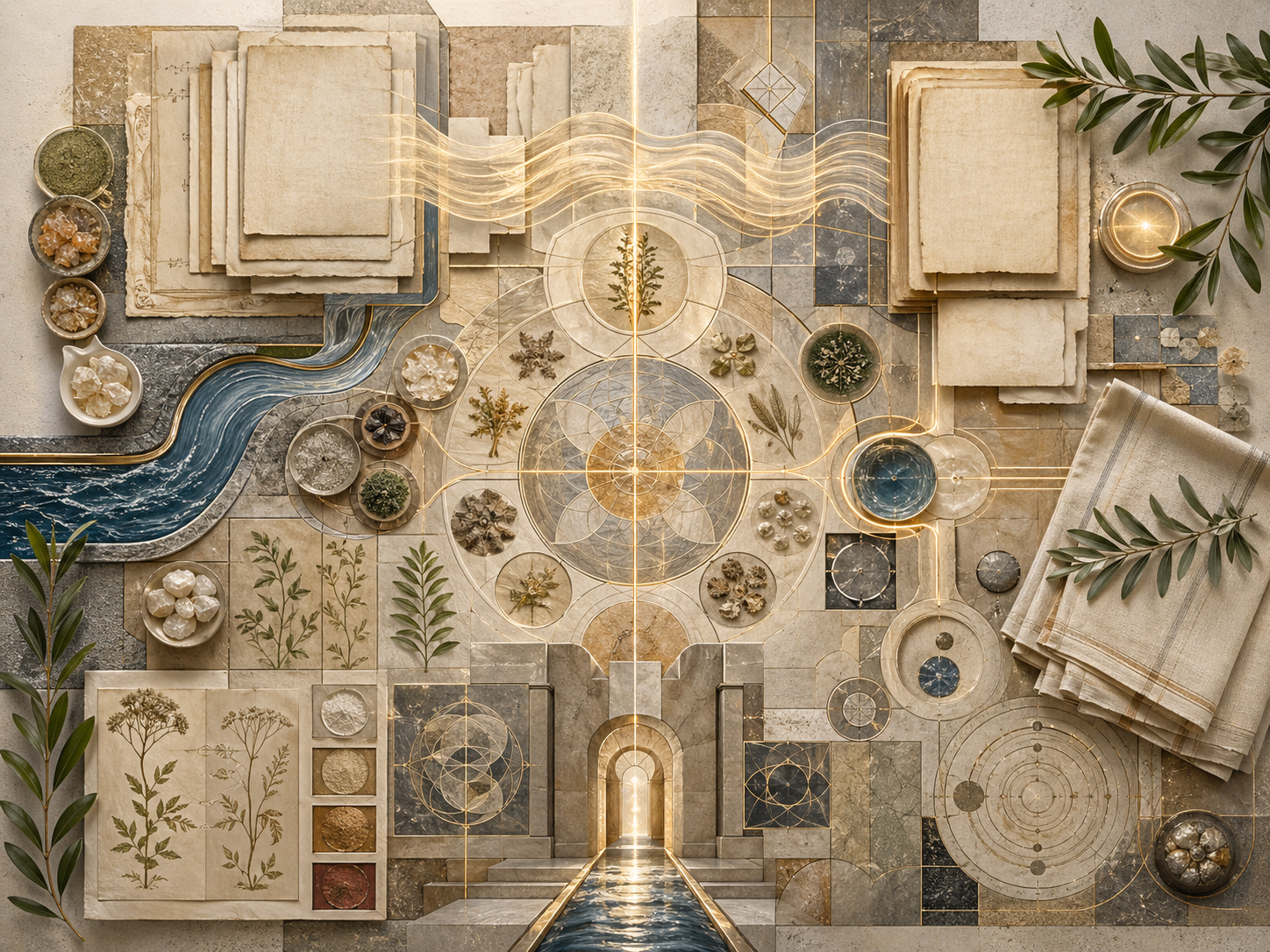
Islamic medicine should be approached as a historical field of care rather than as a romantic alternative to modern medicine or a dismissive relic of premodern error. Its physicians worked with theories that differ from contemporary biomedicine, especially humoral theory, temperament, regimen, and Galenic physiology. Yet they also built hospitals, studied symptoms, classified diseases, translated major medical works, developed pharmacological literature, wrote surgical manuals, debated anatomy, treated patients, trained students, and understood healing as a moral responsibility. Its historical importance lies precisely in this combination: inherited theory, practical observation, institutional care, ethical obligation, and the ordering of natural knowledge under a wider religious and philosophical horizon.
Why Islamic Medicine Matters
Islamic medicine matters because it shows medicine as a civilizational form of knowledge. It was not only a collection of remedies, nor only a religious concern with healing, nor only a preservation of Greek texts. It was a disciplined intellectual and practical tradition in which inherited medical theories, clinical observation, hospital organization, pharmacology, surgery, ethics, public welfare, philosophy, and religious life interacted.
The medical traditions of Islamic civilization emerged in a world shaped by translation, scholarship, urban institutions, travel, trade, and the moral responsibilities of care. Physicians studied bodies and substances, but they also worked within societies where illness carried ethical, familial, legal, devotional, and communal meaning. Medicine was practical because bodies suffer; it was philosophical because health was understood through order, balance, causation, and nature; it was ethical because treatment involves trust, vulnerability, and responsibility.
Islamic medicine also matters because it unsettles simplified histories of science. The old claim that Islamic civilization merely preserved Greek medicine until Europe recovered it is inadequate. Scholars working in Arabic translated Galen and Hippocrates, but they also criticized, expanded, classified, observed, debated, and institutionalized medicine. They built hospitals, wrote encyclopedias, studied drugs, developed surgical techniques, described diseases, and transmitted medical knowledge across regions and languages.
It also matters for Abrahamic history. Jewish, Christian, Muslim, and other scholars worked inside the same medical and philosophical worlds. Syriac Christian translators helped form the Arabic medical library. Jewish physicians wrote in Arabic and served in Islamic courts. Muslim physicians reorganized medicine within Islamic intellectual culture. Later Latin Europe received much of this knowledge through translation. Islamic medicine therefore belongs to the shared history of Abrahamic and intercivilizational knowledge.
Medicine also matters because it reveals a civilization at one of its most concrete points. Philosophy may ask what being is; theology may ask how God acts; law may ask what the body owes; spirituality may ask how suffering reforms the heart. Medicine asks how a fever is treated, how pain is understood, how drugs are prepared, how hospitals are organized, how a physician behaves, and how a society responds when the body becomes vulnerable. It is one of the places where knowledge, mercy, institution, and embodied life meet.
What Is Islamic Medicine?
Islamic medicine refers to the medical traditions that developed within Islamic civilization, especially in Arabic, Persian, and later Ottoman, South Asian, and other Muslim intellectual worlds. The phrase does not mean that every medical idea was derived directly from the Qur’an or Hadith. It means that medicine developed within societies shaped by Islam, Arabic scholarship, translation, law, hospitals, patronage, philosophy, and religious ethics.
This distinction is important. Islamic medicine included religious healing, Prophetic medicine, prayer, care for the sick, and moral reflection, but it also included rational medicine, anatomy, humoral theory, pharmacology, surgery, diagnosis, regimen, and hospital practice. A physician might study Galen, Hippocrates, Aristotle, Ibn Sina, al-Razi, pharmacological manuals, and local remedies while living in a society where God, law, charity, and moral accountability shaped the meaning of care.
Islamic medicine also varied across time and place. Medicine in Abbasid Baghdad was not identical to medicine in Andalusia, Cairo, Ottoman Istanbul, Safavid Iran, Mughal India, or later Unani traditions in South Asia. Yet these traditions shared a common learned inheritance: Arabic medical vocabulary, Galenic and Hippocratic frameworks, philosophical naturalism, pharmacological literature, hospital institutions, and an ethic of healing within a moral universe.
The term should therefore be used historically and carefully. Islamic medicine is not a single unchanging system, nor a substitute for modern medicine, nor a purely devotional practice. It is a vast historical field where healing, natural knowledge, religion, philosophy, and institution intersected.
It is also important to distinguish “Islamic medicine” from “medicine used by Muslims.” Many physicians in Islamic civilization were Christians, Jews, Sabians, or members of other communities. Many texts drew from non-Muslim sources. Yet the medical tradition developed within Islamic political, linguistic, institutional, and ethical worlds. The adjective “Islamic” names a civilizational context, not a claim that all practitioners, theories, or remedies were explicitly religious in origin.
Healing, Knowledge, and the Moral Order of Care
Healing is never only technical. A sick person is vulnerable, dependent, fearful, embodied, and socially situated. Medical knowledge therefore carries moral weight. The physician enters a relationship of trust. The hospital becomes a site of public care. The household becomes a place of nursing, diet, comfort, and prayer. Medicine becomes a way a civilization responds to suffering.
Islamic civilization valued knowledge, but knowledge was not supposed to be morally empty. The Qur’an repeatedly calls human beings to reflect, observe, reason, and recognize signs in creation. It also calls them to mercy, justice, charity, and care for the vulnerable. Medical inquiry could therefore be understood as part of a broader effort to understand the created body, relieve suffering, preserve life, and serve human welfare.
Qur’anic Text
وَإِذَا مَرِضْتُ فَهُوَ يَشْفِينِAnd when I fall ill, He is the One who heals me.Qur’an 26:80. Arabic text with English rendering.
The verse places healing ultimately with God while leaving room for human care, treatment, knowledge, and responsibility. In Islamic civilization, medical effort and dependence on God were not necessarily opposed.
This does not mean that every physician was pious or every medical institution was ideal. Physicians could be ambitious, courts could be political, and medical theories could be wrong. But the moral horizon mattered. Healing was not merely a market service. It was bound to charity, public institutions, learned duty, and ethical conduct.
Medical knowledge also required humility. Disease exposes the limits of control. The physician studies causes, symptoms, drugs, and treatments, but healing remains uncertain. Islamic moral reflection often holds together effort and dependence on God: one seeks treatment, uses knowledge, and acts responsibly, while recognizing that life, recovery, and death ultimately exceed human command.
This balance is important because it avoids two errors. One error treats illness as only a technical malfunction, stripping suffering of moral, spiritual, and social meaning. The other treats illness only as spiritual destiny, neglecting knowledge, treatment, and care. Islamic medicine developed in the space between these reductions: the body can be studied, the sick should be treated, the physician must be responsible, and healing remains finally in God’s hands.
Translation, Galen, Hippocrates, and the Arabic Medical Library
The translation movement was foundational for Islamic medicine. Works associated with Hippocrates, Galen, Dioscorides, Aristotle, and other Greek and late antique authors entered Arabic through translation, often mediated by Syriac. Galen was especially influential. His writings on anatomy, physiology, therapeutics, humors, temperament, pulse, diagnosis, and medical method shaped the learned medical tradition for centuries.
But translation was not copying alone. Translators had to create Arabic medical vocabulary, compare manuscripts, clarify technical terms, and make complex theories usable for physicians and students. The Arabic medical library became a new intellectual environment. Greek medical ideas were no longer simply Greek; they became part of Arabic scientific discourse, Islamic hospital practice, philosophical teaching, and later Persian and Latin medical traditions.
Hippocratic medicine contributed ideals of clinical observation, prognosis, regimen, and the physician’s moral posture. Galenic medicine contributed a vast theoretical system linking anatomy, physiology, humoral balance, temperament, and therapy. Dioscorides contributed pharmacological knowledge. Aristotle and late antique natural philosophy shaped broader accounts of nature, causality, soul, and body.
The Arabic medical tradition inherited these materials, but also reorganized them. Medical encyclopedias, summaries, commentaries, case observations, pharmacological manuals, surgical treatises, and hospital practice transformed the received tradition. Islamic medicine must therefore be understood as reception and transformation, not preservation alone.
The medical library also created a new kind of physician-scholar. A learned physician could cite Galen, debate Aristotle, read pharmacological manuals, interpret symptoms, teach students, serve courts, write case histories, and treat ordinary patients. Medical authority became textual, practical, observational, and institutional at once. The book mattered, but so did the bedside.
Syriac, Persian, Indian, and Local Medical Inheritances
Greek medicine entered Islamic civilization through Syriac Christian scholarly networks that had already translated and studied Greek medical literature. Syriac-speaking physicians and translators were central to Abbasid medicine. They helped create the Arabic medical vocabulary and served as physicians, teachers, translators, and scholars.
Persian medical culture also mattered. The Sasanian world had institutions, court medicine, and learned traditions that influenced early Islamic medicine. The famous academy and hospital traditions associated with Jundishapur have often been discussed in this context, though modern scholarship treats some older claims about its exact role with caution. What remains clear is that Persian administrative, medical, and scholarly cultures contributed to the early Islamic medical world.
Indian knowledge also entered Arabic scientific culture, especially in mathematics, astronomy, pharmacology, and materia medica. Trade routes and translation networks made medicinal substances and medical ideas mobile. Islamic medicine developed in contact with plants, minerals, foods, and therapeutic practices from many regions.
Local knowledge mattered as well. Physicians did not treat abstract bodies alone. They treated bodies in climates, diets, cities, villages, households, and environmental conditions. Medicine required knowledge of local substances, water, air, seasonal patterns, foods, and social habits. The ordering of natural knowledge was therefore both universalizing and local.
This plurality is essential for understanding Islamic medicine. The tradition was not formed by one source, one people, or one method. It was a composite knowledge-world: Greek theory, Syriac translation, Persian institution, Indian substance knowledge, local practice, Arabic systematization, religious ethics, and clinical experience. Its strength came from its ability to organize many inheritances into a learned medical culture.
Humoral Medicine, Balance, Temperament, and Regimen
Much of classical Islamic medicine worked within a humoral framework inherited from Greek medicine. Health was understood through balance among humors, qualities, temperament, organs, faculties, diet, environment, and regimen. Disease often involved imbalance, obstruction, excess, deficiency, corruption, or disturbance in the body’s ordered processes.
The four humors—blood, phlegm, yellow bile, and black bile—were associated with qualities such as hot, cold, moist, and dry. Temperament, or mizaj, described the constitutional balance of a person, organ, medicine, food, or environment. Therapy sought to restore balance through diet, regimen, drugs, evacuation, rest, movement, bathing, climate adjustment, and other interventions.
Modern readers should not confuse humoral medicine with modern biomedicine. Its physiology and disease theory differ profoundly from contemporary scientific models. Yet it should not be dismissed as irrational. Within its own framework, it attempted to classify bodily states, relate symptoms to causes, connect therapy to observed effects, and order medical judgment through a coherent theory of nature.
Regimen was central. Diet, sleep, exercise, bathing, emotions, air, evacuation, and habits were part of health. This made medicine a discipline of life order, not only crisis intervention. The physician did not merely prescribe drugs; he advised on the pattern of living. Islamic medicine therefore linked healing to balance, discipline, and the regulation of ordinary life.
Humoral medicine also shaped how physicians understood individuality. A treatment was not always applied abstractly to a disease alone; it was adjusted according to patient temperament, age, season, region, strength, diet, and bodily condition. While the theory differs from modern medicine, the concern for patient variation shows a serious attempt to connect general knowledge to particular bodies.
Al-Razi: Clinical Observation, Disease, and Medical Judgment
Al-Razi, known in Latin as Rhazes, was one of the greatest physicians of Islamic civilization. He wrote on medicine, philosophy, chemistry, ethics, and many other topics. His clinical writings show a strong concern with observation, differential diagnosis, case experience, and practical medical judgment.
Al-Razi is often associated with important work on smallpox and measles, where he distinguished diseases that earlier traditions did not always clearly separate. His writings also reveal a physician attentive to symptoms, prognosis, patient conditions, and the limits of authority. He respected earlier medical writers but did not treat them as beyond criticism.
His medical encyclopedic work helped gather and organize knowledge from earlier sources while adding observations and judgments. Al-Razi’s significance lies partly in his willingness to think clinically. Textual authority mattered, but the patient mattered too. The physician had to observe, compare, remember, and decide.
This clinical posture is one of the reasons Islamic medicine deserves serious attention. It did not consist only of inherited theory. It involved the practical art of judgment under uncertainty. Disease does not always match a textbook. The healer must reason from signs, histories, bodily states, and experience.
Al-Razi also represents the physician as a critical reader. The learned physician receives tradition, but does not merely repeat it. He tests inherited categories against observation, examines differences among cases, and recognizes when authority must be corrected by experience. This is one of the most important intellectual habits in the history of medicine: reverence for learning joined to willingness to revise judgment in the presence of the patient.
Ibn Sina: The Canon, Philosophy, and Medical Systematization
Ibn Sina, known in Latin as Avicenna, produced one of the most influential medical works in world history: Al-Qanun fi al-Tibb, or The Canon of Medicine. The Canon systematized medical knowledge in a comprehensive form, covering general principles, simple drugs, diseases of particular organs, diseases affecting the whole body, and compound remedies.
The Canon was not merely a list of treatments. It presented medicine as ordered knowledge. Ibn Sina connected medical theory to natural philosophy, anatomy, physiology, temperament, disease, diagnosis, and therapy. His philosophical background shaped his medical writing. The body was studied as a natural organism governed by causes, faculties, balance, and structure.
The influence of the Canon was immense across Islamic lands and later Latin Europe. It became a central medical textbook for centuries. Its authority was not absolute everywhere, and it was criticized, summarized, commented upon, and adapted. But its role in organizing medical learning was extraordinary.
Ibn Sina’s importance also shows the connection between medicine and falsafa. He was not only a physician but a philosopher. His account of nature, soul, intellect, causation, and order informed his medical thought. Islamic medicine was often part of a broader intellectual architecture in which body, nature, and metaphysics were linked.
The Canon also demonstrates the power and danger of systematization. Its systematic clarity made medicine teachable and portable, but its authority could also become heavy. Later physicians had to decide when to follow, summarize, comment, correct, or move beyond it. The history of Ibn Sina’s medicine is therefore not only the history of a book, but the history of how a civilization handles intellectual authority.
Al-Zahrawi: Surgery, Instruments, and Practical Technique
Al-Zahrawi, known in Latin as Abulcasis, was one of the major surgical figures of Islamic civilization. His work Al-Tasrif included an important surgical section with descriptions of procedures, cautery, instruments, obstetrical concerns, dental work, wound treatment, and practical techniques. His writings influenced later Islamic and European surgery.
Surgery occupied a complex place in learned medicine. In some traditions, surgery was treated as more manual and less prestigious than theoretical medicine. Yet al-Zahrawi’s work demonstrates that practical technique, instruments, and embodied skill could be brought into learned medical literature. The hand and the mind belonged together.
His attention to instruments is especially important. Medical care is not only theory and drug knowledge. It also involves tools, craft, timing, tactile skill, and judgment. The surgeon must know anatomy, but also how to act carefully upon a vulnerable body.
Al-Zahrawi’s work shows Islamic medicine’s practical range. It included not only philosophical and humoral theory, but also surgical intervention, wound care, obstetric concerns, and procedural knowledge. The ordering of natural knowledge became concrete in tools, techniques, and disciplined practice.
Surgery also reveals the ethical intensity of medicine. The surgeon acts directly on the body. Error can wound, maim, or kill. Practical technique therefore requires not only courage and skill, but restraint. Al-Zahrawi’s legacy belongs to a history of medicine in which knowledge becomes handwork, and handwork must be governed by responsibility.
Ibn al-Nafis: Anatomy, Circulation, and Critical Reading
Ibn al-Nafis is especially important for the history of anatomy and circulation. He is widely known for describing pulmonary circulation in his commentary on Ibn Sina’s Canon, challenging aspects of Galenic physiology. His work shows that Islamic medicine could be critically engaged with inherited authority rather than merely repeating it.
The significance of Ibn al-Nafis lies not only in one discovery but in method. He read authoritative texts closely, compared claims, reasoned anatomically, and revised inherited explanations. The classical medical tradition was not frozen. Commentaries could be sites of criticism and innovation.
His work also complicates the idea that medieval medicine was entirely submissive to Galen. Galen was immensely authoritative, but authority did not prevent correction. Physicians and commentators could disagree with earlier masters when they believed evidence, anatomy, or reasoning required it.
Ibn al-Nafis therefore belongs to the broader history of disciplined reading. Islamic intellectual culture often worked through commentary, but commentary did not necessarily mean passivity. It could become a mode of critique, refinement, and new knowledge.
His example also helps modern readers understand premodern intellectual change. Innovation did not always appear as a rejection of tradition. It often occurred inside commentary, gloss, correction, and reinterpretation. A physician could honor an authoritative text while identifying where its explanation failed. This is a different model of originality from modern rhetoric of rupture, but it is originality nonetheless.
Hospitals, Care Institutions, and Medical Education
Hospitals, often called bimaristans, were among the most important institutions of Islamic medicine. They provided places for treatment, teaching, observation, and public care. Major hospitals existed in cities such as Baghdad, Damascus, Cairo, and elsewhere, supported by rulers, patrons, and charitable endowments.
The hospital is civilizationally significant because it transforms healing from private remedy into public institution. It gathers physicians, patients, students, drugs, records, wards, kitchens, water, beds, and administrative systems. It also reflects a moral claim: the sick deserve organized care.
Hospitals could serve multiple functions. They treated patients, trained physicians, stored drugs, separated certain conditions, provided food and care, and sometimes supported medical teaching. Their exact organization varied by place and period, but their existence shows the institutional sophistication of Islamic medicine.
Hospitals also connected medicine to charity. Many were funded through waqf endowments, linking religiously grounded giving to durable public welfare. Healing became part of the city’s moral infrastructure. Medicine, law, wealth, and care met in institution-building.
The hospital also created a space where medicine could become cumulative. Patients could be observed, students could learn from cases, drugs could be stored and prepared, and physicians could work in proximity to one another. Not every hospital functioned ideally, and access varied across time and place, but the institutional form itself shows a major civilizational commitment: healing required organization, not only individual expertise.
Pharmacology, Materia Medica, and the Study of Substances
Pharmacology was a major field of Islamic medicine. Physicians and pharmacists studied simple and compound drugs, plants, minerals, animal substances, dosage, preparation, substitution, storage, and therapeutic effects. The Islamic world’s trade networks made materia medica unusually rich, drawing substances from the Mediterranean, India, Africa, Persia, Central Asia, and beyond.
Dioscorides was important, but Islamic pharmacology did not simply repeat ancient sources. Scholars compiled, compared, translated, classified, and expanded drug knowledge. New substances entered the medical literature through trade, local practice, and experimentation. Pharmacological knowledge was deeply tied to geography and commerce.
Pharmacy also required discipline. A drug could heal or harm depending on dose, preparation, patient condition, temperament, and context. Compound remedies required skill and measurement. Apothecaries and physicians occupied roles of trust. The study of substances therefore belonged to both natural knowledge and ethical responsibility.
Materia medica also reveals the ecological dimension of medicine. Plants, minerals, climates, soils, routes, markets, and bodies were connected. Islamic medicine studied the body through the natural world. Healing depended on knowledge of creation’s substances and their effects.
Pharmacology also shows how medicine depended on global exchange. A drug might be harvested in one region, traded through another, described in Arabic, compounded in an urban pharmacy, prescribed by a physician, and later translated into Latin or Persian medical literature. The body of the patient thus stood at the end of long networks of ecology, trade, language, and trust.
Hygiene, Regimen, Diet, Environment, and Preventive Care
Preventive care was a major concern in Islamic medical thought. Regimen included diet, sleep, movement, bathing, air, emotional states, evacuation, sexual activity, seasonal change, and environmental conditions. Health was not treated only as the absence of disease but as a balanced state requiring ongoing discipline.
Diet occupied a central place. Food was medicine-like because it shaped bodily balance. Physicians classified foods according to qualities, effects, and suitability for different temperaments and conditions. Moderation mattered. Excess, imbalance, and inappropriate regimen could produce illness.
Environment also mattered. Air, water, climate, dwelling, season, and urban conditions affected health. This concern connects Islamic medicine to broader environmental and public health thinking, even though its theoretical framework differs from modern epidemiology. Physicians recognized that bodies are not isolated from place.
Religious practices also supported habits of cleanliness, though ritual purity should not be reduced to hygiene alone. Ablution, bathing, dietary norms, fasting, moderation, and concern for bodily discipline formed an ethical and embodied context in which health could be discussed. The body was a trust, not a mere possession.
Regimen also made medicine a philosophy of daily life. Sleep, emotion, food, movement, climate, and habit were not marginal details. They were the pattern through which the body remained ordered or became disturbed. This gave medicine a practical wisdom dimension: to care for health was to cultivate a disciplined relationship with ordinary life.
Prophetic Medicine, Devotion, and Clinical Medicine
Prophetic medicine refers to a body of teachings, reports, practices, and later writings associated with healing in relation to the Prophet Muhammad’s guidance. It includes material on diet, honey, black seed, cupping, prayer, supplication, ruqya, moderation, and other forms of care. Its role in Islamic history is complex and should be handled carefully.
Prophetic medicine should not be confused with the whole of Islamic medicine. The learned medical tradition of al-Razi, Ibn Sina, al-Zahrawi, Ibn al-Nafis, and others drew heavily on Greek, Syriac, Persian, and other rational medical traditions. Prophetic medicine existed alongside, and sometimes in conversation with, clinical and philosophical medicine.
Hadith Text
مَا أَنْزَلَ اللَّهُ دَاءً إِلَّا أَنْزَلَ لَهُ شِفَاءًGod has not sent down a disease except that He has sent down for it a cure.Reported in Sahih al-Bukhari. Arabic text with English rendering.
This report has often encouraged Muslim reflection on treatment, remedy, and hope. It should be read as religious encouragement toward healing, not as a replacement for historical, clinical, or modern medical judgment.
For many believers, Prophetic medicine provided devotional meaning and practical guidance rooted in sacred memory. It joined healing to trust in God, prayer, moderation, and Prophetic example. Yet responsible historical study must distinguish between devotional traditions, hadith evaluation, empirical medicine, and modern clinical evidence.
A careful approach avoids two errors. It does not dismiss Prophetic medicine as irrational superstition, because religious healing and moral comfort have real significance in Muslim life. It also does not treat every premodern remedy as a substitute for modern medical care. The historical article studies meaning, not medical advice.
Prophetic medicine also reminds readers that illness is experienced by whole persons, not only bodies as biological systems. Prayer, hope, trust, family care, recitation, and moral reassurance can matter deeply in illness. But devotional meaning and clinical treatment should not be collapsed into one another. A responsible account preserves both reverence and discernment.
Medical Ethics and the Moral Responsibilities of the Healer
Medicine creates ethical obligations because patients are vulnerable. Physicians possess knowledge, access, authority, and influence. Islamic medical ethics drew from several sources: religious morality, Greek medical ethics, adab literature, professional norms, legal concerns, and philosophical reflections on virtue.
The healer’s responsibilities include honesty, competence, confidentiality, compassion, restraint, humility, and avoidance of harm. A physician must not exploit illness for greed or status. He must recognize limits, seek knowledge, and treat patients as human beings rather than cases. Medical skill without moral discipline is dangerous.
Adab was central to medical ethics. The physician needed proper conduct: with patients, teachers, colleagues, rulers, students, and the poor. A good physician was not only technically trained but morally formed. Character mattered because medicine depends on trust.
Medical ethics also raised legal questions. Who may treat? What happens when treatment fails? What risks are acceptable? How should bodily exposure be handled? How does one balance necessity, modesty, consent, and preservation of life? These questions connected medicine to fiqh and social responsibility.
The healer’s ethical burden also included humility before uncertainty. A physician who overpromises can harm. A physician who hides ignorance can harm. A physician who treats the poor carelessly can harm. Medicine becomes trustworthy only when knowledge is joined to moral restraint. In that sense, Islamic medicine belongs not only to the history of science, but to the history of character.
Women, Households, Midwifery, and Everyday Care
Much of medical care in any civilization occurs outside elite texts. Women, households, midwives, nurses, mothers, servants, herbal practitioners, and local healers carried practical knowledge of childbirth, infant care, food, nursing, bathing, fever, wounds, menstrual health, fertility, aging, and dying. Islamic medicine should not be reduced to famous male physicians alone.
Women’s medical experience is especially important because childbirth, pregnancy, nursing, menstruation, and household care were central to embodied life. Midwives and women caregivers often possessed forms of practical expertise that did not always enter formal medical encyclopedias. Their work sustained families and communities.
Legal and ethical questions around women’s bodies also mattered. Modesty, necessity, treatment by male or female practitioners, childbirth, marriage, inheritance, nursing, and family responsibility all connected medicine to fiqh. The body was not only biological; it was legal, social, ethical, and devotional.
A serious account of Islamic medicine should therefore include both learned medicine and everyday care. The hospital, library, and court physician matter, but so do the household, the birthing room, the kitchen, the bath, and the practices by which ordinary people preserved health and responded to suffering.
This broader view also corrects a common archival imbalance. Elite medical texts preserve the names of famous physicians, but not always the labor of those who washed bodies, prepared food, sat with the sick, assisted births, prepared remedies, comforted children, and cared for the dying. Civilizational medicine includes that hidden labor. A tradition of healing is not only what physicians wrote; it is also what communities did when illness entered the home.
Medicine, Falsafa, Soul, Body, and Natural Philosophy
Medicine and falsafa were deeply connected. Natural philosophy gave physicians a framework for understanding the body as part of the created order. The body had faculties, organs, temperaments, causes, functions, and purposes. The soul animated the body, and the body affected the soul. Emotions, imagination, digestion, sleep, and perception could be studied together.
Ibn Sina is the clearest example of this connection. His medical writings cannot be separated from his philosophical account of nature, causation, soul, and intellect. The physician needed to understand not only symptoms but the order of bodily processes. Medicine was an applied science of nature.
This connection also shaped discussions of psychosomatic conditions, emotional states, melancholy, lovesickness, fear, anger, grief, and imagination. Islamic medicine recognized that body and inner life interact, even if its categories differ from modern psychology. The soul-body relation was philosophically and clinically significant.
Medicine therefore became one of the places where philosophy touched suffering directly. Metaphysics asked what exists; logic disciplined thought; natural philosophy studied causes; medicine asked how ordered knowledge might relieve pain, restore balance, and preserve life.
This relationship also helps explain why medicine had high intellectual status. It was not merely practical craft, though craft mattered. It was a science of embodied nature. To study the body was to study order, causation, matter, form, faculties, temperament, and the relation between physical and inner life. Medicine gave philosophy a human body; philosophy gave medicine a theory of nature.
Medicine, Fiqh, Law, and Bodily Responsibility
Medicine also interacted with fiqh. Islamic law regulates bodies in many contexts: purity, fasting, prayer, illness, pregnancy, nursing, disability, sexuality, death, inheritance, injury, liability, and necessity. Medical knowledge could affect legal judgment because bodily conditions matter for religious obligation.
For example, illness may modify fasting duties. Disability may affect prayer posture. Pregnancy and nursing raise questions of fasting and care. Bodily injury involves compensation and responsibility. Death requires washing, burial, and inheritance procedures. Medical knowledge helps identify conditions relevant to law.
The principle of necessity is also important. Islamic law recognizes that hardship, illness, compulsion, and preservation of life may change legal obligations. Medicine provides information about harm, risk, capacity, and treatment. Law gives moral and communal structure to bodily responsibility.
This interaction shows again that Islamic civilization did not isolate fields of knowledge. Medicine informed law; law shaped care; ethics governed practice; theology framed life and death; spirituality gave meaning to suffering. The body stood at the intersection of natural knowledge and sacred obligation.
Medicine and law also met in questions of trust. A legal ruling might depend on a physician’s testimony about harm, capacity, pregnancy, disability, or recovery. A physician’s work might be judged legally if treatment caused injury. This relationship required competence, honesty, and professional accountability. The healer did not stand outside moral order; the healer’s knowledge became part of communal judgment.
Latin Transmission and the Global Afterlife of Islamic Medicine
Islamic medicine had a long afterlife beyond the Islamic world. Arabic medical works were translated into Latin and became central to medieval and early modern European medicine. Ibn Sina’s Canon, al-Razi’s writings, al-Zahrawi’s surgery, and other works circulated through universities, libraries, medical schools, and commentarial traditions.
Latin Europe did not simply receive Greek medicine directly. It encountered Greek medicine transformed through Arabic translation, Islamic commentary, clinical experience, pharmacological expansion, and philosophical systematization. Arabic medicine became part of European medical education for centuries.
Jewish scholars and translators played important roles in this transmission. Hebrew and Latin translations helped move medical knowledge across linguistic and religious boundaries. Medicine became one of the strongest examples of shared Abrahamic and intercivilizational learning.
The global afterlife of Islamic medicine also includes Unani medicine in South Asia, Ottoman medical traditions, Persian medical literature, and ongoing historical interest in Arabic medical texts. Modern medicine has moved beyond the theoretical framework of humoral medicine, but the historical contribution remains significant.
This afterlife should not be framed only as Islamic medicine “giving Europe” knowledge. The story is broader. Medical knowledge moved from Greek, Syriac, Persian, Indian, and local worlds into Arabic; from Arabic into Persian, Hebrew, Latin, Turkish, Urdu, and other languages; and into new institutions and practices. Islamic medicine was a major node in a long chain of global medical transmission.
Modern Misreadings of Islamic Medicine
Modern readers often misread Islamic medicine in two opposite ways. One dismisses it as obsolete premodern error. This ignores its historical sophistication, institutions, ethical reflection, pharmacological knowledge, and role in world medicine. The other romanticizes it as timeless alternative medicine that can replace modern clinical science. This also distorts the tradition.
A mature reading is historical and critical. Islamic medicine should be honored as a major achievement of world medical history, but not treated as modern evidence-based medicine. Its theories, categories, and treatments must be understood in context. Some observations were valuable; some theories were mistaken; some practices may be historically important but clinically inappropriate today.
Another misreading separates Islamic medicine from religion entirely, treating it as science that existed despite Islam. This misses the civilizational context. Medicine developed within institutions, languages, patronage systems, ethical norms, and intellectual worlds shaped by Islam. At the same time, it was not reducible to scripture. It drew from Greek, Syriac, Persian, Indian, and empirical sources.
The best approach sees Islamic medicine as an integrated historical field: religiously situated, philosophically informed, clinically practiced, textually transmitted, institutionally supported, and ethically charged.
Modern historical study should therefore be both grateful and precise. Gratitude honors the physicians, translators, nurses, pharmacists, patrons, and patients who made healing into a learned and institutional tradition. Precision refuses to turn that tradition into mythology. Islamic medicine does not need exaggeration in order to matter. Its real history is already significant.
Islamic Medicine in Abrahamic Study
Islamic medicine belongs within Abrahamic study because it reveals how a monotheistic civilization organized care, knowledge, and embodiment. Judaism, Christianity, and Islam all developed traditions of healing, charity, hospitals, medical ethics, prayer, purity, diet, and bodily discipline. Their doctrines differed, but their civilizations shared concern for illness, vulnerability, mortality, and care.
Islamic medicine also shows Abrahamic cooperation. Syriac Christians translated Greek medical works into Arabic. Muslim patrons supported medical scholarship. Jewish physicians wrote in Arabic and served in Islamic courts. Later Latin Christian Europe translated Arabic medical texts. The history of medicine is therefore not owned by one tradition; it is shared through translation, argument, and practice.
The Arabic word Allah is used by Arabic-speaking Muslims, Christians, and Jews for God. In medical history, this shared linguistic world mattered because scholars of different Abrahamic communities often worked in Arabic. They could disagree theologically while sharing medical vocabulary, hospital spaces, philosophical frameworks, and practical concern for the sick.
Islamic medicine therefore helps this series avoid a narrow definition of religion. Abrahamic traditions are not only doctrines about God. They are also civilizations of care, law, translation, education, science, body, death, and mercy. Medicine is one of the places where sacred history touches ordinary human suffering.
It also helps clarify the difference between shared care and theological sameness. Jewish, Christian, and Muslim physicians could share medical texts and treat patients across boundaries without erasing doctrinal disagreement. This is one of the strengths of Abrahamic intellectual history: disagreement did not prevent cooperation in healing. The sick body created a field of shared responsibility.
Why This Article Matters
Islamic medicine and the ordering of natural knowledge matter because they show a religious civilization thinking seriously about the body, nature, disease, care, substances, institutions, and ethical responsibility. Medicine was not outside Islamic civilization. It was one of the ways Islamic civilization organized knowledge for human welfare.
This article also matters because it prepares a more accurate history of science. Islamic medicine was neither mere preservation nor pure modern science. It was a complex premodern medical tradition that translated, classified, observed, treated, institutionalized, and transmitted knowledge across cultures. It belongs to the history of medicine, the history of science, the history of philosophy, and the history of religion.
It also matters because medicine forces humility. Every medical tradition faces suffering and death. Islamic medicine sought order in the body and nature, but it also worked within a moral world in which healing, mercy, charity, and dependence on God remained central. The physician’s knowledge did not eliminate vulnerability; it responded to it.
For the Abrahamic Traditions knowledge series, this article continues the focused intellectual-history arc after Falsafa and the Greek Inheritance in Islamic Civilization. Philosophy asked how nature, soul, causation, and knowledge could be understood. Medicine asked how natural knowledge could be ordered toward healing, care, bodily responsibility, and the relief of suffering.
The next article, Optics, Astronomy, and Scientific Inquiry in the Islamic Golden Age, can turn from medicine to observation, mathematics, light, celestial order, and the scientific study of nature. Together, falsafa, medicine, optics, and astronomy show Islamic civilization not as a passive archive, but as a world where inherited knowledge was translated, debated, institutionalized, and transformed.
The deepest value of this article is that it shows healing as an intellectual and moral act. To study medicine historically is to study bodies, but also vulnerability, trust, expertise, institutions, translation, ecology, law, and mercy. Islamic medicine belongs to world history because it organized these concerns into a durable tradition of natural knowledge and care.
Related Reading
- Abrahamic Traditions: Prophecy, Revelation, Law, and Sacred History
- The Qur’an: Revelation, Recitation, Guidance, and Sacred History
- Kalam, Tawhid, and Islamic Theology
- Falsafa and the Greek Inheritance in Islamic Civilization
- Islamic Civilization, Knowledge, and World History
- Mercy, Beauty, and Discipline in the Islamic Tradition
- Optics, Astronomy, and Scientific Inquiry in the Islamic Golden Age
- Healing Traditions
- Islamic Medicine
- Greek-Roman Medicine
- Herbalism and Traditional Knowledge
Further Reading
- Álvarez Millán, C. (2010) Practice versus Theory: Tenth-Century Case Histories from the Islamic Middle East. Leiden: Brill. Available at: https://brill.com/
- Conrad, L.I., Neve, M., Nutton, V., Porter, R. and Wear, A. (1995) The Western Medical Tradition: 800 BC to AD 1800. Cambridge: Cambridge University Press. Available at: https://www.cambridge.org/
- Dols, M.W. (1984) Medieval Islamic Medicine: Ibn Ridwan’s Treatise “On the Prevention of Bodily Ills in Egypt”. Berkeley: University of California Press. Available at: https://www.ucpress.edu/
- Fancy, N. (2013) Science and Religion in Mamluk Egypt: Ibn al-Nafis, Pulmonary Transit and Bodily Resurrection. London: Routledge. Available at: https://www.routledge.com/
- Gutas, D. (1998) Greek Thought, Arabic Culture: The Graeco-Arabic Translation Movement in Baghdad and Early ‘Abbasid Society. London: Routledge. Available at: https://www.routledge.com/
- Hamarneh, S.K. (1962) Development of Hospitals in Islam. Washington, DC: National Library of Medicine. Available through the National Library of Medicine and research libraries.
- Iskandar, A.Z. (1986) “Al-Rāzī,” in Morelon, R. and Rashed, R. (eds.) Encyclopaedia of the History of Arabic Science. London: Routledge. Available at: https://www.routledge.com/
- Levey, M. (1973) Early Arabic Pharmacology: An Introduction Based on Ancient and Medieval Sources. Leiden: Brill. Available at: https://brill.com/
- Longrigg, J. (1993) Greek Rational Medicine: Philosophy and Medicine from Alcmaeon to the Alexandrians. London: Routledge. Available at: https://www.routledge.com/
- Nasr, S.H. (1976) Islamic Science: An Illustrated Study. London: World of Islam Festival Publishing. Available through academic libraries.
- Pormann, P.E. and Savage-Smith, E. (2007) Medieval Islamic Medicine. Edinburgh: Edinburgh University Press. Available at: https://edinburghuniversitypress.com/
- Rashed, R. (ed.) (1996) Encyclopedia of the History of Arabic Science. London: Routledge. Available at: https://www.routledge.com/
- Savage-Smith, E. (1996) “Medicine,” in Rashed, R. (ed.) Encyclopedia of the History of Arabic Science. London: Routledge. Available at: https://www.routledge.com/
- Siraisi, N.G. (1990) Medieval and Early Renaissance Medicine: An Introduction to Knowledge and Practice. Chicago: University of Chicago Press. Available at: https://press.uchicago.edu/
- Ullmann, M. (1978) Islamic Medicine. Edinburgh: Edinburgh University Press. Available through academic libraries.
References
- Al-Razi, A.B.M. (n.d.) Kitab al-Hawi fi al-Tibb / The Comprehensive Book on Medicine. Historical editions and translations available through academic libraries.
- Al-Razi, A.B.M. (n.d.) Kitab al-Jadari wa al-Hasbah / On Smallpox and Measles. Historical editions and translations available through medical history collections and academic libraries.
- Al-Zahrawi, A.Q. (n.d.) Al-Tasrif li-man ‘Ajiza ‘an al-Ta’lif. Historical editions and translations available through academic libraries.
- Dioscorides, P. (2000) De Materia Medica. Translated editions available through academic and medical history collections. Available at: https://www.loc.gov/
- Galen (2013) Selected Works. Translated by P.N. Singer. Oxford: Oxford University Press. Available at: https://global.oup.com/academic/
- Hippocrates (1994) Hippocratic Writings. Edited by G.E.R. Lloyd. London: Penguin Classics. Available at: https://www.penguinrandomhouse.com/
- Hunayn ibn Ishaq (n.d.) Epistle on the Translations of Galen. Historical editions and translations available through academic libraries.
- Ibn al-Nafis (n.d.) Commentary on Anatomy in Ibn Sina’s Canon. Historical editions and scholarly studies available through academic libraries.
- Ibn Sina / Avicenna (n.d.) Al-Qanun fi al-Tibb / The Canon of Medicine. Historical editions and translations available through academic libraries.
- National Library of Medicine (n.d.) Islamic Medical Manuscripts. Available at: https://www.nlm.nih.gov/hmd/arabic/arabichome.html
- Quran.com (n.d.) Surah Al-‘Alaq 96:1–5. Available at: https://quran.com/96/1-5
- Quran.com (n.d.) Surah Al-Nahl 16:69. Available at: https://quran.com/16/69
- Quran.com (n.d.) Surah Al-Isra 17:82. Available at: https://quran.com/17/82
- Quran.com (n.d.) Surah Al-Shu‘ara 26:80. Available at: https://quran.com/26/80
- Savage-Smith, E. (1996) “Medicine,” in Rashed, R. (ed.) Encyclopedia of the History of Arabic Science. London: Routledge. Available at: https://www.routledge.com/
- Sunnah.com (n.d.) Sahih al-Bukhari 5678: There Is No Disease That Allah Has Created Except That He Also Has Created Its Treatment. Available at: https://sunnah.com/bukhari:5678
- Sunnah.com (n.d.) Sahih Muslim 2204a: For Every Disease There Is a Remedy. Available at: https://sunnah.com/muslim:2204a
- Ullmann, M. (1978) Islamic Medicine. Edinburgh: Edinburgh University Press. Available through academic libraries.
- World Digital Library / Library of Congress (n.d.) Arabic and Islamic Medical Manuscript Collections. Available at: https://www.loc.gov/collections/