Author name: Tariq Ahmad

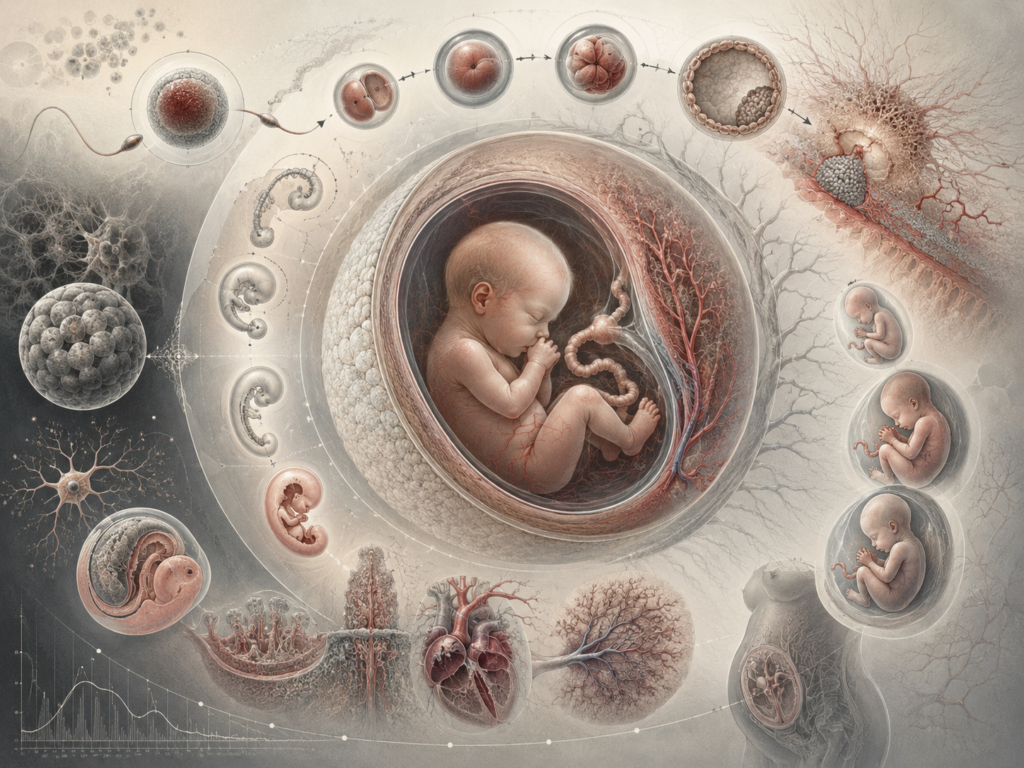
Research-grade illustration of prenatal development showing fertilization, cell division, embryonic growth, fetal development, placental structures, vascular systems, and the earliest biological foundations of human life.

Prenatal Development and the Earliest Foundations of Life

Prenatal development is the earliest and most consequential phase of human development because it is the period in which the organism first takes form under conditions that are already biological, relational, environmental, and social. This article examines conception, embryonic and fetal development, maternal health, prenatal care, stress, nutrition, toxic exposure, and inequality as developmental conditions rather than merely medical background. It argues that prenatal life is the first developmental environment, shaped by timing, vulnerability, public systems, and unequal protection. Far from being a preface to psychology, prenatal development establishes the earliest foundations on which later regulation, cognition, resilience, and risk are built.
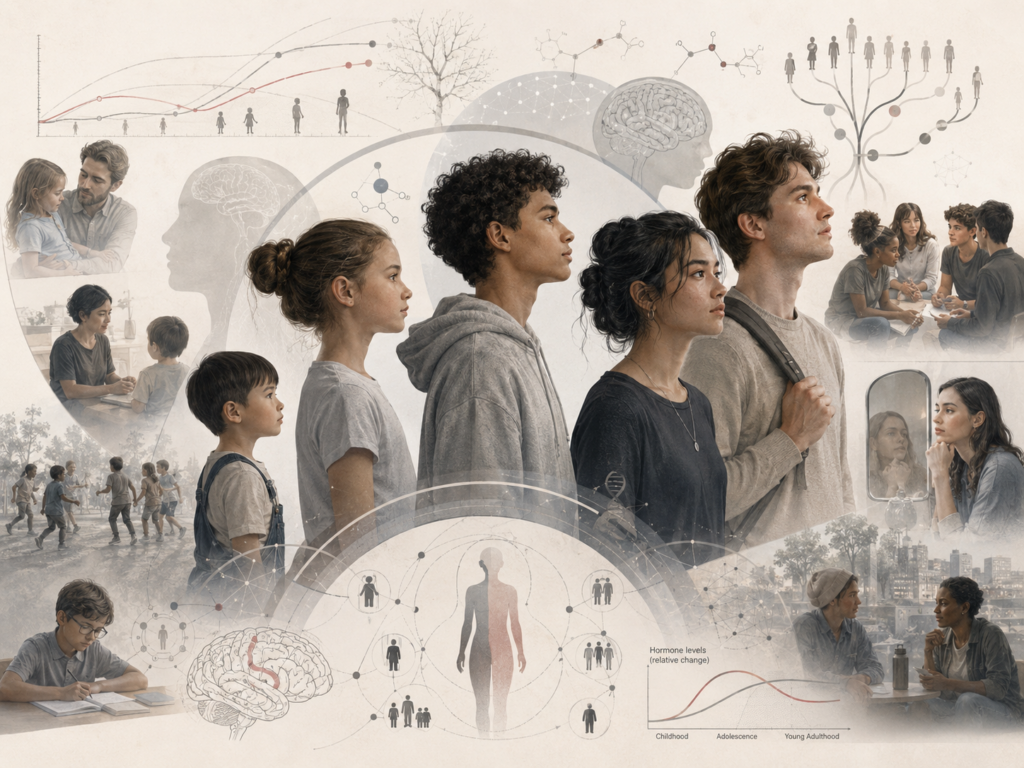
Research-grade illustration of gender and sexual development across childhood, adolescence, and young adulthood, showing identity formation, embodiment, peer interaction, family context, social learning, biological maturation, and self-reflection.

Gender Development and Sexual Development

Gender development and sexual development are related but distinct developmental processes through which children and adolescents come to understand embodied difference, social expectation, identity, attraction, intimacy, and the meanings attached to the body in family, peer, cultural, and institutional life. This article distinguishes the two while examining how they intersect through childhood socialization, puberty, expression, consent, sexual health, culture, stigma, and institutional recognition. It argues that neither process can be understood as biology alone or as private experience alone. Both unfold through family life, peer worlds, schools, healthcare systems, and unequal social environments. In that sense, this developmental domain reveals how bodies and selves are formed through recognition, knowledge, support, and power.

Research-grade illustration of stage theories of development, showing people progressing across the lifespan, stepped developmental pathways, brain maturation, growth curves, social contexts, and alternative nonlinear developmental trajectories.

Stage Theories of Development: Promise, Power, and Critique

Stage theories of development have endured because they promise an intelligible order to human change. Rather than treating development as mere accumulation, they describe cognition, identity, morality, and psychosocial life as patterned reorganizations that unfold across distinguishable phases. This article examines the explanatory power of stage models in Freud, Piaget, Erikson, and Kohlberg, while also addressing the major critiques that limited them, including empirical rigidity, cultural narrowness, normative hierarchy, and insufficient attention to inequality, disability, and context. It argues that stage theories remain most useful when treated as heuristic accounts of qualitative transition rather than rigid universal scripts of human life.

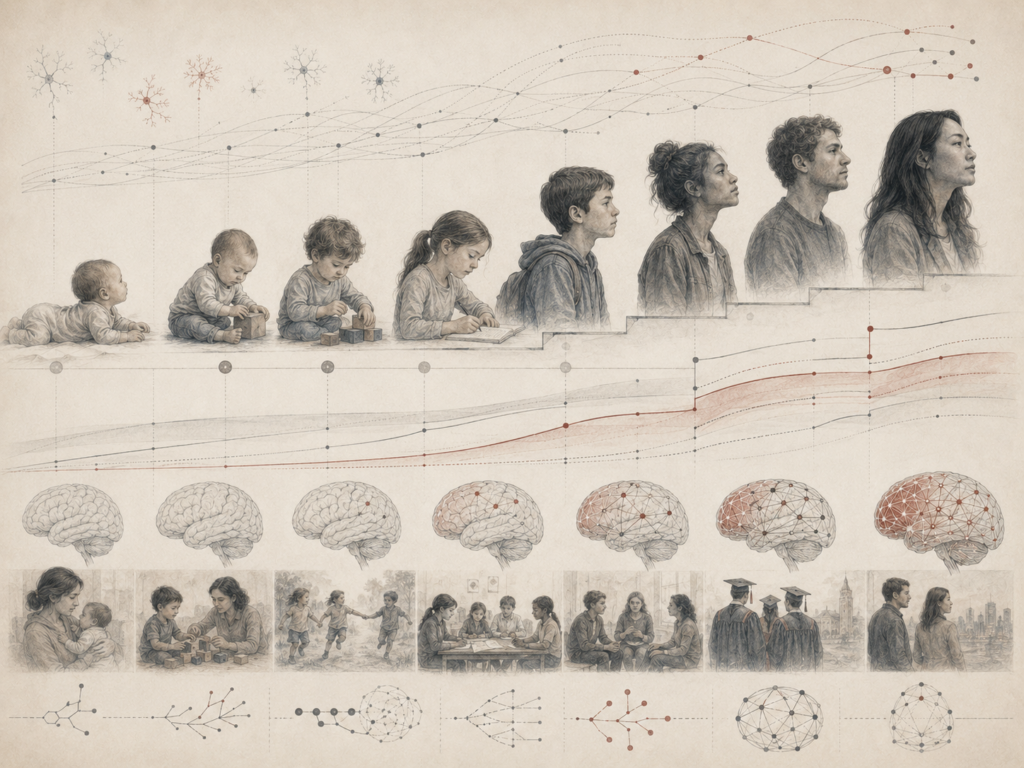
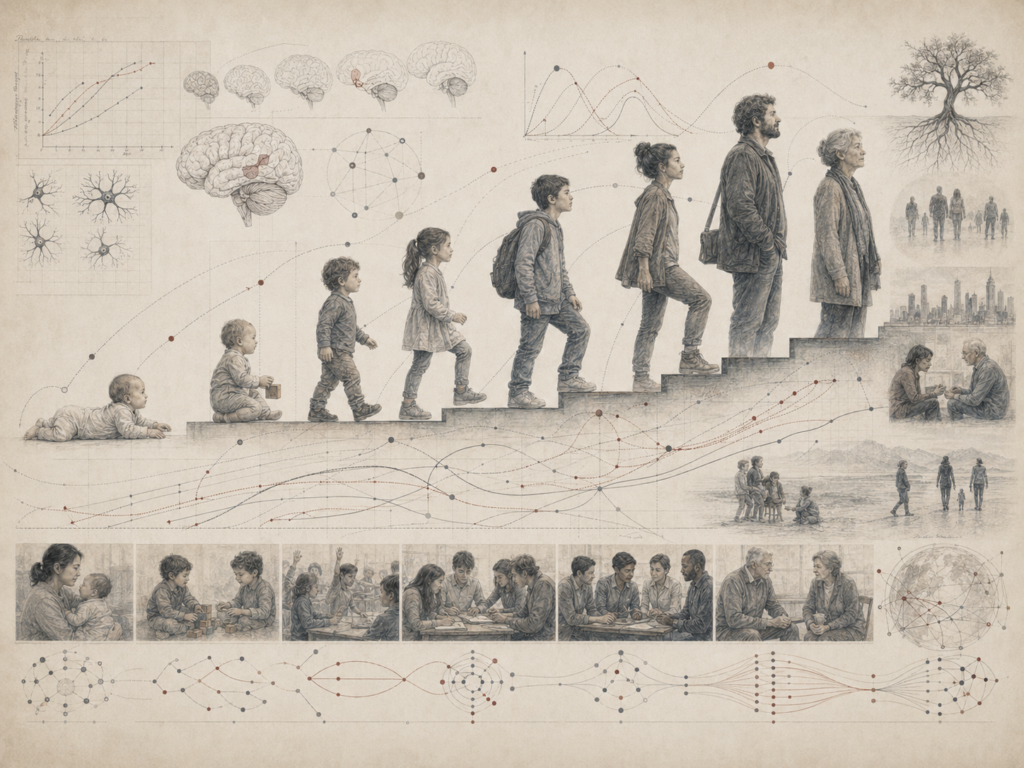
Research-grade illustration of developmental change across the lifespan, showing gradual growth curves, stage-like transitions, brain maturation, neural networks, and figures progressing from infancy through adulthood.

Continuity, Discontinuity, and the Logic of Developmental Change

Continuity and discontinuity is one of developmental psychology’s deepest questions because it asks how change itself is organized. Does development proceed gradually, through cumulative growth in skill, knowledge, and regulation, or does it shift through more qualitative reorganizations in cognition, identity, attachment, and social life? This article examines the debate across classical theory, lifespan and developmental systems perspectives, and domains such as language, moral development, and adolescence. It argues that development is rarely purely one or the other. Many processes are continuous in buildup and discontinuous in expression, with timing, context, inequality, and institutional disruption shaping when change appears gradual, threshold-based, or structurally transformative.

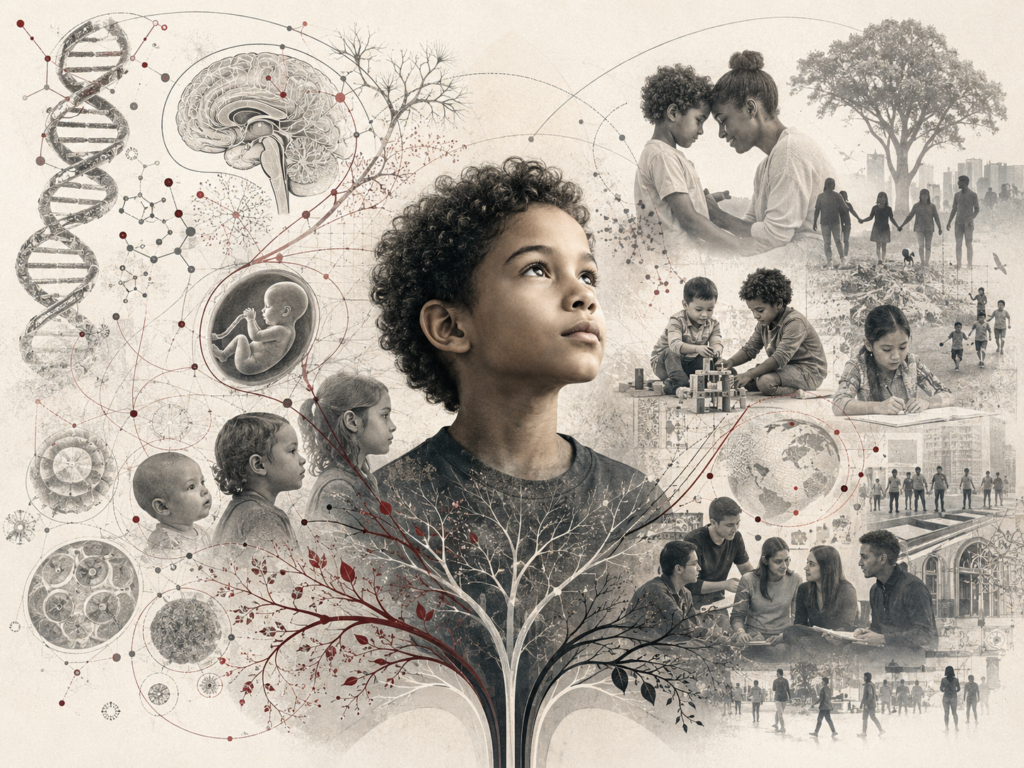
Research-grade illustration of the nature–nurture question, showing a child surrounded by DNA, brain development, caregiving, peer interaction, family, culture, environment, and developmental pathways.

Nature, Nurture, and the Developmental Question

Nature and nurture is developmental psychology’s most famous debate, but serious developmental science no longer treats it as a simple contest between heredity and environment. Human development unfolds through reciprocal processes in which biology, caregiving, nutrition, stress, learning, timing, institutions, and culture continually interact across time. This article examines why the old binary broke down, how gene-environment interaction and biological embedding reshaped the field, and why developmental outcomes must be understood as probabilistic, context-sensitive, and unequally conditioned. Rather than asking whether nature or nurture matters more, developmental psychology now asks how human pathways are produced through dynamic systems of susceptibility, support, adversity, and developmental timing.

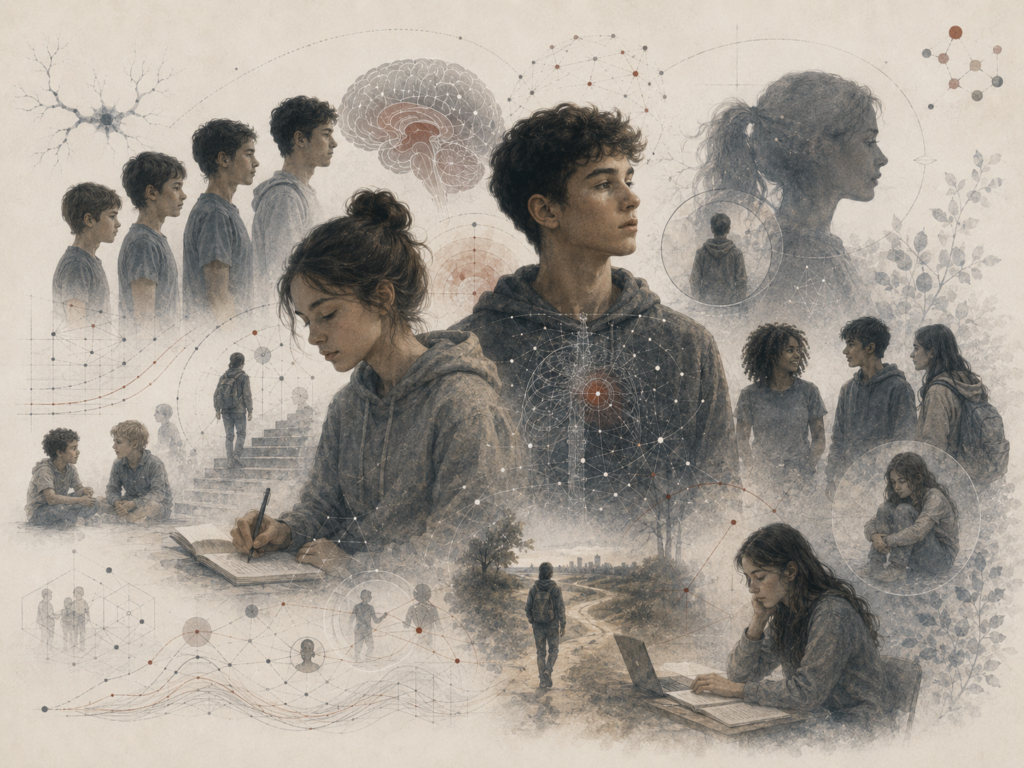
Research-grade illustration of adolescence and identity formation, showing teenagers in stages of psychological transition, self-reflection, peer interaction, emotional uncertainty, neural development, and emerging selfhood.

Adolescence, Identity, and Psychological Transition

Adolescence is a psychological transition in which identity becomes newly urgent as bodily change, peer recognition, family tension, institutional pressure, and future imagination converge. This article examines identity formation, embodiment, self-consciousness, peer belonging, autonomy, school life, inequality, and the broader transition from childhood dependence toward adult selfhood. It argues that adolescence is not simply a stage of turbulence or immaturity, but a major developmental reorganization in which the self becomes more reflective, more socially exposed, and more actively interpreted. In that sense, adolescence reveals how identity is formed not in isolation, but through bodily change, relationship, recognition, and unequal social worlds.

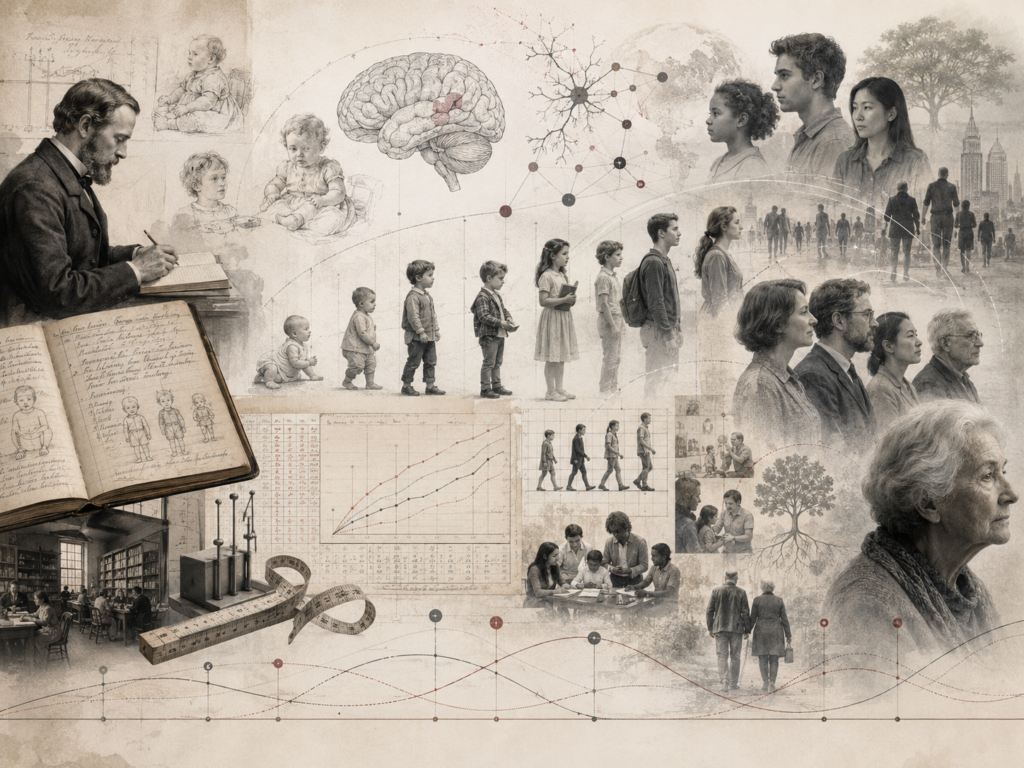
Research-grade historical illustration of developmental psychology, showing early child-study notebooks, observation, measurement tools, growth charts, brain diagrams, children across developmental stages, and lifespan development from childhood to old age.

The History of Developmental Psychology: From Child Study to Lifespan Science

The history of developmental psychology is the history of a field gradually learning to take time, context, and human change seriously. What began as child study, educational observation, and philosophical reflection on growth eventually became a broader science of development across the lifespan. Along the way, the field passed through stage theories, maturational models, psychoanalytic interpretation, learning theory, cognitive developmental frameworks, attachment research, ecological approaches, and lifespan science. Its history is therefore not only a sequence of major theorists, but also a record of shifting assumptions about childhood, adulthood, aging, culture, normality, institutions, inequality, and the changing methods through which human development has been studied.

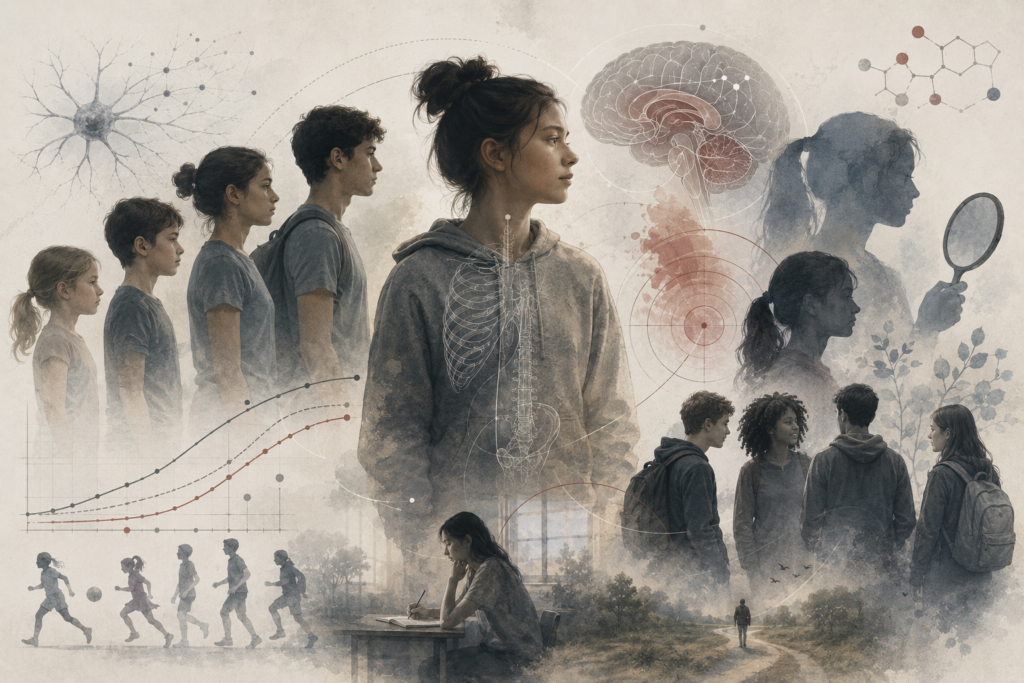
Research-grade illustration of adolescent transition showing sequential figures moving from late childhood into adolescence, with subtle physiological overlays, brain and growth motifs, self-reflection, peer interaction, and emerging identity.

Puberty, Embodiment, and Adolescent Transition

Puberty is a developmental transition through which bodily change, self-awareness, peer comparison, family response, and identity become newly intense across adolescence. This article examines endocrine change, embodiment, pubertal timing, gendered and sexualized meaning, peer evaluation, school life, inequality, and adolescent transition as parts of one developmental process. It argues that puberty is not just biological maturation, but a lived reorganization of selfhood in which the changing body becomes socially visible and psychologically consequential. In that sense, puberty reveals how bodily change enters human development not as neutral physiology alone, but as part of the making of the adolescent self.

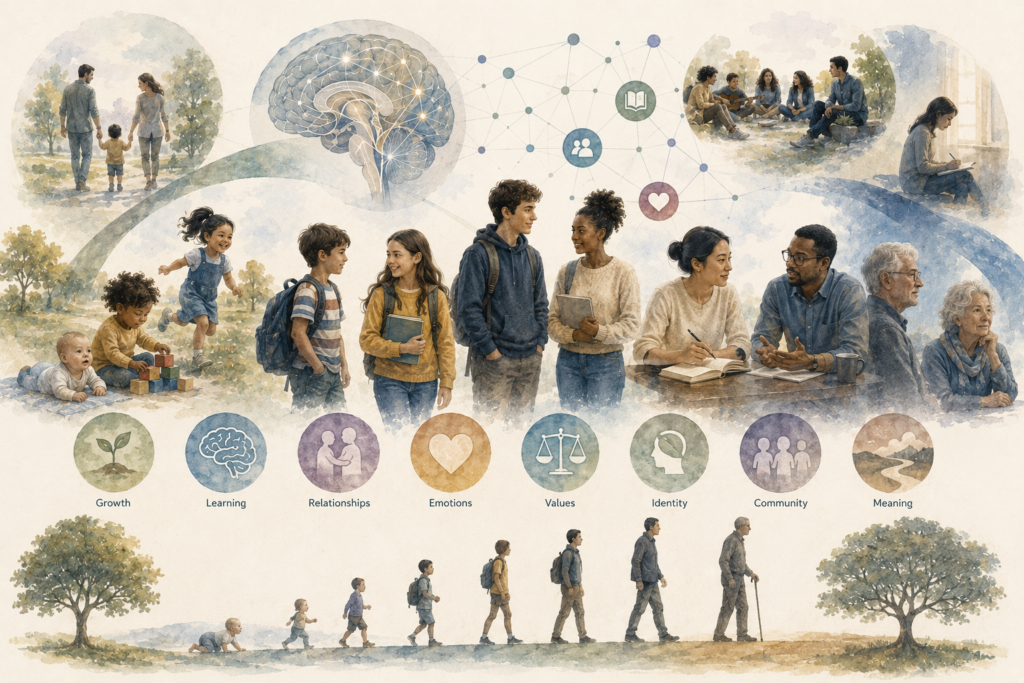
Watercolor-style research illustration of human development across the lifespan, showing infancy, childhood, adolescence, adulthood, and older age alongside symbolic motifs of growth, learning, relationships, emotion, identity, community, and meaning.

What Is Developmental Psychology? Human Development Across the Lifespan

Developmental psychology is the scientific study of how human beings change, persist, adapt, and become over time. Far more than a catalog of childhood milestones, the field examines how cognition, attachment, language, identity, emotional regulation, morality, and social participation emerge across the lifespan within bodies, relationships, institutions, and unequal material environments. It asks how development unfolds through timing, support, adversity, and culture; why similar beginnings can produce sharply different outcomes; and how family systems, schools, policy regimes, trauma, disability, and structural inequality shape developmental pathways. At its strongest, developmental psychology is a science of human formation under real conditions of dependency, learning, vulnerability, and possibility.

Scroll to Top